Breathing problems can feel frightening, especially when you suddenly feel that you cannot catch your breath. You may breathe rapidly, take shallow breaths, or feel as though you are not getting enough air. These symptoms can occur with hyperventilation, dyspnea, or several underlying respiratory conditions.
Understanding hyperventilation vs dyspnea is important because these terms describe different aspects of breathing. Dyspnea refers to the uncomfortable sensation of difficult or labored breathing. Hyperventilation refers to breathing more than the body needs for its metabolic requirements, which can reduce carbon dioxide levels in the blood.
Although they can occur together, they are not interchangeable. Finding the reason behind your breathing symptoms is important for receiving appropriate treatment.
What Is Dyspnea?
Dyspnea is the medical term for the sensation of shortness of breath or difficulty breathing. People may describe it in different ways.
You might feel:
- Like you cannot get enough air
- Like you cannot take a deep breath
- Tightness in your chest
- Breathlessness during activity
- A feeling that you cannot catch your breath
- Increased effort when breathing
Dyspnea can develop suddenly or gradually. It may occur during exercise, at rest, while lying down, or during sleep.
Several conditions can cause dyspnea, including asthma, COPD, pneumonia, respiratory infections, heart conditions, anemia, and other medical problems.
What Is Hyperventilation?
Hyperventilation occurs when a person breathes faster or deeper than necessary for the body’s metabolic needs. This can cause carbon dioxide levels in the blood to fall.
Hyperventilation may cause symptoms such as:
- Rapid breathing
- Lightheadedness
- Dizziness
- Tingling around the mouth or in the hands
- Chest discomfort
- Feeling unable to get enough air
- Palpitations
- Anxiety or fear
Anxiety and panic can trigger hyperventilation, but not every episode of rapid breathing is caused by anxiety. Lung disease, metabolic problems, pain, fever, and other conditions can also affect breathing patterns.
Hyperventilation vs Dyspnea – Why They Feel Similar
One reason people confuse hyperventilation and dyspnea is that both can produce a strong sensation of breathing difficulty.
For example, someone experiencing hyperventilation may breathe very quickly but still feel that they cannot get enough air. Someone with asthma may experience genuine airway narrowing that produces dyspnea and may also begin breathing rapidly in response.
The sensation alone does not always reveal the underlying cause. A proper medical assessment may be necessary when symptoms are persistent, recurrent, severe, or unexplained.
What Causes Rapid Shallow Breathing?
Rapid shallow breathing can occur for many reasons. Respiratory infections, asthma, COPD, pneumonia, pain, anxiety, fever, and other conditions may change the normal breathing pattern.
Some people develop shallow breathing because taking a deep breath feels uncomfortable. Others may breathe rapidly because their body is responding to an underlying medical problem.
If rapid shallow breathing continues or repeatedly occurs without an obvious explanation, professional evaluation is recommended.
Why Can’t I Catch My Breath?
The feeling that you cannot catch your breath can have many causes. Temporary breathlessness after intense physical activity may be normal. However, unexplained or persistent breathlessness deserves attention.
Possible causes include:
- Asthma
- COPD
- Pneumonia
- Bronchitis
- Respiratory infections
- Allergic reactions
- Anemia
- Heart conditions
- Anxiety or panic
- Reduced physical fitness
- Other lung diseases
The appropriate treatment depends on identifying the underlying cause.
Can Hyperventilation Cause Shortness of Breath?
Yes. Hyperventilation can produce a sensation of breathlessness even when a person is breathing rapidly. Changes in carbon dioxide levels can contribute to dizziness, tingling, chest discomfort, and an uncomfortable awareness of breathing.
However, it is important not to automatically assume that rapid breathing is caused by hyperventilation. A person with an underlying lung condition may also breathe rapidly because of genuine respiratory difficulty.
That is why recurrent episodes should be properly assessed rather than simply attributed to stress or anxiety.
Common Lung Conditions That Cause Dyspnea
Asthma
Asthma causes inflammation and narrowing of the airways. It can produce wheezing, chest tightness, coughing, and shortness of breath. Symptoms may worsen at night, during exercise, or after exposure to triggers.
COPD
COPD can cause persistent breathlessness, coughing, wheezing, and excess mucus. Symptoms may gradually become more noticeable during physical activity.
Pneumonia
Pneumonia can cause inflammation in the lungs and may lead to cough, fever, chest discomfort, fatigue, and difficulty breathing.
Bronchitis
Bronchitis can irritate the airways and increase mucus production. Some people also experience wheezing and shortness of breath.
Interstitial Lung Disease
Interstitial lung diseases can affect the lung tissue and may cause progressive breathlessness, particularly during physical activity. Persistent unexplained dyspnea should therefore be evaluated carefully.
How Are Breathing Problems Diagnosed?
A pulmonologist may begin by discussing when your symptoms occur, how long they have lasted, and whether anything triggers or relieves them.
Depending on your symptoms, evaluation may include:
- Physical examination
- Oxygen saturation measurement
- Pulmonary Function Test
- Spirometry
- Chest X-ray
- CT scan when indicated
- Blood tests
- Allergy evaluation
- Other specialized respiratory investigations
These tests can help distinguish between airway problems, lung tissue disease, infections, and other potential causes of breathing difficulty.
Treatment Depends on the Cause
There is no single treatment for dyspnea or hyperventilation. Management depends on the underlying cause.
For example, asthma may require prescribed inhaled medications. COPD may require inhalers, pulmonary rehabilitation, lifestyle changes, and other long-term management. Respiratory infections may require appropriate medical treatment based on their cause.
When anxiety or panic contributes to hyperventilation, breathing strategies and treatment of the underlying anxiety may be helpful. However, medical causes should be considered before assuming that breathing symptoms are purely anxiety-related.
Do not start or stop prescription respiratory medication without professional medical advice.
When Should You See a Pulmonologist?
You should consider seeing a pulmonologist if you experience:
- Recurrent shortness of breath
- Frequent episodes of rapid breathing
- Persistent cough
- Wheezing
- Chest tightness
- Breathlessness during routine activities
- Breathing difficulty that wakes you at night
- Repeated respiratory infections
- Unexplained changes in your breathing pattern
Sudden or severe breathing difficulty, especially when accompanied by chest pain, fainting, confusion, bluish lips, or severe weakness, requires urgent medical attention.
Expert Respiratory Care in Rawalpindi
Understanding hyperventilation vs dyspnea can help you recognize that breathing difficulties have different possible causes. Rapid shallow breathing, a feeling that you cannot catch your breath, or persistent shortness of breath should not automatically be attributed to stress or anxiety.
A proper respiratory evaluation can help identify whether symptoms are related to asthma, COPD, infection, another lung condition, or a breathing pattern such as hyperventilation.
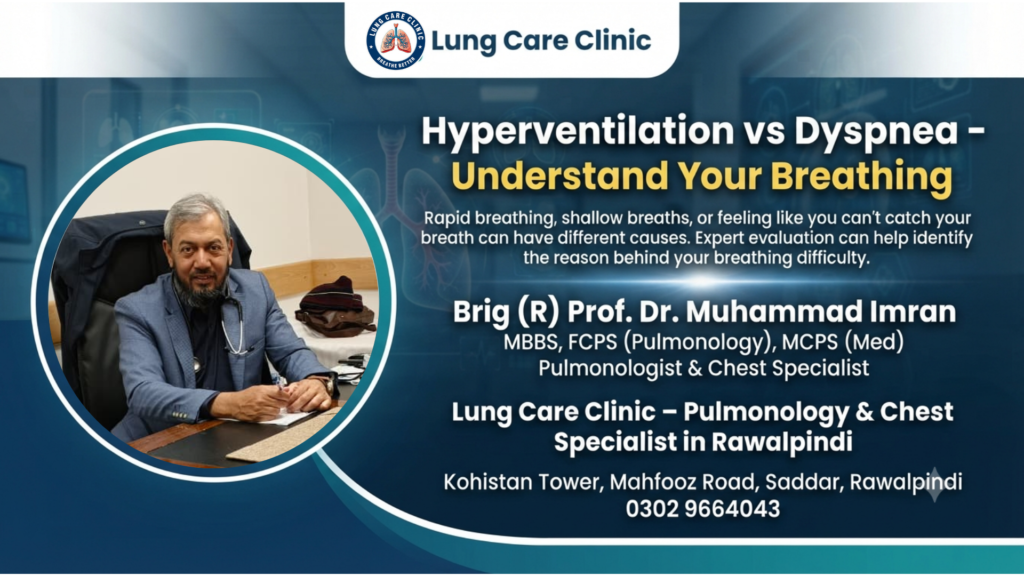
Brig (R) Prof. Dr. Muhammad Imran, Pulmonologist & Chest Specialist, provides comprehensive evaluation and treatment for breathing difficulties, asthma, COPD, chronic cough, wheezing, chest infections, and other respiratory conditions at Lung Care Clinic – Pulmonology & Chest Specialist in Rawalpindi.
Kohistan Tower, Mahfooz Road, Saddar, Rawalpindi
0302 9664043
If you frequently feel short of breath, breathe unusually fast, or feel like you cannot catch your breath, don’t ignore the symptoms. Professional evaluation can help identify the underlying cause and guide an appropriate treatment plan for better respiratory health.