Recurrent wheezing in adults is a symptom that often signals an underlying respiratory condition. Wheezing is a high-pitched, whistling sound that occurs when air moves through narrowed or inflamed airways. While many people associate wheezing with asthma, it can also result from chronic obstructive pulmonary disease (COPD), bronchitis, respiratory infections, allergies, or other lung disorders.
Occasional wheezing may occur during a respiratory infection, but recurrent episodes should never be ignored. Identifying the underlying cause is essential for effective treatment and long-term lung health.
What Is Wheezing?
Wheezing is a musical or whistling sound heard during breathing, most commonly when exhaling. It develops when the airways become partially blocked due to inflammation, mucus, muscle tightening, or swelling.
Some people experience mild wheezing only during exercise, while others may have persistent symptoms that interfere with daily activities or sleep.
What Causes Recurrent Wheezing in Adults?
Several respiratory conditions can cause recurrent wheezing in adults.
Asthma
Asthma is one of the leading causes of wheezing. It causes inflammation and narrowing of the airways, making breathing difficult.
Common symptoms include:
- Wheezing
- Chest tightness
- Shortness of breath
- Persistent cough
- Symptoms that worsen at night or early morning
With proper treatment, asthma can often be effectively controlled.
Chronic Obstructive Pulmonary Disease (COPD)
COPD is a long-term lung disease that commonly affects smokers and people exposed to air pollution or occupational dust.
Symptoms include:
- Persistent wheezing
- Chronic cough
- Excess mucus production
- Breathlessness
- Reduced exercise tolerance
Early diagnosis and treatment can slow disease progression and improve quality of life.
Bronchitis
Bronchitis causes inflammation of the bronchial tubes, leading to airway narrowing and mucus production.
People with bronchitis often experience:
- Productive cough
- Wheezing
- Chest discomfort
- Fatigue
- Mild shortness of breath
Acute bronchitis usually improves within a few weeks, while chronic bronchitis requires ongoing management.
Respiratory Infections
Respiratory infections such as pneumonia, influenza, and viral chest infections may temporarily cause wheezing due to airway inflammation.
Symptoms may include:
- Fever
- Cough
- Chest pain
- Fatigue
- Thick mucus
Persistent wheezing after an infection should be evaluated by a pulmonologist.
Allergies
Exposure to allergens such as pollen, dust mites, mold, or pet dander may trigger airway inflammation and wheezing in susceptible individuals.
Managing allergies can reduce respiratory symptoms and improve breathing.
Smoking
Smoking irritates the airways and damages lung tissue over time. Smokers are more likely to develop chronic wheezing due to airway inflammation and mucus accumulation.
Quitting smoking is one of the most effective ways to improve lung health.
Can Wheezing Occur Without Asthma?
Yes. Many people experience wheezing without asthma. Conditions that may cause wheezing without asthma include:
- COPD
- Bronchitis
- Pneumonia
- Allergic reactions
- Respiratory infections
- Airway obstruction
- Gastroesophageal reflux disease (GERD)
- Vocal cord dysfunction
Because wheezing has many possible causes, a proper medical evaluation is essential before starting treatment.
What Does a Whistling Sound While Breathing Mean?
A whistling sound while breathing usually indicates that air is passing through narrowed airways. This narrowing may result from swelling, muscle tightening, excessive mucus, or an obstruction within the respiratory tract.
The sound may be heard during inhalation, exhalation, or both, depending on the underlying condition.
Symptoms That May Accompany Wheezing
Recurrent wheezing often occurs with other respiratory symptoms, including:
- Persistent cough
- Chest tightness
- Shortness of breath
- Excess mucus production
- Chest congestion
- Fatigue
- Difficulty exercising
- Frequent respiratory infections
The combination of symptoms helps your pulmonologist determine the most likely cause.
When Should You See a Pulmonologist?
Consult a pulmonologist if you experience:
- Recurrent wheezing
- Wheezing that lasts more than a few days
- Difficulty breathing
- Persistent cough
- Chest pain
- Coughing up blood
- Fever with breathing difficulty
- Frequent nighttime symptoms
Seek emergency medical care immediately if wheezing is severe, rapidly worsening, or accompanied by blue lips, confusion, or inability to speak in full sentences.
How Is Recurrent Wheezing Diagnosed?
A pulmonologist will begin by reviewing your symptoms, medical history, and lifestyle factors such as smoking or occupational exposures.
Diagnostic tests may include:
- Physical examination
- Chest X-ray
- CT scan
- Pulmonary Function Test (Spirometry)
- Oxygen saturation measurement
- Blood tests
- Allergy testing
- Sputum examination when infection is suspected
These investigations help identify the exact cause and guide appropriate treatment.
Treatment for Recurrent Wheezing
Treatment depends on the underlying diagnosis.
Your doctor may recommend:
- Bronchodilator inhalers
- Inhaled corticosteroids
- Antibiotics for bacterial infections
- Allergy medications
- Pulmonary rehabilitation
- Smoking cessation support
- Breathing exercises
- Vaccinations to reduce respiratory infections
Following your treatment plan consistently is essential for controlling symptoms and preventing future flare-ups.
Tips to Reduce Wheezing
You can improve your lung health by adopting healthy lifestyle habits.
- Avoid smoking and secondhand smoke.
- Reduce exposure to dust and air pollution.
- Take prescribed inhalers correctly.
- Stay physically active within your doctor’s recommendations.
- Maintain a healthy body weight.
- Stay hydrated to help keep mucus thin.
- Manage allergies effectively.
- Seek early treatment for respiratory infections.
These measures can reduce airway irritation and lower the risk of recurrent wheezing.
Expert Pulmonary Care in Rawalpindi
Recurrent wheezing should never be dismissed as a minor problem. Whether it is caused by asthma, COPD, bronchitis, allergies, or another respiratory condition, early diagnosis and treatment can help prevent complications and improve your quality of life.
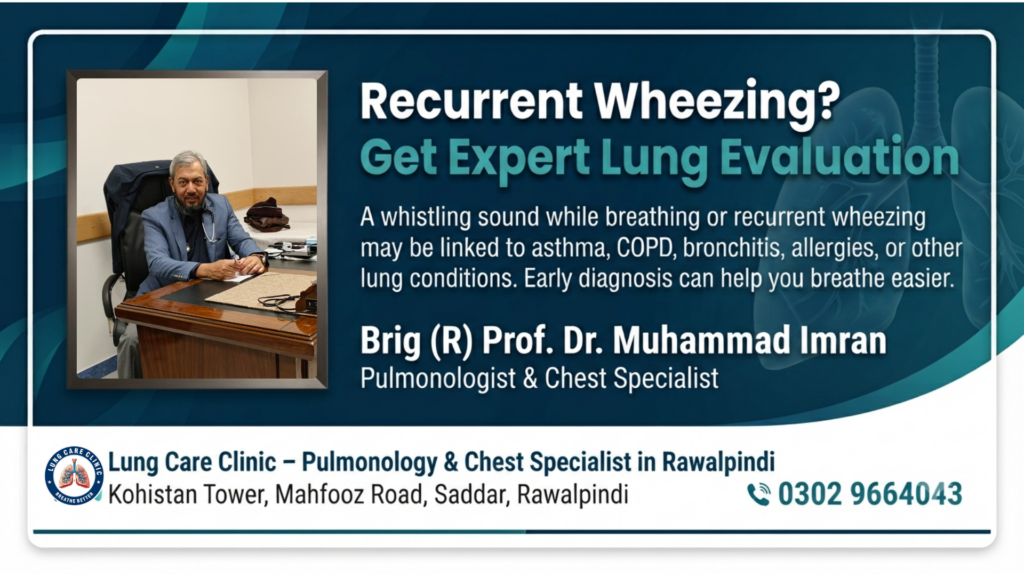
Brig (R) Prof. Dr. Muhammad Imran, Pulmonologist & Chest Specialist, provides comprehensive evaluation and treatment for recurrent wheezing, asthma, COPD, bronchitis, chest infections, chronic cough, and other respiratory conditions at Lung Care Clinic – Pulmonology & Chest Specialist in Rawalpindi.
Kohistan Tower, Mahfooz Road, Saddar, Rawalpindi
0302 9664043
If you experience persistent wheezing, a whistling sound while breathing, or repeated episodes of breathing difficulty, schedule an appointment today. Timely evaluation and personalized care can help you breathe easier, reduce symptoms, and protect your long-term lung health.