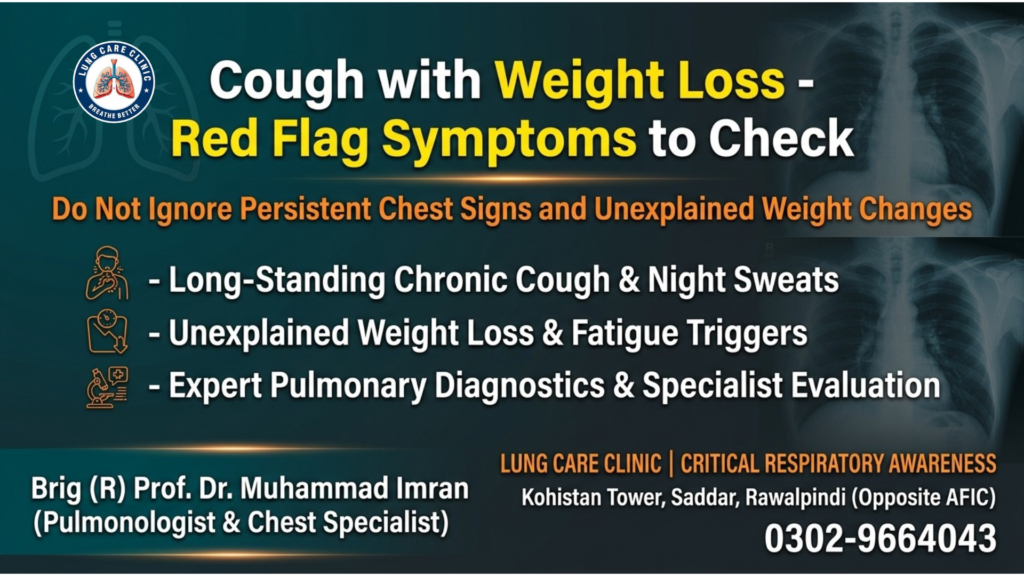
Experiencing a persistent cough that lingers for weeks is concerning on its own. However, when a long-standing cough occurs alongside unexplained weight loss, it serves as a critical medical signal. Understanding why a cough with weight loss requires immediate clinical evaluation helps patients seek timely diagnostic care and protect their long-term lung health.
While common colds and seasonal allergies cause temporary respiratory discomfort, systemic symptoms like sudden weight drops, night sweats, and chronic fatigue point toward deeper pulmonary issues.
Understanding a Cough with Weight Loss
A chronic cough is defined as a cough lasting longer than eight weeks in adults. When your body fights an underlying chronic lung disease or systemic infection, it consumes significantly more energy. This increased metabolic demand, combined with reduced appetite, often leads to involuntary weight loss.
Evaluating a cough with weight loss allows physicians to identify underlying respiratory disorders before irreversible lung damage occurs.
Key physiological mechanisms connecting respiratory disease to weight loss include:
- Increased Work of Breathing: Chronic airway inflammation forces your respiratory muscles to work harder, burning extra calories even while resting.
- Persistent Systemic Inflammation: Infections and lung diseases release inflammatory proteins called cytokines, which suppress appetite and break down muscle mass.
- Loss of Appetite (Anorexia): Continuous coughing and chronic shortness of breath make eating uncomfortable, leading to reduced daily caloric intake.
- Chronic Oxygen Deprivation: Reduced lung efficiency impairs nutrient absorption and cellular energy production throughout the body.
Red Flag Symptoms That Require Immediate Medical Care
When evaluating a cough with weight loss, physicians look for specific red flag symptoms that indicate serious medical conditions. Recognizing these warning signs ensures you receive prompt specialist care.
Critical red flag signs include:
- Cough Lasting Longer Than 3 to 4 Weeks: Any unresolved cough that persists beyond a month requires detailed clinical testing.
- Coughing Up Blood (Hemoptysis): Seeing blood-streaked sputum or dark blood clots when coughing is a primary medical warning sign.
- Drenching Night Sweats: Waking up with soaked clothes or bedsheets suggests active chronic infections or lymphatic issues.
- Unexplained Weight Drop: Losing more than 5% of your body weight within a few months without dieting or exercise.
- Shortness of Breath (Dyspnea): Experiencing breathlessness during routine daily tasks like walking or climbing stairs.
- Persistent Low-Grade Fever: Spiking daily mild fevers, especially during late afternoons or evenings.
- Unilateral Chest Pain: Sharp or dull chest pain that worsens during deep breathing or coughing.
Potential Underlying Conditions
A cough with weight loss can stem from several serious respiratory and systemic conditions. Accurate diagnostic testing is essential to pinpoint the exact cause.
Pulmonary Tuberculosis (TB)
Tuberculosis remains a common cause of chronic respiratory illness. Mycobacterium tuberculosis infects lung tissue, causing persistent coughing, chest pain, weight loss, fever, and night sweats. Early diagnosis through sputum testing and chest imaging ensures complete recovery with standard anti-TB therapy.
Chronic Obstructive Pulmonary Disease (COPD)
Severe COPD inflames the airways and destroys air sacs inside the lungs. Patients with advanced COPD burn high amounts of energy just to breathe, leading to progressive muscle wasting and weight loss alongside a chronic productive cough.
Lung Cancer and Respiratory Malignancies
A new or changing cough accompanied by rapid, unexplained weight loss is a key warning sign of lung malignancy. Tumors obstructing bronchial passages cause persistent irritation, airway bleeding, and systemic weight loss.
Interstitial Lung Disease (ILD) & Pulmonary Fibrosis
Progressive scarring of lung tissue restricts oxygen absorption. Patients suffer from a dry, hacking cough, progressive shortness of breath, severe fatigue, and gradual weight loss due to chronic oxygen shortage.
5. Chronic Lung Abscess or Fungal Infections
Deeper lung cavity infections caused by bacteria or environmental fungi lead to tissue damage, persistent purulent cough, low-grade fevers, and noticeable weight loss.
Diagnostic Steps for Evaluating Respiratory Symptoms
When you visit a chest specialist for a cough with weight loss, the physician performs a structured diagnostic evaluation to identify the root cause.
Standard diagnostic tests include:
- Digital Chest X-Ray: Provides an initial visual scan of your lungs to check for shadows, infiltrates, cavities, or nodules.
- High-Resolution CT Scan (HRCT): Generates detailed cross-sectional images of lung tissue, airways, and blood vessels.
- Sputum Analysis & GeneXpert: Tests expectorated phlegm for bacterial pathogens, fungal elements, and drug-resistant tuberculosis strains.
- Spirometry & Pulmonary Function Tests (PFT): Measures your lung capacity and airflow limits to diagnose asthma, COPD, or restrictive lung diseases.
- Diagnostic Bronchoscopy: Allows a pulmonologist to examine the interior of your airways directly using a thin, flexible scope camera and collect tissue samples safely.
Preventive Measures and Pulmonary Care
While undergoing medical investigation, adopting supportive respiratory habits helps manage symptoms and prevents further airway strain.
Recommended care guidelines:
- Avoid all exposure to tobacco smoke, secondary smoke, and biomass fuel fumes.
- Eat calorie-dense, nutrient-rich small meals frequently to combat involuntary weight loss.
- Maintain adequate daily hydration to thin bronchial secretions and make coughing less painful.
- Wear protective masks when visiting dusty environments or crowded public spaces.
- Take all prescribed medications consistently as directed by your chest consultant.
Why Choose Lung Care Clinic in Saddar, Rawalpindi?
Evaluating complex respiratory warning signs requires an experienced specialist, direct consultant care, and a dedicated medical environment. Located centrally at Kohistan Tower in Saddar, Rawalpindi (Opposite AFIC), Lung Care Clinic offers expert pulmonary diagnostic evaluations and treatment management.
Brig (R) Prof. Dr. Muhammad Imran, a distinguished pulmonologist and chest specialist with decades of clinical experience, provides personalized care. He conducts detailed clinical assessments, reviews diagnostic imaging, and designs targeted treatment plans for complex lung conditions.
Frequently Asked Questions
Is a cough with weight loss always a sign of cancer?
No. While weight loss with a chronic cough requires immediate evaluation, it is frequently caused by treatable conditions such as Pulmonary Tuberculosis, severe COPD, or chronic fungal lung infections.
How quickly should I see a doctor for these symptoms?
If your cough lasts longer than three weeks or if you notice unexplained weight loss and night sweats, you should schedule a diagnostic consultation with a chest specialist without delay.
Can treating the underlying lung disease restore lost weight?
Yes. Once your pulmonologist diagnoses the root cause and starts effective treatment—such as anti-TB therapy, targeted antibiotics, or specialized inhalers—airway inflammation subsides, energy expenditure decreases, and weight gradually returns to normal.
For expert pulmonary evaluations, diagnostic chest imaging reviews, and personalized treatment plans, visit Lung Care Clinic at Kohistan Tower, Saddar, Rawalpindi (Opposite AFIC), or call 0302-9664043.