Living with persistent breathlessness, chronic coughing, and reduced stamina affects every aspect of daily life. Chronic Obstructive Pulmonary Disease (COPD) is a progressive lung condition that restricts airflow and makes breathing steadily more difficult over time. Consulting a qualified COPD specialist in Rawalpindi provides patients with accurate diagnostic clarity, targeted inhaler therapies, and structured long-term care plans to protect lung function and improve daily comfort.
Effective COPD management slows disease progression, prevents severe flare-ups, and restores independence. Understanding how modern pulmonary medicine addresses chronic airway obstruction empowers patients and families to take proactive control of their respiratory health.
Understanding Chronic Obstructive Pulmonary Disease (COPD)
COPD is an umbrella term covering progressive respiratory conditions that block airflow and cause persistent breathing difficulties. The two primary conditions within this spectrum are chronic bronchitis and emphysema, which frequently occur together in varying degrees.
Chronic bronchitis involves ongoing inflammation and narrowing of the bronchial tubes, leading to excessive mucus production and a daily productive cough. Emphysema involves gradual damage to the tiny air sacs (alveoli) in the lungs, reducing their elasticity and impairing oxygen transfer into the bloodstream.
Key risk factors contributing to COPD development include:
- Tobacco Smoke Exposure: Long-term cigarette smoking remains the leading cause of chronic airway inflammation and alveolar destruction.
- Environmental Pollutants: Prolonged exposure to urban air pollution, biomass fuel smoke, industrial dust, and chemical fumes damages delicate lung tissues.
- Recurrent Respiratory Infections: Frequent untreated chest infections during adulthood accelerate airway scarring and airflow limitation.
- Genetic Predisposition: Rare inherited deficiencies, such as Alpha-1 antitrypsin deficiency, weaken natural lung protection against tissue breakdown.
Recognizing Early and Advanced Symptoms of COPD
Because COPD develops gradually over many years, early warning signs are often mistaken for normal aging or a routine smoker’s cough. Early medical evaluation prevents irreversible lung decline.
Common symptoms requiring specialist assessment include:
- Progressive Shortness of Breath: Breathlessness initially noticed during brisk walking or climbing stairs that eventually occurs during routine dressing or resting.
- Persistent Chronic Cough: A daily cough that lasts for months or years, often producing clear, white, yellow, or greenish sputum.
- Frequent Wheezing: A high-pitched whistling sound during exhalation caused by narrowed, inflamed airways.
- Chest Tightness: A sensation of heaviness or restriction across the chest, particularly during morning hours or cold weather.
- Unexplained Fatigue: Low energy levels resulting from the extra physical effort required to breathe and reduced oxygen delivery.
Why Consult a COPD Specialist in Rawalpindi?
General symptomatic treatment often fails to address the underlying mechanics of chronic airflow obstruction. A dedicated COPD specialist in Rawalpindi evaluates the exact stage of airway limitation and tailors medical therapy to individual lung physiology.
Specialist pulmonary care offers distinct clinical advantages:
- Precise Differential Diagnosis: Distinguishing COPD from adult-onset asthma, heart failure, or interstitial lung disease ensures accurate medication selection.
- Staging Disease Severity: Measuring exact lung volumes classifies obstruction into mild, moderate, severe, or very severe stages for targeted planning.
- Optimizing Inhaler Delivery: Selecting the right inhaler device and verifying proper inhalation technique guarantees medication reaches deep into small airways.
- Preventing Acute Exacerbations: Identifying early infection triggers reduces emergency hospital visits and preserves remaining lung capacity.
Diagnostic Testing for Accurate COPD Evaluation
Confirmed diagnosis relies on objective lung function measurements rather than symptoms alone. Comprehensive pulmonary diagnostics pinpoint the severity of obstruction and guide treatment adjustments.
Essential diagnostic tests include:
- Spirometry (Pulmonary Function Testing): The gold-standard test measuring how much air a patient can exhale forcefully and how quickly they empty their lungs before and after a bronchodilator.
- Digital Chest X-Ray: Evaluates lung hyperinflation, flattens diaphragm contours, and rules out concurrent pneumonia or structural lung conditions.
- Pulse Oximetry and Blood Gas Analysis: Assesses blood oxygen saturation levels at rest and during light exertion to determine whether supplemental oxygen is needed.
- Sputum Evaluation: Identifies bacterial pathogens during acute flare-ups so targeted antibiotic therapy can be prescribed promptly.
Comprehensive Treatments for Severe COPD Care
While structural damage from emphysema cannot be fully reversed, modern COPD specialist treatment controls daily symptoms, improves exercise tolerance, and slows further decline.
Targeted Bronchodilator Therapy
Bronchodilators relax the smooth muscles surrounding narrowed airways, opening breathing passages and reducing air trapping. Long-acting beta-agonists (LABAs) and long-acting muscarinic antagonists (LAMAs) form the cornerstone of daily maintenance therapy, delivered directly to the lungs via precision inhalers.
Inhaled Corticosteroids for Flare-Up Control
For patients experiencing frequent exacerbations or overlapping airway inflammation, combination inhalers containing inhaled corticosteroids reduce bronchial swelling and lower the frequency of severe breathing crises.
Inhaler Technique Mastery and Spacer Support
Even the strongest medication fails if inhaled incorrectly. Specialist consultations include hands-on verification of metered-dose inhalers, dry powder inhalers, and spacer devices to maximize lung deposition and minimize throat irritation.
Pulmonary Rehabilitation and Breathing Conditioning
Structured breathing exercises, including pursed-lip breathing and diaphragmatic strengthening, teach patients how to empty trapped air efficiently and manage breathlessness during physical movement.
Preventive Vaccinations and Infection Control
Respiratory viruses and bacterial pneumonia trigger dangerous COPD flare-ups. Annual influenza vaccinations and pneumococcal immunization provide essential protection against severe seasonal infections.
Supplemental Oxygen Therapy
For patients with advanced COPD and persistently low blood oxygen levels, carefully titrated supplemental oxygen protects heart health, reduces daytime fatigue, and improves sleep quality.
Managing COPD Flare-Ups and Daily Triggers
An acute COPD exacerbation occurs when respiratory symptoms suddenly worsen beyond normal day-to-day variations. Recognizing early warning signs allows prompt intervention before hospitalization becomes necessary.
Practical strategies to minimize daily triggers include:
- Complete Smoking Cessation: Stopping tobacco use and avoiding secondhand smoke immediately slows the rate of annual lung function decline.
- Indoor Air Quality Protection: Avoiding wood smoke, incense, strong chemical cleaners, and dusty environments keeps sensitive airways calm.
- Weather Preparedness: Wearing a scarf or mask over the nose and mouth during cold winter mornings warms incoming air and prevents bronchospasm.
- Action Plan Adherence: Following a written flare-up action plan outlines exactly when to adjust rescue inhalers and when to contact your pulmonologist.
Expert COPD Management at Lung Care Clinic, Saddar, Rawalpindi
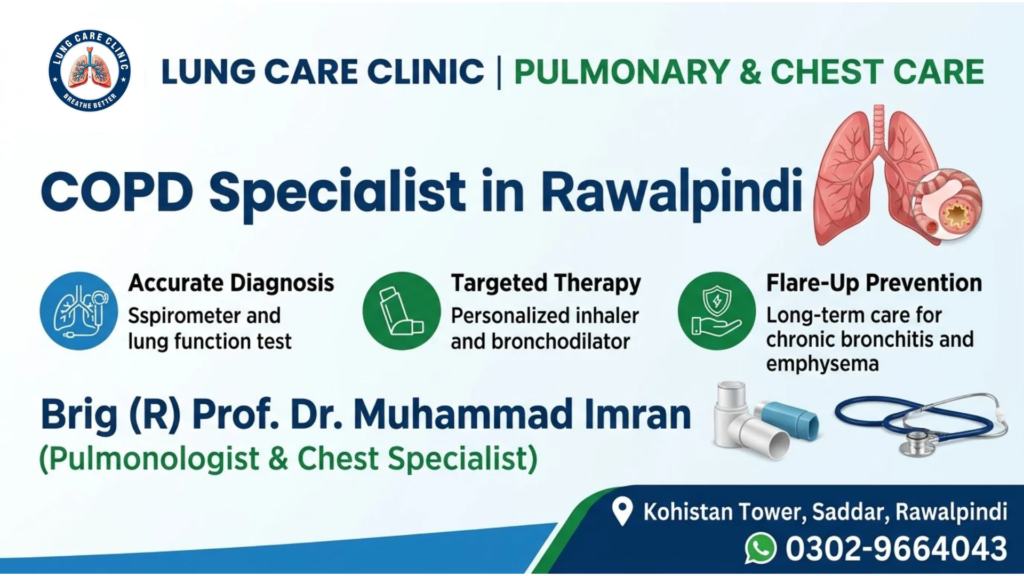
Patients living with chronic bronchitis, emphysema, or severe breathing difficulties require consistent, individualized medical supervision. Located conveniently at Kohistan Tower, Saddar, Rawalpindi, Lung Care Clinic provides comprehensive pulmonary diagnostics and long-term respiratory management.
Under the clinical care of Brig (R) Prof. Dr. Muhammad Imran, a senior pulmonologist and chest specialist, patients receive thorough spirometry assessments, personalized inhaler regimens, and structured guidance to breathe easier and maintain an active lifestyle.
Frequently Asked Questions
Can COPD be cured completely with medication?
COPD cannot be completely cured, as long-term airway remodeling and alveolar changes are permanent. However, consistent specialist treatment, proper inhaler therapy, and trigger avoidance effectively control symptoms and slow disease progression.
How is COPD different from asthma?
Asthma typically begins earlier in life and involves reversible airway narrowing triggered by allergens or exercise. COPD usually develops after age 40 due to long-term smoke or pollutant exposure and causes persistent, progressive airflow limitation.
When should a COPD patient seek urgent medical care?
Seek prompt specialist evaluation if you experience worsening shortness of breath at rest, increased sputum volume, a change in mucus color to thick yellow or green, fever, or ankle swelling.
For expert COPD evaluation, lung function testing, and personalized respiratory management, visit Lung Care Clinic at Kohistan Tower, Saddar, Rawalpindi, or call 0302-9664043.