
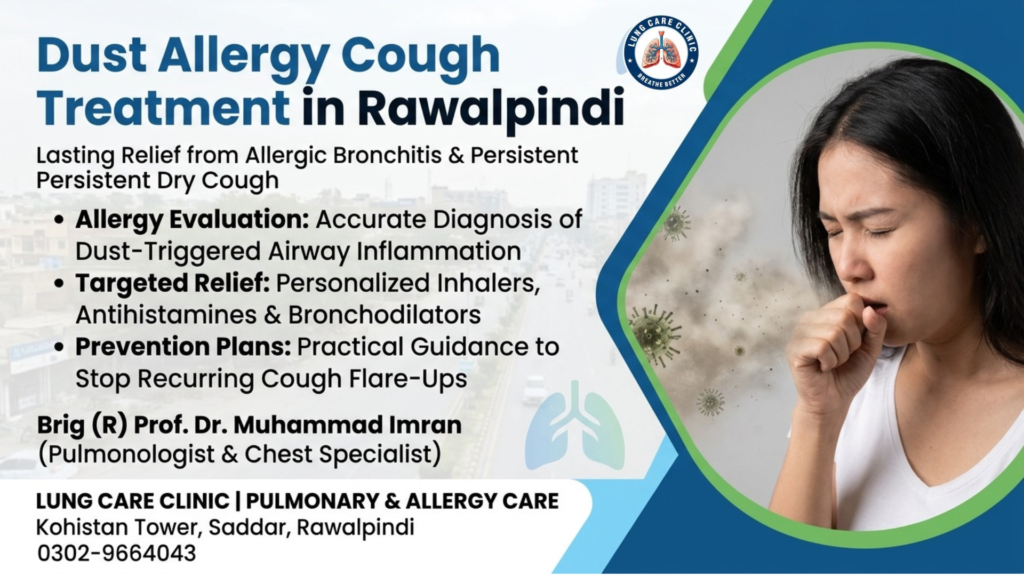
A persistent dry cough triggered by household dust, seasonal winds, or urban pollution disrupts sleep, lowers daytime productivity, and irritates sensitive airways. Many individuals mistake an allergic cough for a lingering seasonal cold, yet standard cough syrups rarely resolve immune-driven airway inflammation. Seeking professional dust allergy cough treatment in Rawalpindi provides accurate diagnostic clarity, targeted medication, and practical environmental strategies to calm irritated bronchial passages.
Understanding why dust triggers prolonged coughing empowers patients to break the cycle of chronic throat irritation and allergic bronchitis. Combining safe daily remedies with expert pulmonary evaluation ensures lasting respiratory comfort.
Understanding Dust Allergy Cough and Allergic Bronchitis
A dust allergy cough occurs when the immune system overreacts to microscopic airborne particles inhaled into the respiratory tract. Common indoor and outdoor allergens include microscopic dust mites, dry soil particles, pollen grains, pet dander, mold spores, and fine urban particulate matter.
When these allergens settle on the lining of the nose, throat, and bronchial tubes, the body releases histamine and inflammatory chemicals. This immune cascade causes swelling, excess mucus production, and heightened nerve sensitivity inside the airways. The cough reflex then activates repeatedly as the lungs attempt to clear perceived irritants.
When airway inflammation persists for weeks without targeted treatment, it often develops into allergic bronchitis. Unlike bacterial chest infections, allergic bronchitis stems from ongoing environmental sensitivity rather than contagious germs, meaning antibiotics do not resolve the cough.
Common Dust Allergy Cough Symptoms to Watch For
Recognizing the distinct features of an allergy-related cough helps differentiate it from viral flu or bacterial pneumonia. Symptoms frequently fluctuate depending on indoor dust exposure, weather shifts, and time of day.
Key symptoms include:
- Persistent Dry or Hacking Cough: A tickling sensation deep in the throat or upper chest that triggers repeated coughing fits without heavy phlegm.
- Nighttime and Early Morning Worsening: Coughing intensifies when lying down in bed due to dust mites in bedding or post-nasal drip pooling in the throat.
- Clear Mucus or Throat Clearing: Occasional small amounts of clear, stringy sputum accompanied by frequent throat clearing.
- Nasal Congestion and Sneezing: Watery eyes, itchy nose, sneezing, and sinus drainage running down the back of the throat.
- Mild Wheezing or Chest Tightness: A subtle whistling sound during exhalation or slight breathlessness after sweeping, dusting, or walking in dusty outdoor air.
Safe Home Remedies for Dust Cough Relief
While home measures cannot cure underlying airway hyperresponsiveness, consistent daily habits soothe irritated tissues and reduce allergen load inside living spaces.
Steam Inhalation and Humidification
Breathing warm, moist air hydrates dry bronchial linings, loosens thick nasal secretions, and calms sensitive cough receptors. Inhaling plain steam for ten minutes before bedtime eases nighttime throat irritation.
Saline Nasal Rinses
Rinsing nasal passages with sterile saline spray flushes trapped dust particles, pollen, and inflammatory mucus out of the sinuses. Clearing the upper airway prevents post-nasal drip from triggering reflex coughing.
Warm Hydration and Soothing Liquids
Drinking warm water, herbal infusions, or warm water with a teaspoon of honey coats an irritated throat and reduces cough frequency. Proper hydration also keeps airway secretions thin and easy to clear.
Bedroom Dust Mite Control
Because individuals spend seven to eight hours nightly in bed, minimizing bedroom dust yields rapid symptom relief:
- Wash bedsheets, pillowcases, and blankets weekly in hot water.
- Use zippered allergen-proof covers on mattresses and pillows.
- Replace heavy fabric curtains and plush carpets with washable blinds and smooth flooring.
- Wipe surfaces with a damp microfiber cloth rather than dry dusting, which scatters allergens back into the air.
When Home Remedies Are Not Enough
Home remedies provide temporary comfort, yet persistent airway inflammation requires targeted medical intervention. Relying solely on over-the-counter suppressants masks symptoms while underlying bronchial swelling worsens.
Schedule a specialist evaluation if you experience any of the following warning signs:
- A dry or tickling cough lasting longer than three weeks.
- Coughing fits that repeatedly wake you from sleep.
- Audible wheezing, chest tightness, or shortness of breath during routine walking.
- History of childhood allergies, eczema, or family history of asthma.
- Coughing that fails to improve after taking basic antihistamines or syrups.
Untreated allergic bronchitis can gradually progress into cough-variant asthma, making early pulmonary assessment vital for long-term lung protection.
Specialist Dust Allergy Cough Treatment in Rawalpindi
Effective medical management targets both the allergic trigger and the resulting bronchial inflammation. A thorough evaluation by a pulmonologist identifies whether symptoms stem purely from upper airway allergies, allergic bronchitis, or early asthma.
Diagnostic steps typically include:
- Detailed Clinical History: Identifying specific environmental triggers, seasonal patterns, and occupational dust exposures.
- Spirometry (Lung Function Testing): Measuring airflow speed and bronchial responsiveness to detect hidden airway narrowing or cough-variant asthma.
- Digital Chest X-Ray: Ruling out chronic sinus-related infections, bronchitis complications, or structural lung issues.
Based on diagnostic findings, comprehensive treatment plans include:
- Second-Generation Antihistamines: Non-drowsy medications that block histamine release, stopping sneezing, itchy throat, and post-nasal drip.
- Intranasal Corticosteroid Sprays: Targeted anti-inflammatory sprays that shrink swollen nasal tissues and eliminate sinus drainage into the throat.
- Inhaled Bronchodilators and Corticosteroids: Low-dose precision inhalers deliver medication directly to inflamed bronchial tubes, calming cough receptors rapidly without systemic side effects.
- Leukotriene Receptor Antagonists: Oral controller tablets that block inflammatory pathways triggered by dust mites and airborne allergens.
Practical Daily Prevention Tips for Dust-Sensitive Lungs
Protecting sensitive airways requires proactive daily routines, especially during dry, windy seasons or dusty commutes:
- Wear a Well-Fitted Mask Outdoors: Wearing a protective mask while riding a motorbike, walking near construction, or traveling in heavy traffic filters fine dust particles before they reach your lungs.
- Clean Air Conditioner Filters Regularly: Wash split AC filters every two weeks to prevent accumulated dust and mold spores from circulating indoors.
- Keep Windows Closed During Dust Storms: Seal doors and windows during windy afternoons and run indoor air circulation cleanly.
- Shower and Change Clothes After Outdoor Exposure: Rinsing hair and changing dusty clothes upon returning home prevents transferring outdoor allergens onto sofas and pillows.
Expert Respiratory Care at Lung Care Clinic Near AFIC, Rawalpindi
Patients struggling with persistent dust allergy cough, allergic bronchitis, or unexplained nighttime coughing benefit from specialized pulmonary evaluation. Located conveniently at Kohistan Tower, Saddar, Rawalpindi (Opposite AFIC), Lung Care Clinic provides comprehensive respiratory diagnostics and personalized allergy cough management.
Under the clinical care of Brig (R) Prof. Dr. Muhammad Imran, a senior pulmonologist and chest specialist, patients receive accurate spirometry testing, clear differentiation between allergic cough and asthma, and tailored treatment plans designed for lasting relief.
Frequently Asked Questions
How long does a dust allergy cough usually last?
A dust allergy cough lasts as long as you remain exposed to airborne triggers and airway inflammation remains untreated. With proper allergen control and targeted medical therapy, symptoms typically improve significantly within one to two weeks.
Can a dust allergy cough turn into asthma?
Yes. Persistent, untreated allergic inflammation in the lower airways increases bronchial sensitivity and can progress into cough-variant asthma or classic allergic asthma over time.
Why does my allergy cough get worse at night?
Nighttime coughing worsens because mattresses and pillows harbor microscopic dust mites, and lying flat allows nasal mucus to drip down the back of the throat, irritating sensitive cough nerves.
For expert dust allergy cough evaluation, lung function testing, and lasting respiratory relief, visit Lung Care Clinic at Kohistan Tower, Saddar, Rawalpindi (Opposite AFIC), or call 0302-9664043.