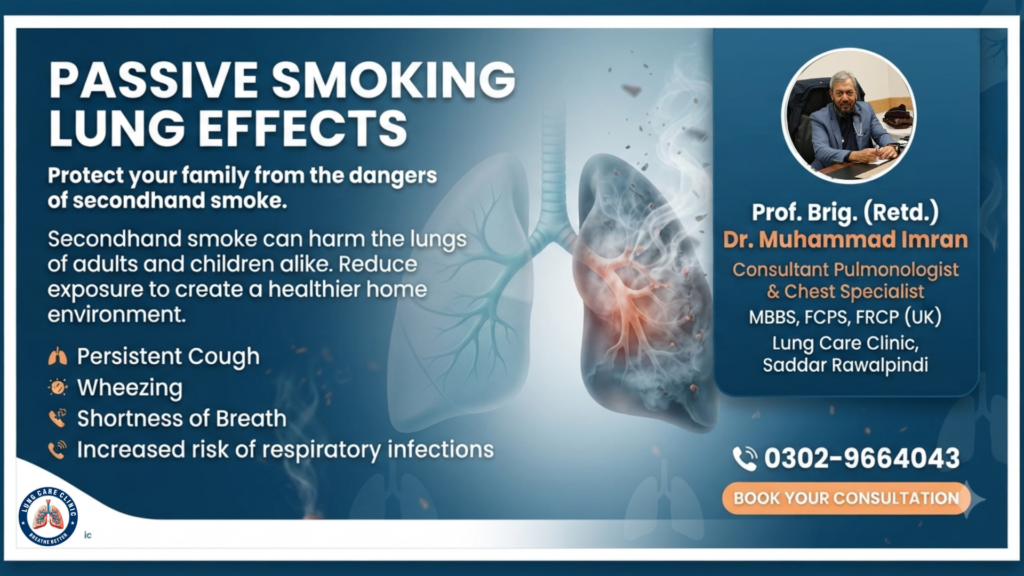
Passive smoking is a major public health concern that affects millions of people who do not smoke themselves. Many individuals believe that avoiding cigarettes is enough to protect their lungs, but regular exposure to secondhand smoke can also cause serious respiratory problems.
Understanding Passive Smoking Lung Effects is important because secondhand smoke contains thousands of harmful chemicals that can damage the lungs, increase the risk of chronic respiratory disease, and affect people of all ages. Children, pregnant women, older adults, and individuals with existing lung conditions are particularly vulnerable.
Even brief exposure to tobacco smoke indoors can affect your breathing, while long-term exposure may contribute to permanent lung damage.
What Is Passive Smoking?
Passive smoking, also known as secondhand smoke exposure, occurs when a person inhales smoke produced by someone else’s cigarette, cigar, or other tobacco product.
Secondhand smoke includes:
- Smoke exhaled by a smoker
- Smoke released directly from the burning tobacco product
Both forms contain harmful chemicals that remain suspended in the air and can easily be inhaled by nearby family members, friends, coworkers, and children.
What Is in Secondhand Smoke?
Secondhand smoke contains more than 7,000 chemicals, many of which are toxic.
These include:
- Carbon monoxide
- Formaldehyde
- Benzene
- Ammonia
- Hydrogen cyanide
- Fine particulate matter
- Numerous cancer-causing substances
These pollutants irritate the respiratory tract and can damage lung tissue even in people who have never smoked.
How Does Secondhand Smoke Affect the Lungs?
When smoke enters the lungs, harmful particles travel deep into the airways and air sacs.
Repeated exposure causes:
- Airway inflammation
- Increased mucus production
- Reduced lung function
- Narrowing of the breathing passages
- Increased susceptibility to respiratory infections
Over time, these changes may contribute to chronic respiratory disease.
Passive Smoking Lung Effects
The effects of passive smoking vary depending on the duration and intensity of exposure.
Common respiratory effects include:
Persistent Cough
One of the earliest symptoms is a cough that develops after repeated exposure to cigarette smoke.
Many individuals experience chronic throat irritation and coughing despite never smoking themselves.
Wheezing
Inflamed airways may produce a whistling sound during breathing.
Wheezing is especially common in people with asthma who are exposed to secondhand smoke.
Shortness of Breath
Airway inflammation and reduced lung function may cause breathlessness during walking, climbing stairs, or other daily activities.
Chest Tightness
Some individuals develop chest discomfort or tightness because smoke irritates the breathing passages.
Frequent Respiratory Infections
Exposure to tobacco smoke weakens the lungs’ natural defense mechanisms, increasing the risk of:
- Bronchitis
- Chest infections
- Pneumonia
- Viral respiratory illnesses
Who Is Most at Risk?
Although passive smoking affects everyone, certain groups are especially vulnerable.
These include:
- Infants
- Young children
- Pregnant women
- Older adults
- Individuals with asthma
- Patients with Chronic Obstructive Pulmonary Disease (COPD)
- People with chronic lung disease
- Individuals with weakened immune systems
Even low levels of smoke exposure may worsen respiratory symptoms in these groups.
Smoking Around Family: Hidden Dangers
Many smokers avoid smoking directly near children but continue smoking inside the home or in nearby rooms.
Unfortunately, smoke spreads throughout indoor spaces and remains in the air long after the cigarette has been extinguished.
Family members may continue inhaling harmful particles without realizing it.
Children living in smoking households are at greater risk of:
- Persistent cough
- Wheezing
- Ear infections
- Asthma attacks
- Reduced lung development
- Recurrent respiratory infections
Creating a smoke-free home is one of the most effective ways to protect family members from long-term respiratory harm.
Warning Signs You Should Not Ignore
Consult a pulmonologist if you develop:
- Persistent cough
- Recurrent wheezing
- Increasing shortness of breath
- Chest tightness
- Frequent chest infections
- Worsening asthma symptoms after smoke exposure
Early evaluation helps identify smoke-related respiratory problems before permanent lung damage occurs.
Secondhand Smoke Lung Damage
Long-term exposure to secondhand smoke can cause significant and sometimes irreversible lung damage. Even individuals who have never smoked may develop chronic respiratory diseases after years of regular exposure.
Repeated inhalation of tobacco smoke may contribute to:
- Chronic Obstructive Pulmonary Disease (COPD)
- Chronic bronchitis
- Reduced lung function
- Persistent airway inflammation
- Recurrent chest infections
- Worsening asthma
- Increased risk of lung cancer
The longer a person is exposed to secondhand smoke, the greater the potential impact on lung health.
How Passive Smoking Affects Children
Children are particularly vulnerable because their lungs are still developing.
Exposure to secondhand smoke during childhood may lead to:
- Frequent coughing
- Wheezing
- Asthma attacks
- Bronchiolitis
- Pneumonia
- Ear infections
- Slower lung growth
- Poor overall respiratory health
Infants exposed to cigarette smoke are also at a higher risk of serious respiratory illnesses compared with those living in smoke-free environments.
Effects on Older Adults and People with Existing Lung Disease
Older adults and individuals with asthma, Chronic Obstructive Pulmonary Disease (COPD), bronchiectasis, or other chronic lung conditions often experience more severe symptoms after secondhand smoke exposure.
Smoke may trigger:
- Increased breathlessness
- Persistent coughing
- Wheezing
- Frequent flare-ups of chronic lung disease
- Reduced response to treatment
Avoiding smoke exposure is an important part of managing chronic respiratory illnesses.
How Is Smoke-Related Lung Disease Diagnosed?
If your symptoms are linked to regular exposure to cigarette smoke, a pulmonologist may recommend further evaluation.
Investigations may include:
- Detailed medical history
- Physical examination
- Spirometry (Pulmonary Function Test)
- Chest X-ray
- High-Resolution CT (HRCT) Chest, when indicated
- Oxygen saturation assessment
- Blood tests
- Additional investigations depending on your symptoms
These assessments help identify whether secondhand smoke has contributed to asthma, COPD, chronic bronchitis, or another respiratory condition.
How to Protect Yourself and Your Family
The most effective way to prevent Passive Smoking Lung Effects is to eliminate exposure to secondhand smoke.
Helpful measures include:
- Keeping your home completely smoke-free
- Avoiding smoking inside vehicles
- Encouraging smokers to smoke only outdoors
- Staying away from enclosed areas where people smoke
- Supporting family members who wish to quit smoking
- Protecting children from exposure to tobacco smoke
- Seeking medical advice if respiratory symptoms develop
Creating a smoke-free environment benefits everyone, especially children and individuals with chronic lung disease.
When Should You Consult a Pulmonologist?
Arrange a respiratory evaluation if you experience:
- Persistent cough
- Wheezing
- Breathlessness
- Chest tightness
- Frequent chest infections
- Asthma symptoms that worsen around cigarette smoke
- Ongoing respiratory symptoms despite avoiding smoke exposure
Early diagnosis allows treatment to begin before long-term complications develop.
Passive Smoking Lung Effects are often underestimated, yet secondhand smoke can seriously harm the lungs of both adults and children. Regular exposure increases the risk of chronic cough, asthma, Chronic Obstructive Pulmonary Disease (COPD), recurrent respiratory infections, and other long-term lung diseases.
The best protection is a completely smoke-free environment. If you or a family member develops persistent respiratory symptoms after exposure to cigarette smoke, consult a pulmonologist for a comprehensive assessment and personalized treatment plan.
Prof. Brig. (Retd.) Dr. Muhammad Imran
Consultant Pulmonologist & Chest Specialist
Lung Care Clinic, Saddar Rawalpindi
0302-9664043