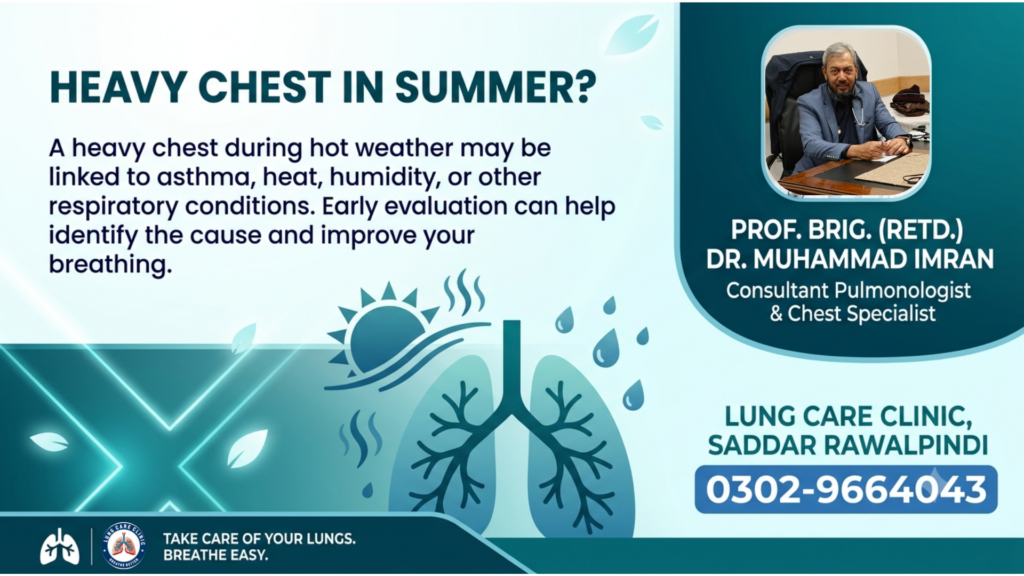
Heavy Chest in Summer is a common complaint, especially during periods of extreme heat and humidity. Many people notice that their chest feels tight, heavy, or uncomfortable when temperatures rise. While this sensation may sometimes result from temporary environmental factors, it can also be an early sign of an underlying respiratory condition that requires medical evaluation. Asthma, Chronic Obstructive Pulmonary Disease (COPD), allergies, respiratory infections, and poor air quality are among the most common reasons for experiencing Heavy Chest in Summer.
Understanding the causes, symptoms, and preventive measures can help protect your lungs and ensure timely treatment when needed.
What Does Heavy Chest in Summer Mean?
Heavy Chest in Summer describes a feeling of tightness, pressure, or discomfort in the chest that develops or worsens during hot weather. Some people describe it as difficulty taking a deep breath, while others feel as though something is pressing on their chest.
Heat alone may contribute to temporary discomfort, but persistent or recurring chest heaviness should never be ignored because it may indicate reduced airflow or another medical condition.
Common Causes of Heavy Chest in Summer
Several factors can contribute to Heavy Chest in Summer, and identifying the underlying cause is essential for effective treatment.
Asthma
Asthma is one of the leading causes of Heavy Chest in Summer. Hot air, increased humidity, dust, pollen, and air pollution can irritate sensitive airways, causing them to narrow.
People with asthma may experience:
- Chest tightness
- Wheezing
- Persistent cough
- Shortness of breath
- Difficulty breathing during outdoor activities
Without proper treatment, asthma symptoms may become more frequent during the summer months.
Chronic Obstructive Pulmonary Disease (COPD)
People living with COPD often find hot weather particularly challenging. High temperatures increase the body’s oxygen demand while making breathing more difficult.
Symptoms may include:
- Heavy feeling in the chest
- Increased breathlessness
- Fatigue
- Persistent cough
- Reduced physical endurance
Patients with COPD should take extra precautions during periods of extreme heat.
High Humidity
Humidity makes the air feel heavier because it contains more moisture. Humid air can increase the effort required to breathe, particularly in individuals with chronic lung diseases.
Many patients report worsening chest heaviness when both heat and humidity are present.
Poor Air Quality
During summer, pollution levels often rise due to increased sunlight, vehicle emissions, smoke, and dust. These airborne irritants can inflame the airways and contribute to Heavy Chest in Summer.
People with respiratory conditions are particularly sensitive to poor air quality.
Seasonal Allergies
Summer allergens such as pollen, grass, and mold spores can trigger inflammation of the airways. Allergic reactions may lead to chest tightness, coughing, sneezing, and breathing difficulties.
Respiratory Infections
Although respiratory infections are more common during colder seasons, bacterial and viral infections can also occur during summer. Chest infections may cause chest heaviness, cough, fever, and shortness of breath.
Symptoms That May Accompany Heavy Chest in Summer
Heavy Chest in Summer may occur alongside other respiratory symptoms, including:
- Shortness of breath
- Wheezing
- Persistent cough
- Difficulty taking deep breaths
- Chest discomfort
- Fatigue
- Reduced exercise tolerance
If these symptoms persist or worsen, professional evaluation is recommended.
Who Is Most at Risk?
Some individuals are more likely to experience Heavy Chest in Summer than others.
Higher-risk groups include:
- People with asthma
- Individuals with COPD
- Allergy sufferers
- Older adults
- Children
- Smokers
- People exposed to dust, smoke, or pollution
- Individuals with chronic lung disease
These individuals should pay close attention to changes in their breathing during hot weather.
How Can You Reduce Heavy Chest in Summer?
Several practical measures can help reduce symptoms and protect your lungs.
Stay Cool
Avoid prolonged exposure to direct sunlight during the hottest hours of the day. Use fans or air conditioning to maintain a comfortable indoor environment.
Stay Hydrated
Drinking enough water helps the body regulate temperature and supports normal respiratory function.
Monitor Air Quality
Limit outdoor activities when pollution levels or dust concentrations are high.
Continue Prescribed Medications
People with asthma or COPD should continue taking prescribed inhalers and medications exactly as directed by their physician.
Avoid Respiratory Irritants
Stay away from cigarette smoke, dust, strong perfumes, and other airborne irritants that may worsen chest tightness.
When Should You See a Pulmonologist?
Heavy Chest in Summer should not be dismissed if symptoms become frequent or interfere with daily life.
Consult a pulmonologist if you experience:
- Persistent chest heaviness
- Recurrent shortness of breath
- Wheezing
- Continuous coughing
- Difficulty performing routine activities
- Symptoms that worsen despite rest
- Chest tightness associated with fever or coughing up blood
Early diagnosis can help identify the underlying cause and prevent complications.
How Is the Cause Diagnosed?
A pulmonologist may recommend investigations based on your symptoms, including:
- Detailed clinical examination
- Chest X-ray
- Spirometry (lung function testing)
- Allergy assessment
- Additional laboratory or imaging tests when necessary
Accurate diagnosis allows treatment to be tailored to your specific respiratory condition.
Heavy Chest in Summer is more than a seasonal discomfort for many people. Heat, humidity, allergies, asthma, COPD, poor air quality, and respiratory infections can all contribute to chest heaviness and breathing difficulties. Recognizing the warning signs and seeking timely medical care can improve your breathing, reduce complications, and enhance your quality of life.
If you frequently experience Heavy Chest in Summer, chest tightness, wheezing, or shortness of breath, consult Prof. Brig. (Retd.) Dr. Muhammad Imran for a comprehensive respiratory evaluation and personalized treatment plan.
Prof. Brig. (Retd.) Dr. Muhammad Imran
Consultant Pulmonologist & Chest Specialist
Lung Care Clinic, Saddar Rawalpindi
0302-9664043