
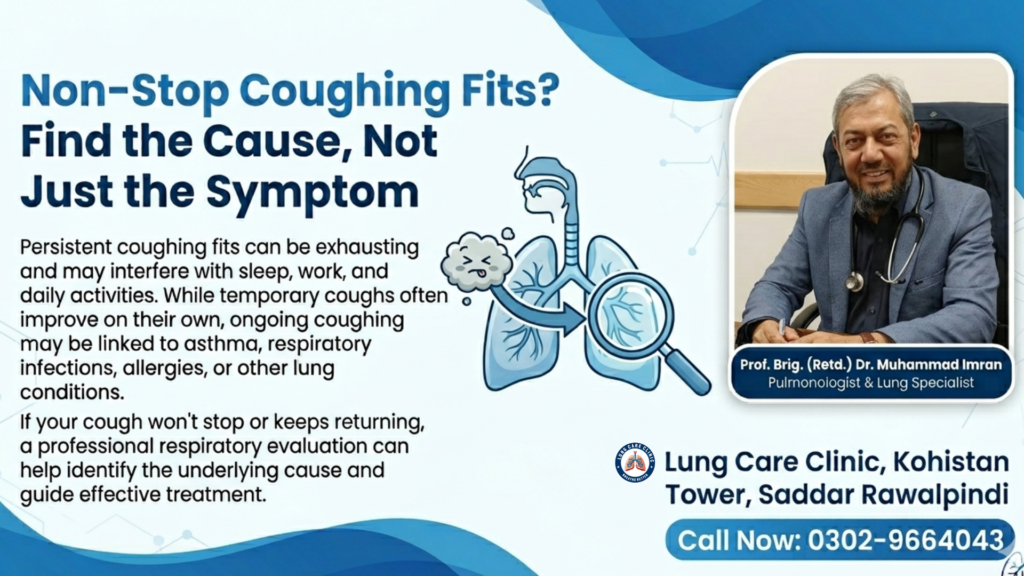
Non-stop coughing fits can be frustrating, exhausting, and sometimes alarming. A cough is the body’s natural way of clearing irritants, mucus, and foreign particles from the airways. However, when coughing becomes frequent or difficult to control, it may interfere with sleep, work, and daily activities.
Many people look for immediate relief when experiencing non-stop coughing fits. While some episodes improve with simple home measures, others may be a sign of an underlying respiratory condition that requires medical attention.
Understanding the causes of persistent coughing can help patients find the right treatment and protect their lung health.
What Are Non-Stop Coughing Fits?
Non-stop coughing fits refer to repeated coughing episodes that are difficult to control. These coughing spells may last for several minutes and can occur during the day or night.
In some cases, coughing fits may be accompanied by:
- Chest discomfort
- Wheezing
- Shortness of breath
- Throat irritation
- Excess mucus production
Therefore, identifying the underlying cause is important for effective relief.
Common Causes of Non-Stop Coughing Fits
Respiratory Infections
Viral infections such as the common cold, flu, and bronchitis are among the most common causes of persistent coughing.
Even after other symptoms improve, coughing may continue for several weeks because the airways remain irritated.
Asthma
Asthma frequently causes chronic coughing and coughing attacks.
Some patients experience cough-variant asthma, where coughing is the primary symptom rather than wheezing.
Therefore, recurring coughing fits may sometimes indicate uncontrolled asthma.
Allergies
Allergic reactions can irritate the airways and trigger persistent coughing.
Common triggers include:
- Dust mites
- Pollen
- Pet dander
- Mold
Reducing exposure to allergens may help improve symptoms.
Postnasal Drip
Excess mucus from the nose or sinuses can drip down the back of the throat.
As a result, throat irritation develops and may trigger repeated coughing.
Acid Reflux
Gastroesophageal reflux disease (GERD) can also cause chronic cough.
When stomach acid reaches the throat, it may irritate the airways and trigger coughing episodes.
How to Stop Non-Stop Coughing Fits Fast
Although treatment depends on the underlying cause, several measures may help provide temporary relief.
Stay Hydrated
Drinking water helps keep the throat moist and may reduce irritation.
Warm fluids may be particularly soothing.
Use Warm Steam
Steam inhalation may help loosen mucus and reduce airway irritation.
Many patients find temporary relief after a warm shower or steam treatment.
Avoid Airway Irritants
Smoke, strong perfumes, pollution, and dust may worsen coughing.
Therefore, avoiding triggers is important whenever possible.
Rest Your Voice
Frequent talking can sometimes worsen throat irritation and prolong coughing.
Giving the throat time to recover may help reduce symptoms.
Follow Prescribed Treatment
Patients with asthma or chronic respiratory conditions should continue taking medications exactly as prescribed.
When a Cough Becomes a Warning Sign
Not every cough is harmless.
Certain symptoms may indicate a more serious condition that requires medical evaluation.
Seek professional care if coughing is accompanied by:
- Shortness of breath
- Wheezing
- Chest pain
- Fever
- Blood in sputum
- Unexplained weight loss
- Persistent symptoms lasting several weeks
Therefore, ongoing coughing should never be ignored.
Conditions Commonly Linked to Chronic Cough
Several respiratory disorders may cause recurring coughing fits.
Asthma
Airway inflammation may trigger repeated coughing episodes.
Chronic Bronchitis
This condition causes long-term inflammation and mucus production.
COPD
Patients with COPD often experience chronic cough and breathing difficulty.
Respiratory Infections
Certain infections can cause prolonged coughing even after recovery begins.
Allergic Airway Disease
Chronic allergies may contribute to ongoing airway irritation and cough.
Identifying the exact cause helps guide appropriate treatment.
How Doctors Evaluate Persistent Cough
A pulmonologist may recommend several tests to determine the cause of chronic coughing.
These may include:
- Pulmonary Function Testing (PFT)
- Chest X-rays
- Oxygen level assessment
- Allergy evaluation
- Physical examination
These assessments help identify respiratory conditions and support accurate treatment planning.
How to Protect Your Respiratory Health
Several habits may help reduce the risk of chronic coughing.
Avoid Smoking
Smoking is a major cause of chronic respiratory disease.
Stay Hydrated
Adequate fluid intake supports healthy airway function.
Manage Allergies
Controlling environmental triggers may help reduce symptoms.
Seek Early Medical Care
Prompt evaluation often prevents symptoms from becoming more severe.
When to Visit a Pulmonologist
You should consult a pulmonologist if:
- Coughing fits occur frequently
- Symptoms disrupt sleep
- Breathing becomes difficult
- Cough lasts more than a few weeks
- Wheezing develops
Early diagnosis may improve outcomes and help prevent complications.
Expert Lung Care in Rawalpindi
People experiencing non-stop coughing fits, chronic cough, wheezing, or breathing difficulties should seek professional respiratory evaluation.
Consult Prof. Brig. (Retd.) Dr. Muhammad Imran
Pulmonologist & Lung Specialist
Lung Care Clinic, Kohistan Tower, Saddar Rawalpindi
0302-9664043
Non-stop coughing fits may be caused by respiratory infections, asthma, allergies, postnasal drip, or acid reflux. While simple home measures may provide temporary relief, persistent coughing should not be ignored.
Early diagnosis and appropriate treatment can help identify the underlying cause, improve breathing comfort, and protect long-term lung health. If coughing continues or worsens, professional respiratory evaluation is recommended.