Asthma can affect breathing in different ways. Some people experience occasional wheezing. Others develop coughing, chest tightness, or shortness of breath. In many cases, proper treatment can control these symptoms.
However, asthma can sometimes become severe.
During a serious asthma attack, the airways can narrow significantly. As a result, breathing may become increasingly difficult. Therefore, recognizing the emergency signs of an asthma attack is extremely important.
A person with asthma should know their usual symptoms and follow their prescribed asthma action plan. At the same time, family members should understand the warning signs of severe breathing difficulty.
Most importantly, do not delay emergency care when symptoms become severe or life-threatening.
What Happens During an Asthma Attack?
Asthma affects the airways that carry air into and out of the lungs.
During an asthma flare-up, the airway muscles can tighten. The airway lining can also become inflamed and swollen. In addition, mucus may increase inside the breathing passages.
Together, these changes can make it harder for air to move.
Consequently, a person may develop:
- Wheezing
- Coughing
- Chest tightness
- Shortness of breath
- Difficulty exercising
- Trouble sleeping because of breathing symptoms
Symptoms can vary from person to person.
Furthermore, an asthma attack can range from mild to severe. That is why knowing the difference between routine symptoms and an emergency matters.
Common Asthma Attack Warning Signs
An asthma flare-up may begin with symptoms that seem familiar.
For example, you may notice more frequent coughing or wheezing. You may also feel tighter in the chest than usual.
Other warning signs can include:
- Increasing shortness of breath
- More frequent use of a prescribed reliever inhaler
- Reduced ability to exercise
- Nighttime coughing or wheezing
- Difficulty performing normal activities
- Symptoms that do not improve as expected
These signs deserve attention.
If symptoms continue despite the treatment prescribed for your asthma, contact your healthcare provider for advice. Moreover, worsening symptoms may require urgent assessment.
Emergency Signs of Asthma Attack
Some symptoms indicate a much more serious situation.
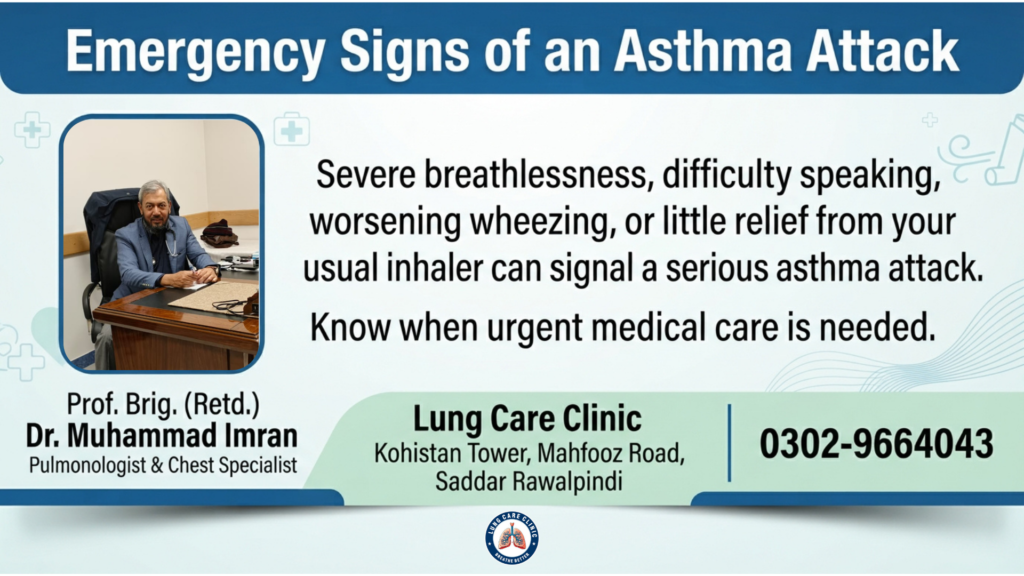
Emergency signs of an asthma attack can include severe difficulty breathing, inability to speak normally because of breathlessness, confusion, extreme exhaustion, or bluish discoloration around the lips or face.
A person may also appear to struggle with every breath.
In addition, the usual reliever medicine may provide little or no relief.
These are serious warning signs.
Therefore, do not wait for a routine appointment if someone is experiencing severe breathing difficulty. Seek emergency medical care immediately.
Difficulty Speaking Can Be a Serious Warning Sign
One important warning sign involves speech.
A person with mild asthma symptoms may usually speak normally. However, someone with severe breathing difficulty may struggle to complete a sentence.
For example, they may need to stop repeatedly to breathe.
This can indicate significant respiratory distress.
Therefore, difficulty speaking because of breathlessness should never be ignored.
If the person appears severely unwell, seek emergency medical assistance rather than attempting to manage the situation solely at home.
Severe Asthma Symptoms That Need Urgent Attention
Severe asthma symptoms can progress quickly.
Watch for:
- Severe breathlessness
- Very rapid or labored breathing
- Difficulty speaking because of breathlessness
- Marked exhaustion
- Confusion or unusual drowsiness
- Blue or gray lips or face
- Poor response to the prescribed reliever treatment
- Symptoms that continue to worsen
These symptoms require urgent medical attention.
Importantly, a person should not drive themselves if they are experiencing severe breathing difficulty. Instead, arrange appropriate emergency transportation or follow local emergency medical guidance.
What If the Inhaler Is Not Helping?
Many people with asthma use prescribed reliever medication during worsening symptoms.
If the medication does not provide the expected relief, the situation deserves attention.
Likewise, needing the reliever much more frequently than usual may indicate poor asthma control or an exacerbation.
Do not repeatedly increase medication beyond the instructions given by your doctor.
Instead, follow your written asthma action plan if you have one. If severe symptoms continue or worsen, seek urgent medical care.
When Should You Go to a Clinic?
Not every asthma symptom requires an emergency department.
However, you should arrange a specialist consultation when asthma symptoms repeatedly interfere with your daily life.
Consider an asthma specialist evaluation if:
- You frequently experience wheezing.
- Your cough keeps returning.
- You wake at night because of asthma symptoms.
- Exercise regularly triggers breathing problems.
- You frequently need your reliever inhaler.
- Your symptoms affect work or normal activities.
- Previous treatment does not control your symptoms.
- You have recently experienced a significant asthma flare-up.
A pulmonologist can review your symptoms and treatment plan.
As a result, specialist assessment may help identify factors contributing to poor asthma control.
When Is Emergency Care More Appropriate?
A routine clinic visit is different from an emergency situation.
If symptoms remain mild and controlled, you can usually discuss them during a scheduled appointment.
However, severe breathing difficulty requires immediate medical attention.
For example, if someone cannot speak normally because of breathlessness, becomes confused, develops blue or gray lips, or appears extremely exhausted, do not wait for a clinic appointment.
Instead, seek emergency medical care.
The priority during a severe attack is immediate stabilization and appropriate treatment.
Common Asthma Triggers
Asthma symptoms can worsen after exposure to certain triggers.
Common triggers include:
- Dust
- Smoke
- Air pollution
- Pollen
- Animal allergens
- Respiratory infections
- Cold air
- Exercise
- Strong odors
- Certain occupational exposures
- Stress in some individuals
However, triggers vary.
Therefore, identifying your personal triggers can form an important part of asthma management.
Keeping a record of symptoms can also help. Note when symptoms occur and what happened before the episode.
This information can help your doctor identify patterns.
Asthma and Seasonal Changes
Weather changes can affect some people with asthma.
For example, cold air may irritate sensitive airways. Likewise, seasonal pollen and other airborne allergens may trigger symptoms.
During certain seasons, some people notice more coughing, wheezing, or chest tightness.
Therefore, patients with seasonal symptoms should discuss prevention and treatment strategies with their healthcare provider.
An individualized plan can help patients understand how to respond when symptoms change.
Why Asthma Control Matters
Asthma management involves more than treating symptoms during an attack.
The goal is also to maintain good day-to-day control.
Good asthma management may involve prescribed controller medication, correct inhaler technique, trigger management, monitoring symptoms, and regular medical review.
Furthermore, patients should understand how and when to use each prescribed medicine.
Do not stop long-term asthma medication simply because you feel better unless your doctor advises you to do so.
Similarly, do not change your medication dose without professional guidance.
The Importance of an Asthma Action Plan
An asthma action plan provides clear instructions for managing asthma.
It can explain:
- Your regular medicines
- Your reliever medication
- Early warning symptoms
- What to do when symptoms worsen
- When to contact your doctor
- When to seek emergency care
This plan can make decision-making easier during a stressful situation.
Moreover, family members can become familiar with the plan.
That preparation can be especially useful if a severe attack occurs.
Inhaler Technique Also Matters
Incorrect inhaler technique can reduce the amount of medication reaching the airways.
Therefore, ask your doctor or healthcare professional to check your technique.
A patient may use the correct medicine but still receive less benefit if the device is not used correctly.
Depending on the inhaler, a spacer or other technique may also be appropriate.
Your healthcare provider can guide you based on the specific inhaler prescribed for you.
Asthma Specialist in Rawalpindi
Patients searching for an asthma specialist in Rawalpindi may want convenient access to experienced respiratory care.
Lung Care Clinic provides specialist pulmonology and chest care in Saddar, Rawalpindi.
Prof. Brig. (Retd.) Dr. Muhammad Imran, Pulmonologist & Chest Specialist, evaluates patients with asthma and other respiratory conditions.
During a consultation, the doctor may review your symptoms, medical history, current medicines, previous reports, and relevant investigations.
The doctor can then determine whether your asthma appears adequately controlled and whether your treatment requires further review.
Asthma Doctor in Saddar Rawalpindi
For patients looking for an asthma doctor in Saddar Rawalpindi, Lung Care Clinic is located at Kohistan Tower on Mahfooz Road, Military Hospital Road, opposite AFIC.
The central Saddar location provides access for patients from Rawalpindi and nearby areas.
The clinic also serves patients from Islamabad.
If your asthma symptoms repeatedly affect your daily routine, a specialist consultation can help you understand the next steps.
What Should You Bring to an Asthma Consultation?
Preparation can make your appointment more useful.
Bring your current inhalers and other respiratory medicines if possible.
You can also bring:
- Previous prescriptions
- Chest X-rays
- CT reports
- Spirometry or PFT reports
- Blood test reports
- Previous medical records
- Your asthma action plan
Also, make a note of your recent symptoms.
For example, record how often you experience wheezing or coughing. Note whether symptoms occur at night or during exercise.
This information can help your pulmonologist understand your asthma pattern.
How Is Asthma Evaluated?
Your doctor may start with a detailed history and physical examination.
Depending on your symptoms, the doctor may recommend lung function testing.
Spirometry can provide information about airflow and may form part of an asthma evaluation.
However, no single test provides the complete picture for every patient.
Therefore, the doctor may consider symptoms, examination findings, lung function, treatment response, and other relevant information together.
Can Asthma Be Managed Long Term?
Asthma is a chronic condition, but many people can manage it effectively with an appropriate treatment plan.
The right approach depends on the individual’s symptoms and clinical situation.
Regular follow-up can help assess control and identify changes.
Moreover, reviewing inhaler technique and medication use can improve the overall management process.
However, every patient’s asthma behaves differently.
Therefore, treatment should always follow professional medical advice.
Do Not Ignore Repeated Asthma Attacks
Repeated attacks may indicate that asthma is not adequately controlled.
If you frequently need urgent treatment, wake at night because of symptoms, or experience repeated flare-ups, arrange a medical review.
A pulmonologist can reassess your condition and identify possible reasons for poor control.
For example, incorrect inhaler technique, ongoing trigger exposure, an unsuitable treatment plan, or another respiratory problem may contribute to continuing symptoms.
Consequently, repeated attacks deserve proper evaluation.
What to Do During a Severe Asthma Attack
If someone develops severe asthma symptoms, follow their prescribed asthma action plan if available.
Help them use their prescribed reliever medication according to their plan or medical instructions.
Keep them calm and upright if possible.
Most importantly, seek emergency medical assistance when severe symptoms occur.
Do not rely on home treatment alone when the person has severe breathing difficulty, cannot speak normally, becomes confused, develops blue or gray lips, or does not respond adequately to prescribed rescue treatment.
Emergency care should take priority.
Knowing the emergency signs of an asthma attack can help patients and families respond more quickly when symptoms become serious.
Mild symptoms may require a routine asthma review. However, severe breathlessness, difficulty speaking, confusion, extreme exhaustion, blue or gray lips, or poor response to prescribed reliever treatment can signal a medical emergency.
Therefore, do not wait for a routine clinic appointment when severe symptoms develop.
For ongoing asthma symptoms, regular specialist care can help assess control and guide appropriate management.
If you are looking for an asthma specialist in Rawalpindi or an asthma doctor in Saddar, Lung Care Clinic provides specialist respiratory care under Prof. Brig. (Retd.) Dr. Muhammad Imran, Pulmonologist & Chest Specialist.
Lung Care Clinic
Kohistan Tower, Mahfooz Road, Military Hospital Rd, Opposite AFIC, Saddar, Rawalpindi
0302-9664043
Serving patients from Rawalpindi & Islamabad.
If asthma symptoms are repeatedly affecting your breathing or daily activities, contact Lung Care Clinic for a specialist consultation.
Important: This article is for general education and does not replace emergency medical care. If you or someone with asthma is experiencing severe breathing difficulty or other emergency symptoms, seek urgent medical assistance immediately.