
A cough is one of the body’s natural ways of clearing the airways. It can occur when dust, mucus, smoke, infection, or another irritant affects the respiratory system. In many cases, a short-term cough improves as the underlying problem settles.
However, some coughs continue for weeks. Others return repeatedly or become more severe over time. A persistent cough can interfere with sleep, work, exercise, and everyday activities.
Therefore, you should not always treat a long-lasting cough as a minor problem.
If your cough continues without a clear reason, a specialist assessment may help identify its cause. A pulmonologist focuses on conditions affecting the lungs and respiratory system. As a result, a pulmonologist can assess persistent cough along with symptoms such as wheezing, breathlessness, chest tightness, mucus production, or recurrent chest infections.
What Is a Persistent Cough?
The duration of a cough can provide useful information.
A cough that lasts only a few days often occurs with a common respiratory infection or temporary irritation. However, a cough that continues for several weeks deserves closer attention.
Doctors commonly describe a cough lasting more than eight weeks in adults as chronic cough. A cough lasting three to eight weeks often falls into the subacute category.
However, duration alone does not determine whether a cough requires specialist care.
For example, a person may develop concerning symptoms during a shorter illness. On the other hand, another person may have a mild cough that gradually improves.
Therefore, your symptoms, medical history, examination, and overall health all matter.
Common Causes of Persistent Cough
Persistent cough has many possible causes. The respiratory system may not always be the only source.
Common causes can include:
- Asthma
- Chronic obstructive pulmonary disease (COPD)
- Chronic bronchitis
- Previous respiratory infection
- Post-nasal drainage
- Gastroesophageal reflux
- Allergic airway irritation
- Smoking or secondhand smoke exposure
- Environmental pollutants
- Certain medications
- Other lung conditions
In some cases, more than one factor contributes to the cough.
For instance, a patient may have asthma and reflux at the same time. Consequently, treating only one factor may not completely resolve the cough.
This is why a proper chronic cough evaluation matters.
When Should You See a Pulmonologist?
You should consider seeing a pulmonologist when a cough does not improve as expected or keeps returning.
A specialist evaluation becomes particularly useful when the cough occurs alongside other respiratory symptoms.
These symptoms may include:
- Shortness of breath
- Wheezing
- Chest tightness
- Persistent mucus
- Repeated chest infections
- Reduced exercise tolerance
- Chest discomfort
- Coughing that disrupts sleep
- Cough that repeatedly returns
Furthermore, people with a history of smoking, occupational dust exposure, chronic lung disease, or previous serious respiratory illness may benefit from specialist assessment.
A pulmonologist can review the complete clinical picture instead of focusing on the cough alone.
Warning Signs That Need Prompt Attention
Some symptoms require more urgent medical assessment.
Seek prompt medical care if a persistent cough occurs with:
- Coughing up blood
- Significant breathing difficulty
- Severe or worsening chest pain
- Bluish lips or skin
- Confusion or unusual drowsiness
- Very high or persistent fever
- Rapid deterioration
- Severe weakness
These symptoms can occur with several serious conditions. Therefore, you should not delay medical evaluation when they appear.
How Does a Pulmonologist Evaluate a Chronic Cough?
A chronic cough doctor in Rawalpindi may begin with a detailed medical history.
The doctor may ask:
- When did the cough begin?
- Is it dry or productive?
- How often does it occur?
- Does it worsen at night?
- Does exercise trigger it?
- Are you exposed to smoke or dust?
- Do you experience wheezing?
- Have you recently had an infection?
- Do you have heartburn or reflux symptoms?
- Are you taking regular medications?
- Have you experienced weight loss, fever, or night sweats?
The doctor may then perform a physical examination.
Afterward, the specialist can decide whether additional investigations would help.
Tests for Persistent Cough
The appropriate test depends on the suspected cause.
A doctor may consider investigations such as chest X-ray, pulmonary function testing, spirometry, blood tests, allergy assessment, or other respiratory investigations.
In selected cases, the doctor may recommend CT imaging or bronchoscopy when the clinical situation requires further evaluation.
However, not every patient needs every test.
For example, a person with symptoms strongly suggesting asthma may need lung function assessment. Another patient with abnormal imaging may require a different diagnostic approach.
Therefore, testing should follow the clinical findings rather than a fixed checklist.
Persistent Cough and Asthma
Asthma can cause cough, wheezing, chest tightness, and breathing difficulty.
Some people mainly experience coughing rather than obvious wheezing. This pattern can make asthma harder to recognize.
Symptoms may become worse at night, during exercise, after exposure to allergens, or during changes in weather.
A pulmonologist can assess the pattern and determine whether further testing can support an asthma diagnosis.
If asthma contributes to the cough, treatment focuses on controlling airway inflammation and reducing symptoms.
Importantly, patients should follow the prescribed treatment plan rather than changing inhalers or medications without medical advice.
Persistent Cough and COPD
COPD can also cause long-lasting cough and mucus production.
People with COPD may gradually develop breathlessness and reduced exercise tolerance. Smoking remains an important risk factor, although other long-term exposures can contribute as well.
A chronic cough should not automatically be labeled as COPD.
Instead, a pulmonologist can consider the patient’s symptoms, exposure history, examination findings, and lung function.
Early assessment can help identify respiratory problems and establish appropriate management.
Cough After a Chest Infection
A cough can continue after a respiratory infection has improved.
This can happen because the airways may remain irritated for some time. In some people, the cough gradually settles without additional treatment.
However, the situation deserves reassessment if the cough becomes worse, returns after improvement, or occurs with fever, breathlessness, chest pain, or coughing blood.
A persistent cough following an infection may have several possible explanations. Therefore, specialist assessment can help determine whether the cough represents normal recovery or another condition.
Smoking, Dust, and Air Pollution
Environmental exposure can contribute to ongoing cough.
Cigarette smoke can irritate the airways and contribute to chronic respiratory disease. Likewise, workplace dust, fumes, and other airborne irritants can affect respiratory health.
Air pollution may also aggravate respiratory symptoms in susceptible individuals.
If your work or living environment exposes you to dust or fumes, tell your doctor.
Moreover, reducing exposure can form an important part of respiratory care.
People who smoke should also discuss smoking cessation with their healthcare provider. Stopping smoking can provide important long-term health benefits.
Why a Cough Specialist May Help
A general medical evaluation can identify many common causes of cough. However, persistent or complicated respiratory symptoms may require a more focused assessment.
A pulmonologist has specific expertise in lung and airway conditions.
Therefore, a cough specialist can assess whether the symptoms relate to asthma, COPD, infection, airway inflammation, environmental exposure, or another respiratory problem.
The goal is not simply to suppress the cough.
Instead, the goal is to understand why the cough developed and address the underlying cause when possible.
Why You Should Avoid Self-Medicating for a Long-Lasting Cough
Many people try cough syrups, antibiotics, inhalers, or other medicines without professional guidance.
However, the correct treatment depends on the cause.
Antibiotics, for example, do not treat every cough because many respiratory illnesses do not result from bacterial infections.
Similarly, an inhaler may help some conditions but may not be appropriate for every patient.
Therefore, repeated self-medication can delay the correct diagnosis.
If your cough continues or repeatedly returns, specialist assessment can provide a more appropriate direction.
What Should You Bring to Your Appointment?
Preparing for your consultation can make the evaluation more useful.
Bring previous medical reports, chest X-rays, CT scans, prescriptions, and laboratory results if available.
Also, make a note of:
- How long you have had the cough
- Whether it produces mucus
- Possible triggers
- Medicines you currently take
- Previous respiratory infections
- Smoking or environmental exposure
- Other symptoms
This information can help the pulmonologist understand the pattern of your cough.
Finding a Cough Specialist in Saddar Rawalpindi
Patients searching for a cough specialist in Saddar often want convenient access to experienced respiratory care.
Lung Care Clinic is located at Kohistan Tower on Mahfooz Road, Military Hospital Road, opposite AFIC in Saddar, Rawalpindi.
The clinic provides specialist respiratory evaluation for patients with persistent cough, breathing difficulties, asthma, COPD, and other lung-related concerns.
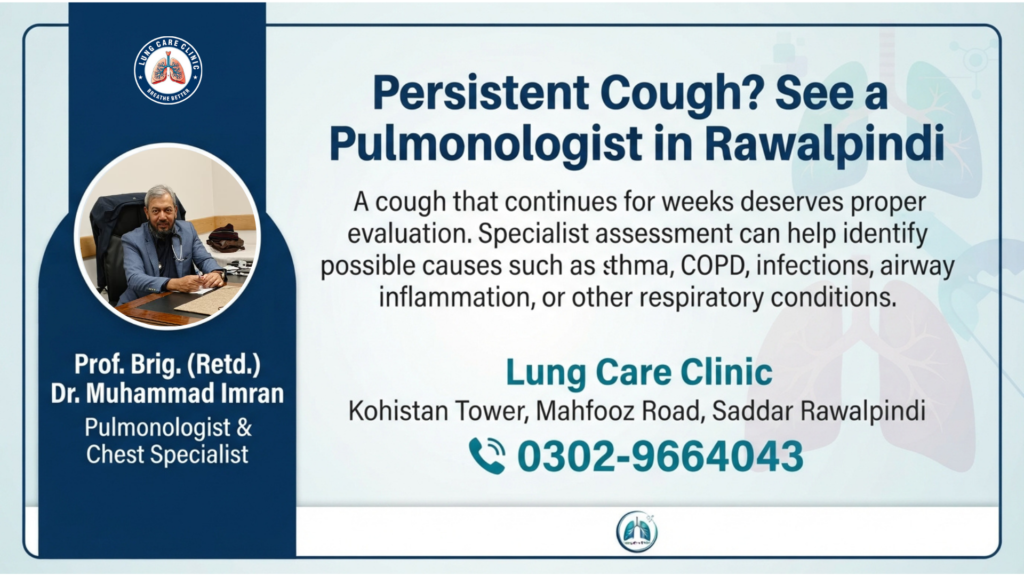
Prof. Brig. (Retd.) Dr. Muhammad Imran, Pulmonologist & Chest Specialist, evaluates patients based on their symptoms, medical history, examination, and relevant investigations.
The clinic also serves patients traveling from Islamabad and nearby areas.
When Should You Not Wait?
Do not ignore a cough that keeps worsening.
Likewise, seek timely assessment if the cough repeatedly returns or begins affecting your ability to sleep, walk, exercise, or work.
You should also discuss persistent cough with a specialist if you have a history of smoking, chronic lung disease, significant occupational exposure, or abnormal previous chest imaging.
Most importantly, seek urgent medical attention when coughing blood, severe breathlessness, significant chest pain, or other serious symptoms occur.
A persistent cough can have many causes. Some are minor and temporary. Others require proper investigation and long-term management.
Therefore, the duration and pattern of your cough matter.
If a cough continues for weeks, repeatedly returns, or occurs with breathing difficulties, wheezing, chest tightness, mucus, or other symptoms, consider specialist evaluation.
A pulmonologist for persistent cough in Rawalpindi can assess the respiratory system, review your medical history, and determine whether further testing is appropriate.
At Lung Care Clinic, specialist respiratory care focuses on understanding the underlying cause rather than simply treating the symptom.
Prof. Brig. (Retd.) Dr. Muhammad Imran
Pulmonologist & Chest Specialist
Lung Care Clinic
Kohistan Tower, Mahfooz Road, Saddar, Rawalpindi
0302-9664043
Serving patients from Rawalpindi & Islamabad.
If you have a persistent cough or another respiratory concern, contact Lung Care Clinic for specialist evaluation.