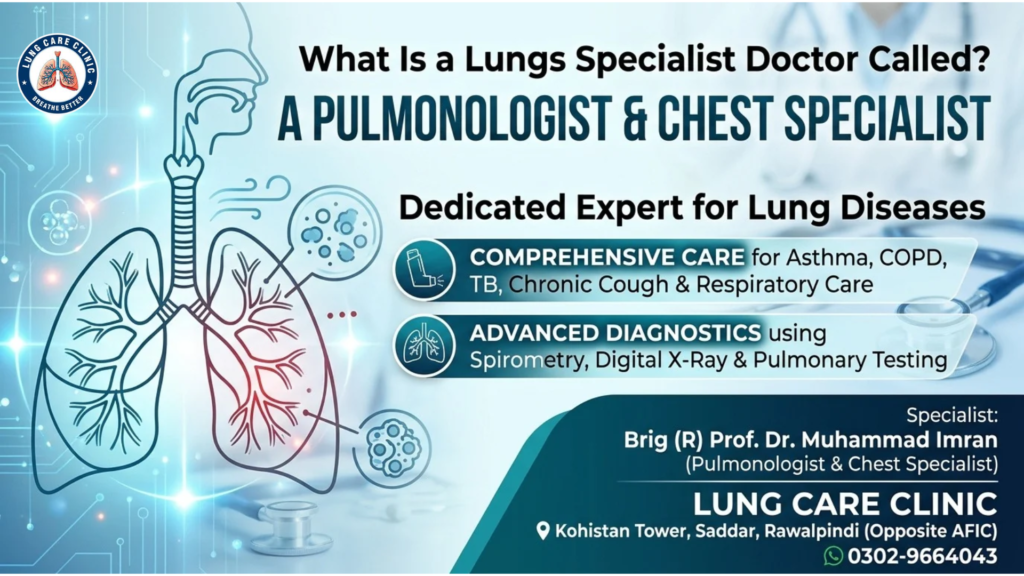
Understanding medical terminology helps patients find the right care quickly. When individuals experience persistent coughing, shortness of breath, or chest discomfort, they often ask: what is a lungs specialist doctor called? Knowing the exact title of a lung specialist ensures you consult the correct medical consultant for respiratory health concerns.
A specialist who diagnoses and treats conditions of the respiratory system is called a pulmonologist or a chest specialist. These medical experts undergo extensive training to manage complex lung diseases, airway disorders, and breathing difficulties.
What Is a Lungs Specialist Doctor Called?
A lungs specialist doctor is medically referred to as a pulmonologist or a chest specialist. The branch of medicine dedicated to the respiratory system is known as pulmonology.
Pulmonology focuses on the anatomy, physiology, and pathology of the lungs, bronchial tubes, trachea, and pleura.
Key designations for a respiratory specialist include:
- Pulmonologist: A physician specialized in diagnosing and treating diseases of the lungs and lower respiratory tract.
- Chest Specialist: A broader professional term commonly used for consultants managing lung conditions and thoracic health.
- Pulmonary Disease Specialist: A medical consultant focusing on acute and chronic pulmonary disorders.
- Respirologist: A terminology used in certain healthcare systems to describe a lung doctor.
What Does a Pulmonologist Do?
A lungs specialist doctor evaluates how well your lungs function, identifies structural or infectious abnormalities, and provides targeted treatments.
Primary clinical responsibilities include:
- Diagnosing Airway Diseases: Identifying asthma, chronic obstructive pulmonary disease (COPD), and chronic bronchitis.
- Managing Pulmonary Infections: Treating pneumonia, pulmonary tuberculosis (TB), and complex lung abscesses.
- Evaluating Chronic Symptoms: Investigating lingering coughs, unexplained shortness of breath, and chest pain.
- Reviewing Advanced Imaging: Interpreting digital chest X-rays, high-resolution CT scans (HRCT), and lung ultrasounds.
- Performing Diagnostic Procedures: Conducting spirometry tests, peak flow measurements, and diagnostic bronchoscopy.
Common Conditions Treated by a Lung Specialist
A lungs specialist doctor manages a wide array of acute and chronic respiratory disorders.
Asthma and Allergic Airway Diseases
Asthma causes chronic inflammation of the bronchial tubes, leading to wheezing, chest tightness, and sudden coughing fits. A pulmonologist prescribes long-term controller inhalers and designs personalized management plans.
Chronic Obstructive Pulmonary Disease (COPD)
COPD includes chronic bronchitis and emphysema, primarily caused by smoking or long-term pollutant exposure. Chest specialists provide medical therapy to slow disease progression and improve daily breathing capacity.
Pulmonary Tuberculosis (TB)
Tuberculosis is a contagious bacterial infection affecting lung tissue. Pulmonologists supervise complete anti-TB treatment regimens to eradicate the infection completely.
Interstitial Lung Disease (ILD) & Pulmonary Fibrosis
ILD involves progressive inflammation and scarring of lung tissue. Pulmonologists utilize specialized therapies to manage tissue stiffness and maintain oxygen levels.
Chronic Cough & Respiratory Infections
Unresolved coughs lasting several weeks require specialist evaluation to identify hidden triggers such as post-nasal drip, bronchial hyperreactivity, or deep lung infections.
Diagnostic Tests Performed by a Pulmonologist
Visiting a lungs specialist doctor involves specific diagnostic evaluations designed to measure lung capacity and visualize respiratory structures.
Standard diagnostic tests include:
- Spirometry & Pulmonary Function Tests (PFT): Measures how much air your lungs can hold and how quickly you can exhale.
- Digital Chest X-Ray: Provides a clear image of lung fields, heart borders, and pleural spaces.
- High-Resolution CT Scan (HRCT): Delivers cross-sectional views of lung tissue to detect early fibrosis or subtle nodules.
- Sputum Culture & GeneXpert: Analyzes expectorated phlegm to detect bacterial strains, fungal growth, or tuberculosis.
- Diagnostic Bronchoscopy: Utilizes a thin, flexible camera to inspect bronchial passages directly and obtain tissue samples.
When Should You See a Lungs Specialist Doctor?
Knowing when to consult a lungs specialist doctor prevents mild respiratory issues from developing into severe medical emergencies.
Seek a specialist consultation if you experience:
- Persistent cough lasting longer than 3 to 4 weeks.
- Unexplained shortness of breath during light physical activity.
- Recurrent chest tightness or wheezing sounds while breathing.
- Coughing up blood or blood-stained phlegm.
- Frequent respiratory infections, such as bronchitis or pneumonia.
- Chronic fatigue accompanied by unexplained weight loss.
Why Choose Lung Care Clinic in Saddar, Rawalpindi?
When searching for an experienced lungs specialist doctor, consulting a dedicated specialist ensures accurate diagnosis and effective management. Located conveniently at Kohistan Tower in Saddar, Rawalpindi (Opposite AFIC), Lung Care Clinic offers complete pulmonary evaluation and care.
Brig (R) Prof. Dr. Muhammad Imran, a senior pulmonologist and chest specialist with extensive medical experience, provides personalized consultant care. He conducts detailed clinical reviews, performs advanced respiratory assessments, and tailors treatment plans for long-term health.
Frequently Asked Questions
What is the difference between a pulmonologist and a cardiologist?
A pulmonologist is a lungs specialist doctor who focuses on breathing and respiratory diseases. A cardiologist specializes in heart conditions and circulatory health.
Do I need a doctor’s referral to visit a chest specialist?
You can book a direct consultation with a pulmonologist if you experience persistent respiratory symptoms or require specialist opinion.
Is spirometry painful?
No. Spirometry is a simple, non-invasive breathing test that measures how much air you inhale and exhale into a specialized device.
For professional lung evaluations, digital chest imaging reviews, and expert respiratory treatment plans, visit Lung Care Clinic at Kohistan Tower, Saddar, Rawalpindi (Opposite AFIC), or call 0302-9664043.