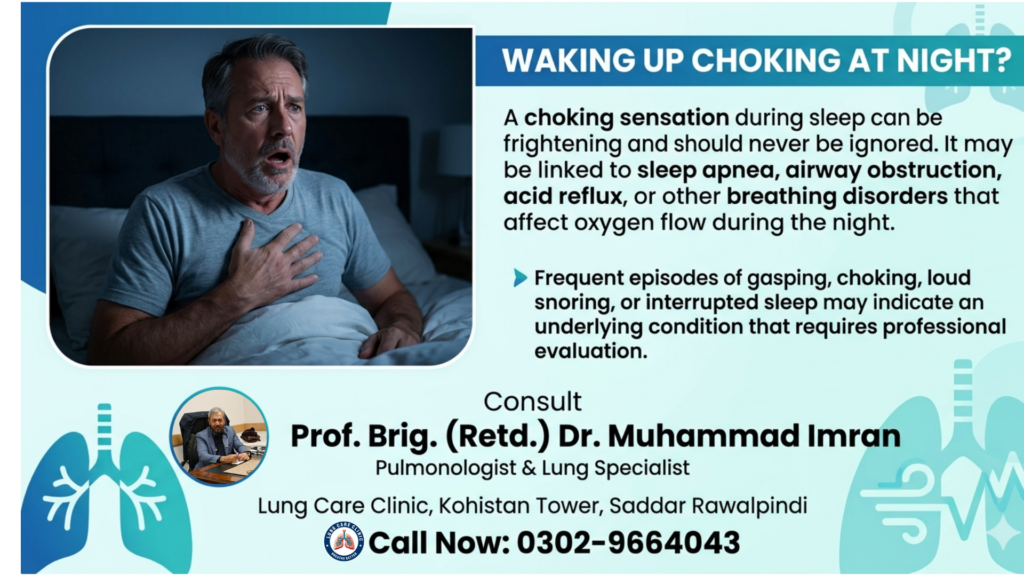
A choking sensation at night can be frightening and may leave a person suddenly awake, gasping for air. While occasional sleep disturbances can occur for many reasons, repeated episodes of choking or breathing difficulty during sleep should never be ignored.
Many people assume these symptoms are harmless. However, a choking sensation during sleep may sometimes indicate an underlying medical condition such as sleep apnea, acid reflux, or another respiratory disorder.
Understanding the possible causes can help individuals seek timely diagnosis and appropriate treatment.
What Does a Choking Sensation at Night Mean?
A choking sensation at night refers to the feeling of being unable to breathe properly while sleeping. Some people wake up suddenly with a sensation of suffocation, gasping, or airway blockage.
These episodes may occur occasionally or repeatedly throughout the night.
Common symptoms may include:
- Waking up gasping for air
- Sudden shortness of breath during sleep
- Loud snoring
- Interrupted sleep
- Restlessness
- Daytime fatigue
Therefore, recurring symptoms should be evaluated by a healthcare professional.
Common Causes of Choking Sensation at Night
Obstructive Sleep Apnea
Obstructive sleep apnea is one of the most common causes of a choking sensation at night.
This condition occurs when the upper airway becomes partially or completely blocked during sleep.
As a result, breathing temporarily stops and oxygen levels may drop.
Common signs include:
- Loud snoring
- Gasping during sleep
- Morning headaches
- Excessive daytime sleepiness
- Poor concentration
Therefore, sleep apnea is often the first condition considered when patients report nighttime choking episodes.
Gastroesophageal Reflux Disease (GERD)
Acid reflux may also contribute to nighttime choking sensations.
When stomach acid moves upward into the throat, it can irritate the airway and trigger coughing or choking episodes.
Symptoms may include:
- Heartburn
- Sour taste in the mouth
- Chronic cough
- Throat irritation
Nighttime reflux often becomes worse when lying flat.
Asthma
Poorly controlled asthma may contribute to breathing difficulties during sleep.
Airway inflammation and narrowing may worsen at night, causing coughing, wheezing, and a feeling of choking.
Therefore, nighttime respiratory symptoms should always be assessed carefully.
Allergies and Nasal Congestion
Allergic reactions and chronic nasal blockage can interfere with normal airflow during sleep.
As a result, breathing may become more difficult, particularly when lying down.
Persistent congestion can also worsen snoring and sleep quality.
Why a Choking Sensation at Night Can Be Dangerous
Repeated breathing interruptions during sleep can affect overall health.
Potential complications may include:
Poor Sleep Quality
Interrupted sleep prevents the body from reaching restorative sleep stages.
As a result, individuals may wake up feeling tired despite spending enough time in bed.
Daytime Fatigue
Sleep disruption often leads to excessive daytime sleepiness and reduced productivity.
Reduced Oxygen Levels
Conditions such as sleep apnea can cause repeated drops in oxygen levels during sleep.
Over time, this may place additional strain on the body.
Increased Health Risks
Untreated sleep-disordered breathing has been associated with cardiovascular and metabolic health concerns.
Therefore, recurring nighttime choking should not be dismissed as a minor issue.
Warning Signs You Should Not Ignore
Certain symptoms suggest the need for professional evaluation.
Seek medical attention if you experience:
- Frequent choking episodes during sleep
- Loud snoring
- Waking up gasping for air
- Morning headaches
- Excessive daytime sleepiness
- Difficulty concentrating
- Witnessed pauses in breathing during sleep
Early assessment may help prevent complications and improve quality of life.
How Doctors Diagnose Nighttime Breathing Problems
A pulmonologist may recommend several assessments to determine the cause.
These may include:
Sleep Evaluation
A sleep study can help identify sleep apnea and other sleep-related breathing disorders.
Pulmonary Function Testing (PFT)
This test evaluates lung function and airflow.
Oxygen Assessment
Monitoring oxygen levels may reveal nighttime breathing disturbances.
Medical History and Examination
A detailed evaluation helps identify contributing factors such as asthma, allergies, or reflux disease.
How to Reduce Nighttime Breathing Problems
Several lifestyle measures may help improve symptoms.
Maintain a Healthy Weight
Excess weight is a common risk factor for sleep apnea.
Sleep on Your Side
Some individuals experience fewer breathing interruptions when sleeping on their side.
Avoid Smoking
Smoking can increase airway inflammation and worsen breathing difficulties.
Manage Acid Reflux
Avoiding heavy meals close to bedtime may help reduce reflux-related symptoms.
Seek Early Medical Care
Persistent symptoms should always be evaluated by a respiratory specialist.
When to Visit a Pulmonologist
You should consult a pulmonologist if:
- Choking sensations occur repeatedly
- Snoring becomes severe
- Daytime fatigue affects daily life
- Breathing problems disrupt sleep
- You frequently wake up gasping for air
Early diagnosis can help improve sleep quality and overall health.
Expert Sleep and Lung Care in Rawalpindi
People experiencing a choking sensation at night, sleep apnea symptoms, loud snoring, or nighttime breathing difficulties should seek professional respiratory evaluation.
Consult Prof. Brig. (Retd.) Dr. Muhammad Imran
Pulmonologist & Lung Specialist
Lung Care Clinic, Kohistan Tower, Saddar Rawalpindi
0302-9664043
A choking sensation at night may be caused by sleep apnea, acid reflux, asthma, allergies, or other breathing disorders. While occasional episodes may seem minor, recurring symptoms should never be ignored.