Nighttime Shortness of Breath Rawalpindi can be uncomfortable, frightening, and disruptive to sleep. Some people notice breathing difficulty after lying down, while others wake up gasping for air. These symptoms can have several possible causes, so recurring nighttime breathing problems deserve proper medical evaluation.
Breathing difficulty at night may occur because of asthma, COPD, sleep-related breathing disorders, respiratory infections, heart-related conditions, allergies, or other health problems. Therefore, understanding the pattern of symptoms can help guide the right medical evaluation.
If you experience repeated nighttime breathlessness in Rawalpindi, a pulmonologist can review your symptoms, medical history, medications, and previous reports. The doctor can then determine whether further testing or specialist treatment may be appropriate.
Nighttime Shortness of Breath Rawalpindi – What Does It Mean?
Nighttime shortness of breath refers to difficulty breathing during sleep or around bedtime. It may occur when you first lie down, during the night, or when you wake up.
People may describe the sensation differently. You may feel that:
- You cannot take a deep enough breath
- You wake up gasping for air
- Your chest feels tight
- You need to sit upright to breathe comfortably
- You are breathing faster than usual
- You feel breathless after lying down
- You wake repeatedly because of breathing difficulty
The pattern matters because different conditions can cause similar symptoms.
Common Causes of Nighttime Breathing Problems
Several conditions may contribute to nighttime breathlessness. The cause is not always the same for every patient.
Asthma
Asthma can cause wheezing, coughing, chest tightness, and shortness of breath. Some patients experience more symptoms during the night.
Triggers may include dust, smoke, allergens, cold air, respiratory infections, and other individual factors.
Nighttime coughing or wheezing can therefore be a reason to discuss asthma control with a pulmonologist.
COPD
COPD can cause persistent cough, mucus production, wheezing, and breathlessness. Some patients notice greater difficulty breathing at night.
If you already have COPD and your nighttime symptoms are becoming worse, a medical review can help determine whether your treatment requires adjustment.
Sleep-Related Breathing Disorders
Sleep can change normal breathing patterns. Obstructive sleep apnea is one important example.
During sleep, the upper airway can repeatedly become narrowed or blocked. A person may then wake up gasping for air or choking.
Loud snoring, witnessed pauses in breathing, morning headaches, and excessive daytime sleepiness can also occur.
A doctor may recommend a sleep assessment or sleep study when these symptoms suggest a sleep-related breathing disorder.
Heart-Related Conditions
Breathlessness at night does not always originate from the lungs. Some heart conditions can also cause breathing difficulty, especially when lying down.
Some people may wake during the night feeling short of breath and find relief after sitting upright.
Because heart and lung conditions can produce similar symptoms, appropriate medical assessment is important.
Respiratory Infections
Chest infections can cause cough, fever, mucus, chest discomfort, and breathing difficulty.
Inflammation in the airways or lungs can make breathing more difficult. Coughing and congestion can also disturb sleep.
If symptoms are severe, persistent, or worsening, seek appropriate medical evaluation.
Allergies and Airway Irritation
Dust, smoke, strong fragrances, chemical fumes, and other airborne irritants can affect sensitive airways.
Bedroom exposure can be particularly relevant because you may spend several continuous hours in the same environment.
If symptoms repeatedly occur in a particular room or after exposure to a specific substance, mention this pattern during your consultation.
Anxiety and Panic Episodes
Anxiety can cause a sensation of breathlessness or air hunger. Rapid breathing and chest tightness may also occur.
However, recurring breathing difficulty should not automatically be blamed on anxiety. Lung and heart conditions can produce similar sensations.
For this reason, unexplained or persistent symptoms deserve proper assessment.
Why Do I Wake Up Gasping for Air?
Waking up gasping for air can have different causes. Sleep apnea is one possibility, especially when gasping occurs repeatedly with loud snoring or witnessed pauses in breathing.
Asthma, COPD, nasal obstruction, respiratory infections, and other conditions can also affect nighttime breathing.
Heart-related problems may contribute as well, particularly when breathlessness becomes worse while lying down.
Your doctor may ask whether you snore, cough, wheeze, wake suddenly, or feel better after sitting upright. These details can help guide the evaluation.
When Should You See a Pulmonologist for Nighttime Shortness of Breath Rawalpindi?
Consider a specialist respiratory evaluation if nighttime shortness of breath keeps returning or interferes with your sleep.
You should especially discuss your symptoms with a doctor if you also experience:
- Persistent cough
- Wheezing
- Chest tightness
- Recurrent chest infections
- Daytime breathlessness
- Reduced exercise tolerance
- Loud snoring
- Repeated nighttime awakenings
- Morning headaches
- Excessive daytime sleepiness
- Known asthma or COPD
- A history of significant smoking
- Previous abnormal chest imaging
A pulmonologist can determine whether lung function testing, chest imaging, sleep assessment, or another investigation may be appropriate.
How Is Nocturnal Dyspnea Treated?
Treatment depends on the underlying cause. There is no single treatment for nocturnal dyspnea.
Asthma treatment may include prescribed inhaled medicines and trigger management. COPD care may include prescribed inhalers, smoking cessation support, pulmonary rehabilitation, vaccination, and other measures when appropriate.
Sleep apnea requires a different approach. Depending on the diagnosis, treatment may include positive airway pressure therapy, oral appliances, lifestyle measures, or other interventions.
Respiratory infections require treatment according to their likely cause and severity. Antibiotics are not appropriate for every respiratory infection.
When heart disease contributes to nighttime breathlessness, appropriate cardiac assessment may also be required.
Therefore, identifying the underlying cause is an important part of treatment.
What Tests May Be Needed?
Your doctor will select tests according to your symptoms and examination.
Possible investigations include:
Spirometry
Spirometry measures airflow and can help evaluate conditions such as asthma and COPD.
Pulmonary Function Tests
Additional pulmonary function tests can provide information about lung volumes and gas exchange when required.
Chest Imaging
A chest X-ray or CT scan may be recommended when clinical findings indicate that imaging could provide useful information.
Oxygen Assessment
Oxygen saturation may be checked when appropriate. Additional testing may sometimes be required to assess oxygen levels more fully.
Sleep Assessment
A sleep study may be recommended when symptoms suggest sleep apnea or another sleep-related breathing disorder.
Not every patient needs all of these tests.
What Can You Do Before Your Appointment?
Keep a record of your nighttime symptoms before visiting a specialist.
Write down:
- When the problem started
- How often it happens
- Whether you wake up gasping for air
- Whether you snore
- Whether you cough or wheeze
- Whether sitting upright helps
- Whether dust or smoke triggers symptoms
- Which medicines or inhalers you use
- Previous lung or heart diagnoses
Also bring previous medical reports, chest imaging, prescriptions, and lung function reports if available.
When Is Nighttime Breathlessness an Emergency?
Severe breathing difficulty requires urgent medical attention.
Seek emergency care if breathing becomes severely difficult or if it occurs with severe chest pain, fainting, confusion, blue or grey lips, or rapidly worsening symptoms.
Significant coughing of blood also requires prompt medical assessment.
Do not wait for a routine pulmonology appointment when symptoms appear life-threatening.
Nighttime Shortness of Breath Rawalpindi: Specialist Evaluation
If you repeatedly experience Nighttime Shortness of Breath Rawalpindi, specialist evaluation can help determine the possible cause.
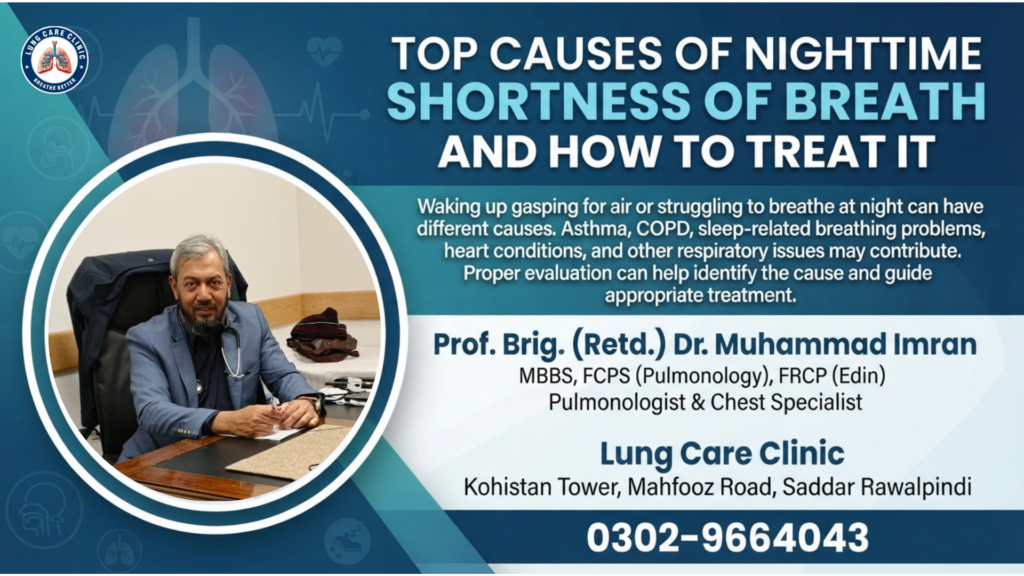
At Lung Care Clinic, Prof. Brig. (Retd.) Dr. Muhammad Imran, Pulmonologist & Chest Specialist, provides respiratory assessment for patients with breathing difficulties, chronic cough, asthma, COPD, and other lung-related concerns.
The consultation may include a review of symptoms, medical history, previous reports, medications, and relevant investigations.
Patients from Rawalpindi and Islamabad can visit the clinic for specialist respiratory care.
Nighttime shortness of breath should not always be considered a normal part of poor sleep. Asthma, COPD, sleep apnea, respiratory infections, heart-related conditions, allergies, and other factors can contribute to nighttime breathing problems.
Waking up gasping for air is especially important to discuss with a healthcare professional when it happens repeatedly.
The right treatment depends on the underlying cause. Therefore, avoid self-diagnosis and do not start or stop prescription medicines without medical advice.
If nighttime breathing problems continue, a pulmonologist can assess your symptoms and determine the next appropriate step.
Prof. Brig. (Retd.) Dr. Muhammad Imran
Pulmonologist & Chest Specialist
Lung Care Clinic
Kohistan Tower, Mahfooz Road, Military Hospital Rd, Opposite AFIC, Saddar, Rawalpindi.
Serving patients from Rawalpindi & Islamabad.
Call 0302-9664043 for Specialist Respiratory Evaluation.