Why Do I Keep Getting Chest Infections?
Getting a chest infection once in a while is common. However, if you repeatedly develop bronchitis, pneumonia, or other respiratory infections, you may wonder why they keep coming back.
Frequent respiratory infections in adults can have many possible causes. Sometimes repeated infections are related to exposure to viruses or bacteria. In other cases, an underlying lung condition may make it easier for mucus and infections to build up in the airways.
Conditions such as asthma, COPD, bronchiectasis, chronic sinus problems, smoking-related airway damage, and certain immune system problems may contribute to recurrent respiratory infections.
Repeated infections should not simply be accepted as having “weak lungs.” Identifying the underlying reason can help you receive appropriate treatment and reduce future episodes.
What Counts as Recurrent Chest Infections?
There is no single number that defines recurrent chest infections for every adult. The pattern matters.
If you repeatedly develop symptoms such as cough, phlegm, fever, chest congestion, wheezing, or shortness of breath, especially when infections keep returning after recovery, a medical evaluation may be appropriate.
Your doctor will consider how often infections occur, how severe they are, how long symptoms last, and whether there are periods of complete recovery between episodes.
Common Causes of Frequent Respiratory Infections in Adults
Asthma
Asthma causes inflammation and narrowing of the airways. Some people with poorly controlled asthma experience repeated coughing, mucus production, wheezing, and respiratory symptoms that may resemble infections.
Uncontrolled airway inflammation can also make respiratory symptoms more difficult to manage during viral infections.
If you frequently experience wheezing, chest tightness, nighttime coughing, or shortness of breath, asthma may need to be considered.
COPD
Chronic obstructive pulmonary disease can cause persistent airway inflammation, mucus production, and reduced airflow.
People with COPD may be more vulnerable to respiratory infections and can experience worsening cough, phlegm, wheezing, and breathlessness during flare-ups.
Smoking is a major risk factor for COPD. Long-term exposure to tobacco smoke, air pollution, and certain workplace pollutants can also contribute to chronic airway damage.
Bronchiectasis
Bronchiectasis is a lung condition in which the airways become permanently widened and damaged. Mucus can collect in these abnormal airways, making it harder for the lungs to clear secretions effectively.
People with bronchiectasis may experience:
- Recurrent chest infections
- Persistent productive cough
- Large amounts of phlegm
- Breathlessness
- Wheezing
- Fatigue
If you repeatedly develop chest infections and produce mucus regularly, your pulmonologist may consider bronchiectasis as part of the evaluation.
Smoking
Smoking damages the natural defense mechanisms of the respiratory system. It can impair the ability of the airways to clear mucus and harmful particles.
As a result, smokers may experience more frequent coughing, phlegm production, bronchitis, and respiratory infections.
Stopping smoking is one of the most important steps you can take to protect your lungs.
Air Pollution and Occupational Exposure
Long-term exposure to dust, smoke, chemical fumes, and air pollution can irritate the airways.
People who work around construction dust, industrial chemicals, smoke, or other airborne irritants may experience persistent respiratory symptoms.
Reducing exposure and using appropriate protective equipment can help protect the respiratory system.
Chronic Sinus Problems and Postnasal Drip
Not every recurring cough or throat symptom originates in the lungs. Chronic nasal or sinus problems can cause mucus to drain into the throat, leading to coughing and frequent throat clearing.
Allergies may also contribute to persistent upper-airway inflammation.
If your symptoms seem to begin with nasal congestion, sneezing, or postnasal drainage, your doctor may consider an upper-airway cause.
Does Frequent Infection Mean You Have Weak Lungs?
Not necessarily.
“Weak lungs” is a common phrase used to describe repeated respiratory problems, but it is not a specific medical diagnosis.
Frequent chest infections may occur because of an underlying lung condition, difficulty clearing mucus, smoking, environmental exposure, immune system problems, or other factors.
A proper evaluation is more useful than simply assuming that your lungs are weak.
Symptoms That Should Not Be Ignored
Recurrent respiratory infections deserve attention when they are associated with:
- Persistent cough
- Repeated production of phlegm
- Wheezing
- Shortness of breath
- Chest pain
- Frequent fever
- Unexplained fatigue
- Blood in sputum
- Reduced exercise tolerance
- Repeated courses of antibiotics
If symptoms become severe or breathing suddenly becomes difficult, urgent medical assessment may be necessary.
How Are Recurrent Chest Infections Diagnosed?
Your pulmonologist will first review your medical history and the pattern of your infections.
Important information includes:
- How often infections occur
- How long symptoms last
- Previous chest X-rays or CT scans
- Smoking history
- Occupational exposures
- Previous respiratory diagnoses
- Current medications
- Previous antibiotic treatments
Depending on your symptoms, your doctor may recommend:
- Chest X-ray
- CT scan
- Pulmonary Function Test
- Spirometry
- Oxygen saturation assessment
- Blood tests
- Sputum testing
- Other specialized investigations
These tests can help identify underlying airway disease, structural lung changes, persistent infection, or other contributing factors.
How Can You Prevent Recurrent Chest Infections?
Prevention depends on the underlying cause, but several measures can support better respiratory health.
Stop Smoking
If you smoke, quitting can significantly reduce ongoing airway irritation and protect lung function.
Manage Existing Lung Conditions
If you have asthma, COPD, bronchiectasis, or another chronic respiratory condition, follow your prescribed treatment plan consistently.
Reduce Exposure to Irritants
Limit exposure to cigarette smoke, dust, chemical fumes, and significant air pollution whenever possible.
Maintain Good Hygiene
Regular handwashing and avoiding close contact with people who have active respiratory infections can reduce exposure to infectious organisms.
Stay Physically Active
Appropriate physical activity can support overall fitness and respiratory function. People with chronic lung conditions should follow exercise recommendations from their healthcare professional.
Stay Up to Date With Recommended Vaccinations
Depending on your age, health conditions, and local medical guidance, vaccinations may help reduce the risk of certain respiratory infections.
Discuss appropriate vaccination with your healthcare provider.
When Should You See a Pulmonologist?
Consider seeing a pulmonologist if you repeatedly develop bronchitis or chest infections, especially when symptoms keep returning despite treatment.
A specialist evaluation is particularly important if you also experience chronic cough, daily phlegm, wheezing, persistent shortness of breath, recurrent pneumonia, or reduced exercise tolerance.
Finding the underlying cause may allow your doctor to create a more effective long-term management plan.
Expert Respiratory Care in Rawalpindi
Frequent respiratory infections in adults should not always be dismissed as seasonal illness or simply described as “weak lungs.” Recurrent bronchitis, pneumonia, persistent mucus, and repeated chest infections can sometimes indicate an underlying respiratory condition that requires specialist evaluation.
Asthma, COPD, bronchiectasis, smoking, air pollution, chronic airway irritation, and other factors may contribute to repeated respiratory problems. Identifying the cause is an important step toward prevention and better long-term lung health.
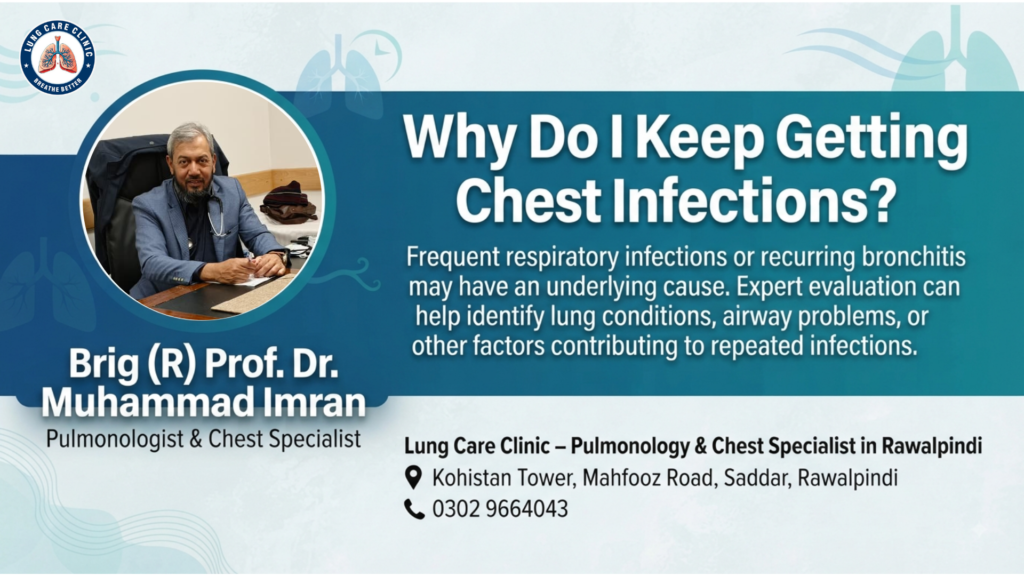
Brig (R) Prof. Dr. Muhammad Imran, Pulmonologist & Chest Specialist, provides expert evaluation and management of recurrent chest infections, chronic cough, bronchitis, asthma, COPD, breathing difficulties, and other respiratory conditions at Lung Care Clinic – Pulmonology & Chest Specialist in Rawalpindi.
Kohistan Tower, Mahfooz Road, Saddar, Rawalpindi
0302 9664043
If you keep getting chest infections or recurring bronchitis, don’t simply treat each episode without investigating why it keeps happening. Book a consultation to discuss your symptoms and determine whether further respiratory evaluation is needed.