Occupational asthma is a type of asthma that develops because of exposure to substances or conditions at work. It can affect people in factories, workshops, construction sites, cleaning services, healthcare settings, laboratories, farms, bakeries, salons, and many other workplaces. In some workers, asthma develops for the first time after repeated workplace exposure. In others, existing asthma becomes worse because of workplace triggers.
If you regularly develop coughing, wheezing, chest tightness, or shortness of breath during working hours, your workplace may be contributing to your breathing problems. However, these symptoms can have many causes. Therefore, proper medical assessment is important before assuming that workplace dust, fumes, or chemicals are responsible.
For people in Rawalpindi and Islamabad, discussing work-related breathing symptoms with a pulmonologist can help identify possible triggers and determine whether lung function testing or other evaluation is appropriate.
What Is Occupational Asthma?
Occupational asthma refers to asthma caused by exposures in the workplace. These exposures can include allergens, irritants, chemicals, dust, fumes, vapors, and certain physical conditions.
CDC guidance distinguishes occupational asthma from work-exacerbated asthma. Occupational asthma describes new asthma caused by workplace exposure, while work-exacerbated asthma refers to asthma that existed previously but becomes worse because of workplace conditions.
This distinction matters because a person may have asthma before starting a particular job, yet the work environment can still make symptoms more frequent or severe.
Workplace-related breathing problems may also develop gradually. A person might not notice a clear connection at first. Symptoms may become more noticeable after repeated exposure over months or years. In other cases, symptoms may appear soon after contact with a particular substance.
Occupational Asthma Symptoms
Occupational asthma symptoms are generally similar to symptoms of other forms of asthma.
Common symptoms include:
- Persistent or repeated coughing
- Wheezing
- Chest tightness
- Shortness of breath
- Difficulty breathing
- Reduced exercise tolerance
- Episodes of breathing difficulty after workplace exposure
A factory fumes cough, for example, may occur after exposure to chemical vapors, smoke, or other airborne irritants. Similarly, workplace dust may trigger coughing and breathing problems in susceptible workers.
Symptoms do not always appear immediately. Some workers develop symptoms during exposure, while others notice breathing problems several hours after leaving the workplace. Symptoms may also become more noticeable during evenings after work.
Because of this delayed pattern, it can be difficult to recognize occupational asthma without carefully reviewing the relationship between symptoms and work.
Is Your Workplace Affecting Your Breathing?
One useful clue is a consistent relationship between your symptoms and your work schedule.
For example, you may notice:
- Coughing begins after arriving at work.
- Wheezing becomes worse during certain tasks.
- Breathing problems occur when using a particular chemical.
- Symptoms increase after exposure to dust or fumes.
- Symptoms improve during weekends.
- Breathing feels better during holidays or extended time away from work.
- Symptoms return after going back to work.
- Your need for asthma medication changes depending on your work schedule.
These patterns do not prove that you have occupational asthma. However, they can provide important information for your doctor.
CDC recommends asking about work conditions, job duties, workplace exposures, and whether symptoms improve when the person is away from work.
Workplace Dust Allergy and Asthma
Workplace dust allergy is another concern for people who experience respiratory symptoms during work.
Different industries can expose workers to different types of dust. Examples include wood dust, grain dust, flour dust, plant materials, and other airborne particles. Some workplace substances can act as allergens, while others can irritate the airways without causing a classic allergic reaction.
A person who works in a bakery, for example, may repeatedly inhale flour particles. A carpenter may encounter wood dust. Agricultural workers can encounter plant materials, pollen, molds, and other airborne substances.
If coughing or wheezing repeatedly occurs during these exposures, it is worth discussing the pattern with a healthcare professional.
Can Factory Fumes Cause Coughing?
Yes, exposure to certain workplace fumes and vapors can irritate the respiratory system and may trigger or worsen asthma in susceptible individuals.
Industrial workplaces may involve chemicals, solvents, paints, gases, metal dust, cleaning agents, or other airborne substances. CDC lists strong fumes and chemical vapors among potential workplace asthma triggers.
A factory fumes cough should not automatically be labeled as occupational asthma. Other respiratory conditions can also cause coughing. Therefore, persistent symptoms require proper assessment.
If coughing continues outside work, becomes progressively worse, occurs at night, or comes with significant shortness of breath or chest tightness, specialist evaluation may be appropriate.
Common Occupational Asthma Triggers
Workplaces vary greatly, so the possible triggers also vary.
Examples of workplace exposures associated with work-related asthma include:
- Wood dust
- Grain and flour dust
- Cleaning chemicals
- Bleach and chlorine-containing products
- Solvents
- Paint-related chemicals
- Metal dust
- Animal proteins
- Latex
- Plant materials
- Pollen
- Mold
- Strong fumes
- Chemical vapors
- Certain industrial substances
- Vehicle exhaust
- Smoke
CDC notes that more than 300 workplace substances are known to cause or worsen asthma.
The risk depends on the substance, level and duration of exposure, individual susceptibility, workplace controls, and other factors.
Who Can Develop Occupational Asthma?
Occupational asthma can affect workers across many industries.
People who may encounter relevant exposures include:
- Factory workers
- Construction workers
- Painters
- Car repair and workshop workers
- Cleaners
- Healthcare workers
- Laboratory workers
- Bakers
- Farmers
- Agricultural workers
- Hairdressers and salon workers
- Animal-care workers
- Woodworkers
- Manufacturing workers
However, having a particular occupation does not mean a person will develop asthma. Individual exposure and susceptibility vary.
How Is Occupational Asthma Diagnosed?
Diagnosing occupational asthma usually requires more than identifying a workplace exposure.
A doctor may review:
- Your symptoms
- Your medical history
- Your previous asthma history
- Your job and workplace
- Your daily work activities
- Materials and chemicals you handle
- When symptoms appear
- Whether symptoms improve away from work
- Your medication use
- Previous lung function results
Lung function testing can also help. Depending on the situation, a doctor may consider spirometry, peak-flow monitoring, bronchodilator testing, bronchial responsiveness testing, or allergy-related tests.
Serial peak-flow measurements may be particularly useful in selected cases. A healthcare professional may ask a patient to record readings at different times during workdays and days away from work so that patterns can be assessed.
Do not start or stop prescribed asthma medication simply to test whether your workplace is causing symptoms. Any medication changes should be discussed with your doctor.
Why Your Work History Matters
When occupational asthma is suspected, your doctor may ask very specific questions about your workplace.
You may be asked:
- What is your job title?
- What tasks do you perform?
- What materials do you handle?
- Do you work around dust?
- Do you use cleaning chemicals?
- Are there fumes or vapors?
- Do you use paints or solvents?
- Do symptoms begin during a specific task?
- Do symptoms improve on weekends?
- What happens during annual leave?
- Have your symptoms changed after moving to a different department?
Keeping a simple symptom diary can also be useful. Record your work hours, tasks, exposures, symptoms, medication use, and days away from work. This information can help your doctor identify possible patterns.
Occupational Asthma Treatment and Management
Treatment depends on the diagnosis, severity of symptoms, and specific workplace exposure.
A major part of managing occupational asthma involves reducing or eliminating exposure to the substance responsible for symptoms. CDC guidance identifies avoidance or reduction of occupational triggers as an important part of management, together with appropriate medical treatment.
Your doctor may recommend an asthma management plan that can include prescribed inhaled medicines or other treatments when appropriate.
Workplace controls may also be important. Depending on the situation, these can include improved ventilation, safer handling procedures, exposure controls, protective equipment, or changes in work tasks.
However, protective equipment does not guarantee that a worker will avoid occupational asthma. CDC notes that some workers can develop work-related asthma even when using respirators or face masks.
For that reason, suspected occupational asthma deserves proper medical evaluation rather than relying only on masks or other protective measures.
Can Occupational Asthma Be Prevented?
Reducing exposure to known respiratory hazards can help reduce risk.
Employers and workers can consider appropriate workplace controls based on the specific hazard.
These may include:
- Better ventilation
- Dust-control systems
- Safe chemical handling
- Substitution of hazardous materials when possible
- Appropriate personal protective equipment
- Workplace exposure assessment
- Training about respiratory hazards
- Prompt reporting of new breathing symptoms
Early recognition also matters. If new asthma symptoms appear after starting a job or after a new workplace material is introduced, discuss the pattern with a healthcare professional.
Early identification can help prevent ongoing exposure and worsening respiratory problems.
When Should You See a Pulmonologist?
You should consider specialist evaluation if you have repeated breathing symptoms that may be connected to your workplace.
A pulmonologist can assess symptoms such as:
- Persistent workplace cough
- Recurrent wheezing
- Chest tightness during work
- Shortness of breath during work
- Breathing problems after exposure to dust
- Symptoms after chemical fumes
- Asthma that has become harder to control
- New breathing symptoms after starting a job
Urgent medical care is appropriate for severe breathing difficulty, inability to speak normally because of breathlessness, bluish lips or face, severe chest symptoms, confusion, or rapidly worsening symptoms.
Do not assume that a persistent factory fumes cough or workplace dust allergy is harmless simply because it improves after leaving work.
Occupational Asthma Care in Rawalpindi
If you live or work in Rawalpindi or Islamabad and experience breathing problems that appear connected to your workplace, specialist respiratory evaluation can help clarify the possible cause.
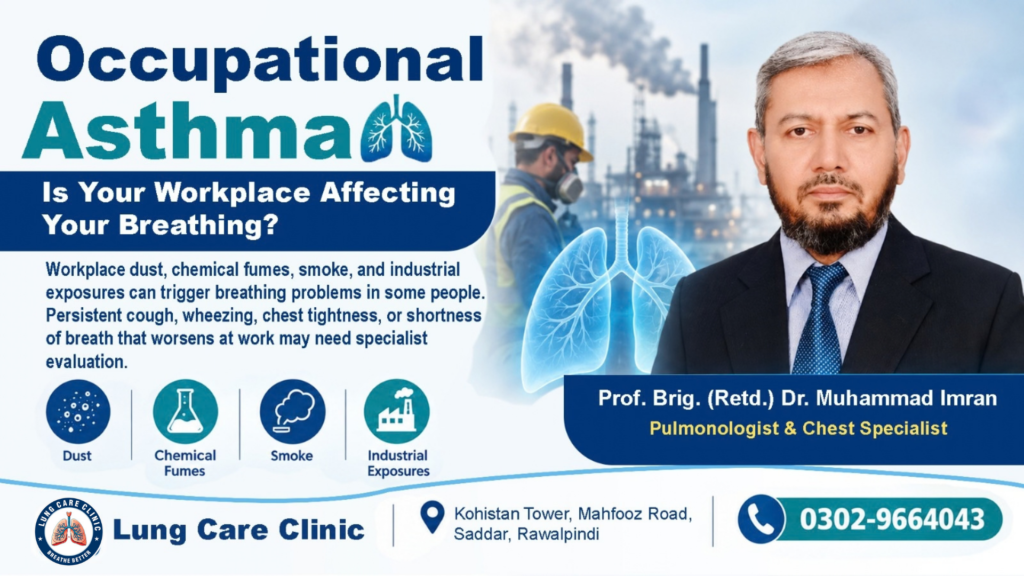
At Lung Care Clinic, Prof. Brig. (Retd.) Dr. Muhammad Imran, Pulmonologist & Chest Specialist, evaluates patients with respiratory symptoms and can guide appropriate assessment based on symptoms, medical history, examination findings, and relevant investigations.
For suspected occupational asthma, it is useful to bring previous medical reports, lung function results, prescriptions, and information about your workplace exposures when available.
If your breathing problems repeatedly appear at work, mention this pattern during your consultation. The connection between symptoms and workplace exposure can provide an important clue for further evaluation.
Occupational asthma can develop when workplace exposures trigger asthma in a person who previously did not have the condition. Existing asthma can also become worse because of workplace dust, fumes, chemicals, allergens, or other conditions.
The most important clue is often the relationship between your symptoms and your work environment. Coughing, wheezing, chest tightness, or shortness of breath that repeatedly appears during work or improves during time away from work deserves attention.
At the same time, these symptoms do not automatically confirm occupational asthma. Other lung and health conditions can produce similar symptoms. Therefore, proper medical evaluation is important.
If you suspect that your workplace is affecting your breathing, discuss your symptoms, job duties, workplace exposures, and symptom timing with a pulmonologist. Appropriate testing and exposure assessment can help guide the next steps.
Lung Care Clinic provides specialist respiratory consultations in Saddar, Rawalpindi.
Prof. Brig. (Retd.) Dr. Muhammad Imran
Pulmonologist & Chest Specialist
0302-9664043