
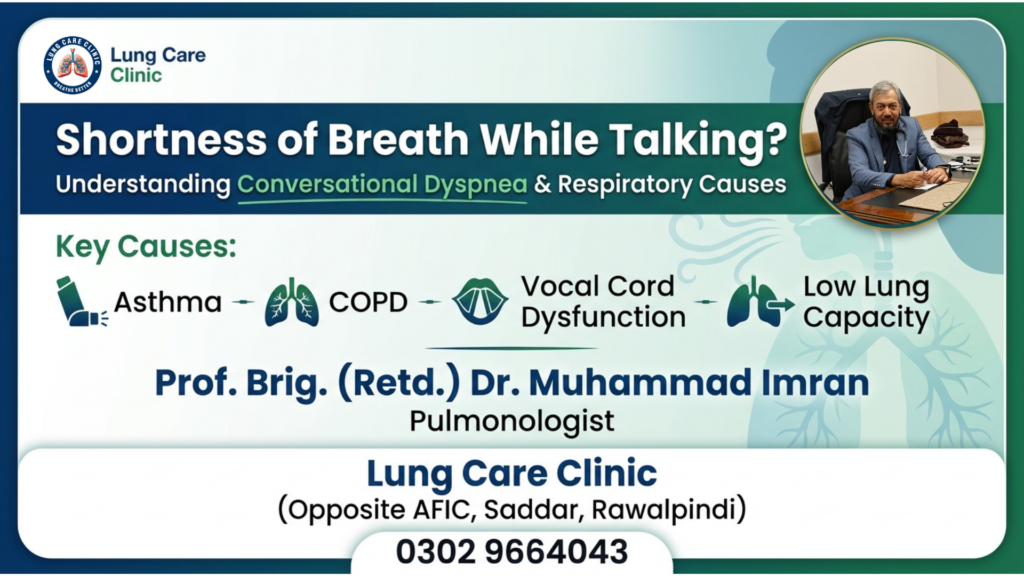
Experiencing shortness of breath while talking can feel alarming and frustrating during everyday conversations. Speech requires a coordinated flow of inhaled and exhaled air. When respiratory capacity decreases, speaking even a few continuous sentences can leave you gasping for breath.
This condition, medically referred to as conversational dyspnea, often indicates an underlying pulmonary or cardiovascular issue. Understanding why you feel out of breath while speaking helps you take appropriate steps toward effective diagnosis and medical management.
Understanding Conversational Dyspnea and Speech Mechanics
Speaking naturally requires a rhythmic breath pattern. As you talk, your body exhales air past your vocal cords while simultaneously maintaining oxygen delivery to vital organs.
Under normal conditions, healthy lungs hold sufficient reserve volume to allow continuous sentences without effort. However, when airway resistance increases or lung elasticity decreases, the breathing mechanism becomes strained. Consequently, simple conversation places an unexpected burden on the respiratory muscles, causing immediate breathlessness.
Primary Medical Causes of Shortness of Breath While Talking
Several respiratory and systemic conditions can cause difficulty maintaining steady breath while speaking.
| Potential Medical Cause | Underlying Mechanism | Typical Accompanying Symptoms |
| Bronchial Asthma | Chronic airway inflammation and narrowing | Wheezing, chest tightness, nighttime coughing |
| COPD & Emphysema | Loss of lung elasticity and air trapping | Frequent phlegm production, chronic fatigue |
| Vocal Cord Dysfunction | Incomplete opening of vocal folds during breathing | High-pitched breathing sound (stridor), throat tightness |
| Post-Viral Hyperresponsiveness | Airway sensitivity following viral chest infections | Dry tickling cough, persistent breathlessness |
| Cardiovascular Strain | Impaired oxygenation due to heart pumping insufficiency | Swelling in ankles, breathlessness when lying flat |
Bronchial Asthma and Airway Hyperresponsiveness
Asthma causes chronic inflammation in the airways, making them sensitive to minor triggers. When speaking, the rapid intake and release of air irritate these hypersensitive bronchial tubes. As a result, the airways constrict, making it difficult to finish sentences without pausing to catch your breath.
Chronic Obstructive Pulmonary Disease (COPD)
COPD includes conditions such as chronic bronchitis and emphysema, which permanently reduce airflow in the lungs. Patients with COPD experience air trapping, where stale air remains trapped inside damaged alveoli. During long conversations, this trapped air leaves little room for fresh oxygen, resulting in quick exhaustion and breathlessness.
Vocal Cord Dysfunction (VCD)
Vocal cord dysfunction occurs when the vocal folds close involuntarily during inhalation instead of opening wide. This paradoxical movement restricts airflow directly at the throat level. Because speaking naturally engages the vocal cords, VCD frequently presents as sudden breathlessness during speech.
Post-Viral Respiratory Sensitivity
Following a severe chest infection or influenza, bronchial airways can remain inflamed and hypersensitive for weeks or even months. This post-viral state reduces lung endurance during vocal activity, causing temporary conversational dyspnea.
When Should You Seek Immediate Medical Evaluation?
While occasional shortness of breath after intense physical exertion is normal, breathlessness during calm conversation requires clinical evaluation.
You should consult a pulmonologist promptly if you notice any of the following symptoms:
- Persistent breathlessness while speaking during routine activities
- Inability to finish a single sentence without stopping to inhale deeply
- Noticeable wheezing or whistling sounds coming from your chest
- Chest tightness or discomfort accompanying speech
- Dizziness or lightheadedness when speaking
Comprehensive Respiratory Evaluation at Lung Care Clinic
Accurate diagnosis of speech-related breathlessness requires specialized pulmonary assessment. At Lung Care Clinic in Saddar, Rawalpindi, patients receive thorough diagnostic evaluations to identify the exact cause of conversational dyspnea.
The clinic is under the direct medical care of Prof. Brig. (Retd.) Dr. Muhammad Imran, a senior pulmonologist and chest specialist. With over 35 years of military medical experience across major tertiary centers like PEMH and AFIC, Dr. Imran offers expert clinical management for all acute and chronic lung conditions.
Diagnostic Approach:
- Spirometry & Pulmonary Function Testing: Measures exact lung volumes and airflow rates.
- Airway Reversibility Assessment: Checks for underlying bronchial asthma and responsive airway diseases.
- Targeted Medication Management: Provides personalized inhaler therapies, bronchodilators, and pulmonary rehabilitation guidance.
Location, Timings & Appointment Details
To consult with Dr. Muhammad Imran regarding persistent breathlessness or chest discomfort:
- Clinic Address: Kohistan Tower, Mahfooz Road (Opposite AFIC), Saddar, Rawalpindi
- Specialist: Prof. Brig. (Retd.) Dr. Muhammad Imran (Chest Specialist)
- Appointment Helpline: 0302 9664043
Frequently Asked Questions (FAQs)
Why do I get out of breath so easily when talking on the phone?
Talking on the phone often involves speaking continuously without natural pauses, which puts extra strain on sensitive or narrowed airways if you have mild asthma or low lung capacity.
Is shortness of breath while talking a sign of asthma?
Yes, conversational breathlessness can be an early indicator of bronchial asthma or airway hyperresponsiveness, especially if accompanied by wheezing or chest tightness.
How is conversational dyspnea diagnosed?
A chest specialist conducts a detailed clinical evaluation, including spirometry (lung function testing), to measure airflow obstruction and evaluate airway health.
How can I book a consultation with Dr. Muhammad Imran?
You can book an appointment directly by calling 0302 9664043 between Monday and Saturday during clinic operating hours.