Living with a chronic lung condition can make everyday activities more difficult. Walking, climbing stairs, shopping, or doing household work may cause breathlessness. Over time, people may become less active because they fear becoming short of breath.
However, avoiding activity can reduce physical fitness even further. This can create a difficult cycle of breathlessness and inactivity.
Pulmonary rehabilitation offers a structured approach to breaking that cycle. It combines physical exercise, breathing techniques, education, and lifestyle guidance. Therefore, it can help selected people with chronic respiratory conditions manage symptoms and become more active.
Importantly, pulmonary rehabilitation does not literally rebuild damaged lung tissue. Instead, it helps the body use available lung function more efficiently while improving physical conditioning and confidence.
What Is Pulmonary Rehabilitation?
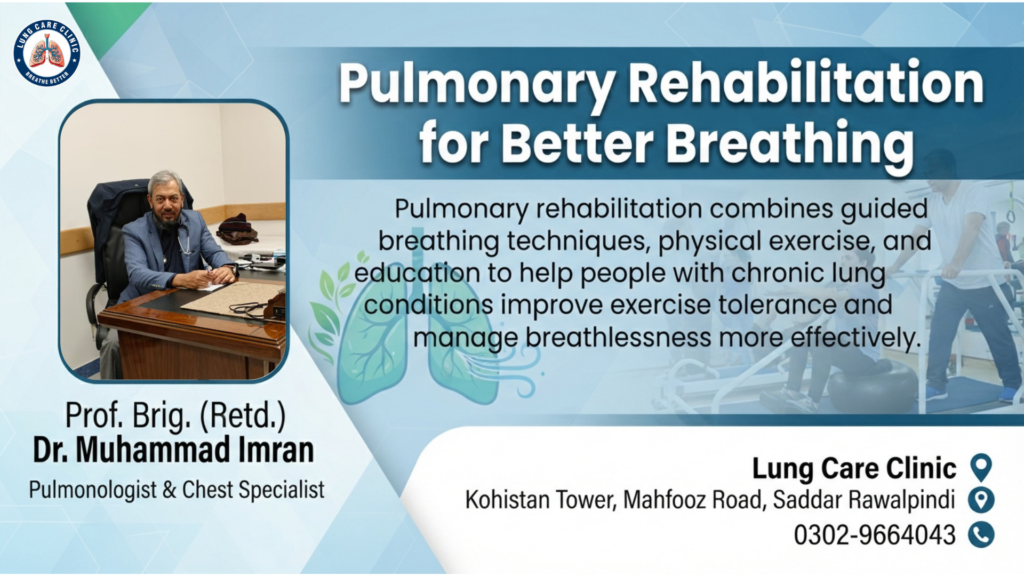
Pulmonary rehabilitation is a structured program designed for people with chronic respiratory conditions.
The program usually combines several components, including:
- Physical exercise
- Breathing techniques
- Education about lung disease
- Energy-conservation strategies
- Nutritional guidance when appropriate
- Support for managing symptoms
The exact program depends on the patient’s condition and physical ability.
Therefore, a pulmonologist should assess the patient before starting an exercise program.
Who Can Benefit From Pulmonary Rehabilitation?
Pulmonary rehabilitation may benefit people with certain chronic lung conditions.
For example, doctors may recommend it for selected patients with:
- COPD
- Chronic bronchitis
- Emphysema
- Interstitial lung disease
- Bronchiectasis
- Other chronic respiratory conditions
However, suitability varies from person to person.
The doctor may consider lung function, oxygen levels, exercise capacity, symptoms, heart health, and other medical conditions before recommending rehabilitation.
Consequently, patients should not begin an intensive exercise program without appropriate medical guidance.
How Does Pulmonary Rehabilitation Help?
Pulmonary rehabilitation focuses on improving how you function rather than simply changing lung measurements.
Regular, supervised exercise can improve muscle strength and endurance. As a result, everyday activities may become easier.
Breathing techniques can also help some patients manage breathlessness more effectively.
Furthermore, education can help patients understand their condition and recognize situations that require medical attention.
Therefore, pulmonary rehabilitation can support better physical function and quality of life.
Pulmonary Rehabilitation Exercises
Exercise forms an important part of pulmonary rehabilitation.
A rehabilitation program may include walking, cycling, and other aerobic activities. The healthcare team adjusts the intensity according to the patient’s ability.
Strength training may also help improve the muscles used during daily activities.
For example, a patient may perform controlled leg exercises to make walking and stair climbing easier.
However, the appropriate exercises depend on the individual’s health.
Therefore, rehabilitation should follow a personalized plan rather than a one-size-fits-all routine.
Breathing Exercises for COPD
Breathing exercises can help some people manage breathlessness.
One commonly used technique involves breathing slowly through the nose and then breathing out through gently narrowed lips. This approach can help some people control their breathing during periods of breathlessness.
Another technique focuses on diaphragmatic breathing. This method encourages greater use of the diaphragm during breathing.
However, breathing exercises do not cure COPD or reverse permanent lung damage.
Instead, they can form part of a broader pulmonary rehabilitation program.
Lung Strengthening Exercises: What Does That Mean?
People often search for “lung strengthening exercises.” However, the phrase can cause confusion.
Exercise does not directly strengthen damaged lung tissue in the same way that resistance training strengthens a muscle.
Instead, physical training can improve the strength and endurance of the muscles that help the body move and breathe.
For example, stronger leg muscles can reduce the effort required for walking. Consequently, a person may perform daily activities with less overall fatigue.
Therefore, the goal should focus on improving functional capacity rather than trying to physically rebuild damaged lung tissue.
Improving Exercise Tolerance
Exercise tolerance refers to how much physical activity a person can perform before symptoms limit them.
Chronic lung disease can reduce exercise tolerance. Breathlessness may cause patients to stop moving, which can gradually reduce physical fitness.
Pulmonary rehabilitation addresses this problem through gradual and controlled exercise.
The rehabilitation team can adjust activity levels over time. As fitness improves, the patient may perform everyday tasks with greater confidence.
However, progress varies among individuals.
Therefore, patients should focus on steady improvement rather than comparing themselves with others.
Pulmonary Rehabilitation for COPD
COPD is one of the conditions commonly associated with pulmonary rehabilitation.
People with COPD may experience chronic cough, wheezing, mucus production, and breathlessness.
These symptoms can interfere with daily activities.
A pulmonary rehabilitation program can help selected COPD patients improve physical conditioning and learn strategies for managing breathlessness.
Moreover, education can help patients understand correct medication use, activity planning, and lifestyle changes.
However, rehabilitation works alongside medical treatment. It does not replace prescribed inhalers or other COPD therapies.
How to Exercise Safely
Safety remains important when exercising with chronic lung disease.
Before starting, discuss your exercise plan with your healthcare professional.
Depending on your condition, the medical team may monitor:
- Heart rate
- Oxygen saturation
- Breathing rate
- Blood pressure
- Exercise symptoms
Stop exercising and seek medical advice if you develop severe breathlessness, chest pain, dizziness, fainting, or other concerning symptoms.
Furthermore, patients who use supplemental oxygen should follow their prescribed oxygen plan during exercise.
Never change your oxygen flow rate without medical advice.
The Importance of Gradual Progress
People with chronic lung conditions may initially struggle with even modest physical activity.
Therefore, starting slowly can help.
A rehabilitation professional may divide exercise into shorter sessions. For example, a patient may walk for a short period, rest, and then continue.
Over time, the healthcare team can adjust the activity according to the patient’s response.
As a result, patients can gradually build endurance without placing unnecessary strain on the body.
Breathing Techniques During Daily Activities
Pulmonary rehabilitation also teaches patients how to manage breathing during everyday tasks.
For example, a person may learn to coordinate breathing with movement.
Breathing control can become particularly useful when walking uphill, climbing stairs, or performing household activities.
Additionally, patients can learn energy-conservation techniques.
These strategies help reduce unnecessary exertion and allow people to complete tasks more efficiently.
The Role of Lifestyle Changes
Pulmonary rehabilitation works best as part of comprehensive respiratory care.
Smoking cessation remains particularly important for people who smoke.
In addition, patients should follow prescribed medications and attend regular medical appointments.
A balanced diet can also support overall physical health.
Furthermore, appropriate vaccinations can help reduce the risk of certain respiratory infections.
Therefore, exercise represents one important part of a much broader lung-health strategy.
When Should You Consult a Pulmonologist?
Consider a pulmonology consultation if breathlessness limits your daily activities.
You should also seek evaluation if you have persistent cough, frequent respiratory infections, reduced exercise tolerance, or a known chronic lung condition.
A pulmonologist can assess your symptoms and review previous lung function tests and imaging.
Then, the specialist can determine whether pulmonary rehabilitation may benefit you.
If you already have COPD or another chronic lung condition, regular follow-up can help the medical team adjust your treatment plan as your condition changes.
Pulmonary rehabilitation provides a structured way to improve physical conditioning and manage symptoms associated with chronic lung disease.
It combines exercise, breathing techniques, education, and practical strategies for daily living.
Although pulmonary rehabilitation cannot repair permanently damaged lung tissue, it can help selected patients use their remaining lung function more effectively and improve their ability to perform daily activities.
Therefore, patients should view rehabilitation as part of comprehensive respiratory care rather than as a replacement for medical treatment.
If chronic breathlessness prevents you from walking, exercising, or completing routine activities, speak with a pulmonologist about your options.
Prof. Brig. (Retd.) Dr. Muhammad Imran
Pulmonologist & Chest Specialist
Lung Care Clinic
Kohistan Tower, Mahfooz Road, Saddar Rawalpindi
0302-9664043
Serving patients from Rawalpindi and Islamabad.