What Is Emphysema?
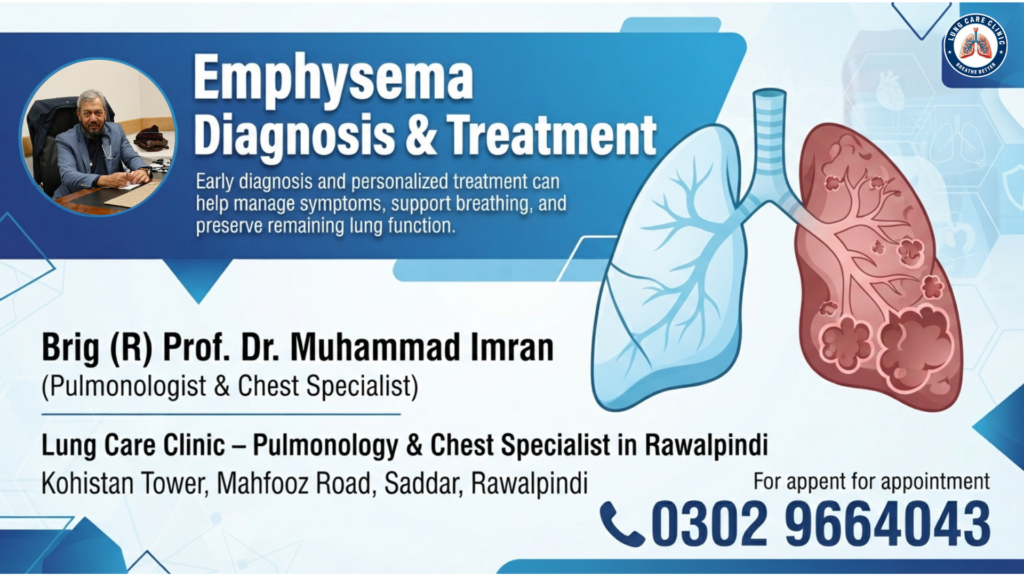
Emphysema Diagnosis and Treatment are important for managing symptoms, protecting remaining lung function, and maintaining quality of life. Emphysema is a chronic lung condition that damages the air sacs in the lungs and can cause breathlessness, reduced exercise tolerance, and air trapping. Early assessment can help identify the severity of lung damage and guide an appropriate treatment plan.
When the alveoli are damaged, the lungs may lose some of their normal elasticity. Air can become trapped inside the lungs, making it harder to empty them effectively. This can contribute to breathlessness, especially during physical activity.
Emphysema-related lung damage cannot simply be reversed. However, appropriate diagnosis and treatment can help control symptoms, improve daily function, reduce complications, and protect remaining lung function.
What Causes Emphysema?
Long-term exposure to cigarette smoke is one of the major causes of emphysema. Smoking can damage lung tissue and cause persistent inflammation in the airways and lungs.
Other possible risk factors include:
- Long-term exposure to secondhand smoke
- Air pollution
- Workplace exposure to dust or chemical fumes
- Certain inherited conditions
- Long-term respiratory irritation
Not every person with emphysema has the same risk factors. A detailed medical history can help identify potential contributors.
What Are the Symptoms of Emphysema?
Emphysema can develop gradually, and early symptoms may be subtle.
Common symptoms include:
- Shortness of breath
- Reduced exercise tolerance
- Persistent cough
- Wheezing
- Chest tightness
- Fatigue
- Difficulty performing activities that previously felt easy
Breathlessness may initially occur only during exercise. As the condition progresses, some people may experience breathing difficulty during routine activities or at rest.
Persistent symptoms should be evaluated rather than assumed to be a normal part of aging.
What Does Hyperinflation of the Lungs Mean?
Hyperinflation of the lungs occurs when more air remains trapped inside the lungs than normal after breathing out.
In emphysema and other forms of COPD, damaged lung tissue and narrowed airways can make it difficult to fully exhale. This can result in air trapping and lung hyperinflation.
Hyperinflation may contribute to the sensation that you cannot take a satisfying breath. It can also increase the effort required for breathing and reduce exercise capacity.
Lung hyperinflation can sometimes be seen on chest imaging, but additional testing is often needed to understand the severity of airflow limitation and its effect on lung function.
How Is Emphysema Diagnosed?
A diagnosis of emphysema begins with a medical history and physical examination. Your doctor may ask about smoking, occupational exposures, respiratory symptoms, previous lung conditions, and changes in exercise tolerance.
Several tests may be used depending on the individual situation.
Spirometry
Spirometry is an important pulmonary function test used to assess airflow. It measures how much air you can breathe out and how quickly you can exhale.
The results can help identify airflow obstruction and assess the severity of COPD.
Pulmonary Function Testing
More detailed pulmonary function tests can provide additional information about lung volumes and how efficiently the lungs transfer gases.
These measurements can be useful when evaluating suspected emphysema and other chronic respiratory conditions.
Chest X-Ray
A chest X-ray may provide information about the lungs and help identify other possible causes of breathing symptoms.
However, a normal or nonspecific X-ray does not necessarily exclude early or mild emphysema.
CT Scan
A chest CT can provide much more detailed images of lung structures. It may help identify areas of emphysema and assess the distribution and extent of structural lung damage.
Your pulmonologist will determine whether CT imaging is appropriate based on your symptoms and initial findings.
How Is Emphysema Treated?
There is no single treatment that works for every person with emphysema. Management is individualized according to symptoms, lung function, disease severity, smoking history, and other health factors.
Treatment may include several approaches.
Stop Smoking
If you smoke, stopping is one of the most important steps for protecting your remaining lung function.
Continuing to smoke can contribute to ongoing lung damage. A healthcare professional can provide support and strategies to help with smoking cessation.
Inhaled Medications
Depending on your symptoms and COPD pattern, your doctor may prescribe inhaled medications that help relax the airways and improve airflow.
Some people may require long-acting bronchodilators, while others may need additional medication based on their individual condition.
Inhalers should be used according to your prescribed treatment plan.
Pulmonary Rehabilitation
Pulmonary rehabilitation combines exercise training, education, breathing strategies, and lifestyle guidance.
It can help some people with COPD improve exercise capacity, reduce the impact of breathlessness, and become more confident with daily physical activity.
Oxygen Therapy
Some people with advanced COPD may develop persistently low blood oxygen levels. In selected patients, supplemental oxygen may be recommended after appropriate assessment.
Oxygen should not be started simply because someone feels breathless. The need for oxygen is determined through clinical evaluation and oxygen measurements.
Vaccination and Infection Prevention
Respiratory infections can cause serious worsening of symptoms in people with COPD. Following recommended vaccination guidance and reducing exposure to respiratory infections can be an important part of long-term management.
Discuss appropriate vaccinations with your healthcare provider based on your age and medical conditions.
Can Emphysema Be Reversed?
Emphysema-related structural lung damage is generally permanent. However, this does not mean that nothing can be done.
Stopping smoking, following appropriate treatment, staying physically active within your capabilities, managing exacerbations, and attending regular medical reviews can help manage symptoms and protect remaining lung function.
The goal of treatment is not simply to eliminate the disease but to help you breathe more comfortably, remain active, and reduce the risk of complications.
Can Lung Function Be Preserved?
Yes, appropriate management can help protect remaining lung function and improve quality of life.
The most important steps include:
- Avoiding tobacco smoke
- Following prescribed inhaler treatment
- Attending regular respiratory reviews
- Staying appropriately active
- Participating in pulmonary rehabilitation when recommended
- Preventing and managing respiratory infections
- Reducing exposure to harmful workplace or environmental irritants
Early evaluation can also help identify COPD and emphysema before symptoms become severely limiting.
When Should You See an Emphysema Specialist?
Consider seeing a pulmonologist if you have persistent breathlessness, chronic cough, wheezing, reduced exercise tolerance, or a history of significant smoking or occupational exposure.
Specialist evaluation is particularly important if breathing symptoms are progressively worsening or begin interfering with everyday activities.
A pulmonologist can determine whether emphysema, COPD, asthma, another lung condition, or a combination of problems is contributing to your symptoms.
When Is Breathing Difficulty an Emergency?
Severe or rapidly worsening shortness of breath requires urgent medical attention.
Seek emergency care if breathing difficulty is accompanied by severe chest pain, blue or gray lips, confusion, fainting, inability to speak normally because of breathlessness, or a sudden significant deterioration in your condition.
Do not delay urgent assessment when breathing becomes severely difficult.
Expert Emphysema and COPD Care in Rawalpindi
Emphysema is a chronic lung condition that can affect breathing and gradually reduce exercise capacity. While the structural damage cannot simply be reversed, appropriate diagnosis and long-term management can help control symptoms and protect remaining lung function.
Testing such as spirometry, pulmonary function testing, chest imaging, and CT scans may help doctors understand the condition and guide treatment. Smoking cessation, appropriate inhaled medication, pulmonary rehabilitation, infection prevention, and selected supportive therapies can all play an important role in management.
Brig (R) Prof. Dr. Muhammad Imran, Pulmonologist & Chest Specialist, provides expert evaluation and management of emphysema, COPD, chronic cough, breathing difficulties, wheezing, and other respiratory conditions at Lung Care Clinic – Pulmonology & Chest Specialist in Rawalpindi.
Kohistan Tower, Mahfooz Road, Saddar, Rawalpindi
0302 9664043
If you are experiencing persistent breathlessness, chronic cough, wheezing, or reduced exercise tolerance, don’t ignore the symptoms. An appropriate respiratory evaluation can help determine the cause and guide a personalized treatment plan focused on better breathing and long-term lung health.