
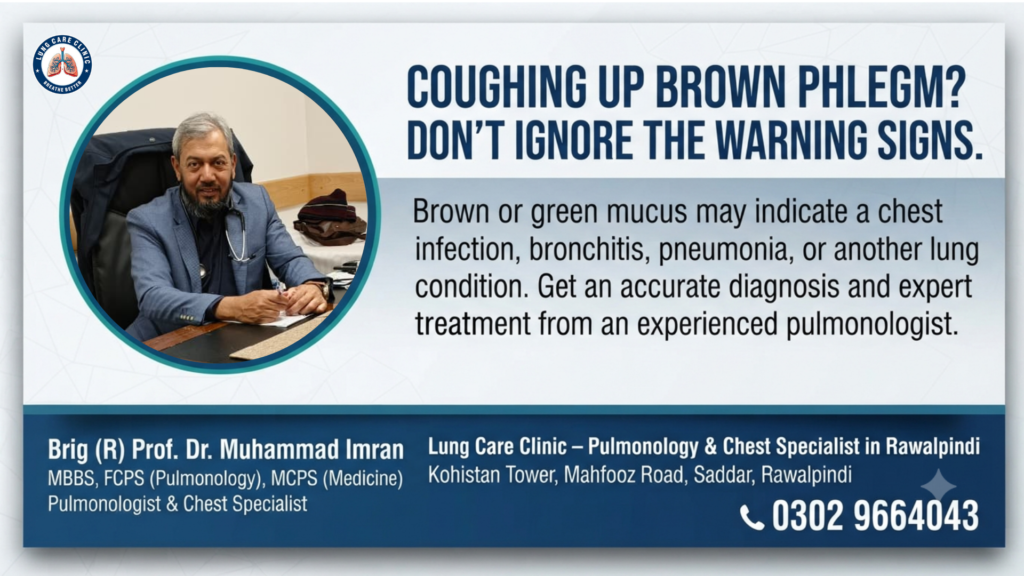
Seeing coughing up brown phlegm can be alarming. While mucus helps protect your lungs by trapping dust, bacteria, and other harmful particles, a change in its color often indicates that something is affecting your respiratory system. Brown phlegm may result from old blood, environmental pollutants, smoking, or certain lung infections.
Although not every case is serious, persistent brown sputum should never be ignored. Identifying the underlying cause early can help prevent complications and ensure appropriate treatment.
What Is Brown Phlegm?
Phlegm is a thick type of mucus produced by the lungs and airways. It plays an important role in keeping your respiratory system healthy. However, when the mucus changes from clear to brown, it usually means it contains old blood, dirt, smoke particles, or inflammatory cells.
People may notice coughing up brown phlegm in the morning, after prolonged coughing, or during a chest infection. The exact cause varies depending on your medical history and symptoms.
Common Brown Sputum Causes
Several conditions can lead to brown sputum causes, including:
Smoking
Smoking is one of the most common reasons for brown mucus. Tobacco smoke contains tar and other chemicals that collect inside the lungs. Over time, the body attempts to remove these substances through coughing.
Smokers often experience:
- Brown mucus in the morning
- Chronic cough
- Wheezing
- Shortness of breath
Bronchitis
Acute or chronic bronchitis causes inflammation of the bronchial tubes. As inflammation increases, mucus production also rises. In severe cases, the mucus may appear brown because of old blood or trapped pollutants.
Symptoms include:
Pneumonia
Pneumonia is an infection affecting the lungs. It may produce brown, yellow, green, or even rust-colored sputum.
Additional symptoms include:
- High fever
- Difficulty breathing
- Chest pain
- Chills
- Persistent cough
Prompt medical evaluation is essential because pneumonia can become serious without treatment.
Environmental Dust and Pollution
People working in dusty environments or exposed to pollution may inhale dirt particles that become trapped inside mucus. The lungs remove these particles through coughing, causing the mucus to appear brown.
Construction workers, miners, and industrial employees are particularly at risk.
Old Blood
Sometimes brown mucus contains old blood from irritated airways after prolonged coughing. Unlike fresh blood, older blood turns brown as it breaks down.
However, if you notice frequent blood-stained sputum, seek immediate medical attention.
Can a Green Mucus Chest Infection Turn Brown?
Yes. A green mucus chest infection may gradually change to brown during recovery or if old blood mixes with mucus.
Green mucus usually indicates that your immune system is fighting an infection. Brown mucus may appear later because inflammatory cells, debris, or dried blood become mixed with the sputum.
The color alone cannot determine whether the infection is improving or worsening. Therefore, medical assessment is recommended if symptoms persist.
Is Brown Phlegm Always Serious?
Not always.
Temporary coughing up brown phlegm after exposure to dust or smoking may not indicate a serious illness.
However, persistent brown mucus should be evaluated if it lasts more than a few days or occurs alongside:
- Fever
- Weight loss
- Chest pain
- Difficulty breathing
- Night sweats
- Persistent cough
- Blood in sputum
These symptoms could indicate a more significant lung condition requiring specialist care.
How Doctors Diagnose Brown Phlegm
To identify the exact cause, your pulmonologist may recommend:
- Medical history review
- Physical examination
- Chest X-ray
- CT scan (if needed)
- Sputum examination
- Blood tests
- Pulmonary Function Test (Spirometry)
- Oxygen level assessment
These investigations help determine whether the symptoms are due to infection, chronic lung disease, or another underlying condition.
Treatment for Brown Phlegm
Treatment depends entirely on the underlying diagnosis.
Your doctor may recommend:
- Antibiotics for bacterial infections
- Inhalers for asthma or COPD
- Smoking cessation support
- Adequate hydration
- Steam inhalation
- Mucus-thinning medications
- Rest and supportive care
Avoid self-medicating with antibiotics because unnecessary use may lead to antibiotic resistance.
How to Prevent Brown Phlegm
You can reduce your risk by following these healthy habits:
- Quit smoking.
- Stay well hydrated.
- Wear protective masks in dusty environments.
- Avoid exposure to air pollution whenever possible.
- Practice good hand hygiene to reduce respiratory infections.
- Stay up to date with recommended vaccinations.
- Seek early medical care if respiratory symptoms persist.
These preventive measures support healthier lungs and reduce the likelihood of recurrent respiratory infections.
When Should You See a Pulmonologist?
Consult a pulmonologist if you experience:
- Brown phlegm lasting more than one week
- Recurrent chest infections
- Persistent cough
- Wheezing
- Shortness of breath
- Chest pain
- Unexplained weight loss
- Blood mixed with sputum
Early diagnosis often leads to better treatment outcomes and helps prevent complications.
Expert Pulmonary Care in Rawalpindi
If you are coughing up brown phlegm, don’t ignore persistent respiratory symptoms. Early evaluation can identify infections, chronic lung diseases, or other conditions before they become more serious.
Brig (R) Prof. Dr. Muhammad Imran, Pulmonologist & Chest Specialist, provides comprehensive evaluation and treatment for cough, chest infections, asthma, COPD, pneumonia, bronchitis, and other respiratory conditions at Lung Care Clinic – Pulmonology & Chest Specialist in Rawalpindi.
Kohistan Tower, Mahfooz Road, Saddar, Rawalpindi
0302 9664043
If you have persistent cough, brown sputum, or breathing difficulties, schedule a consultation for expert diagnosis and personalized treatment. Early care can help protect your lung health and improve your quality of life.