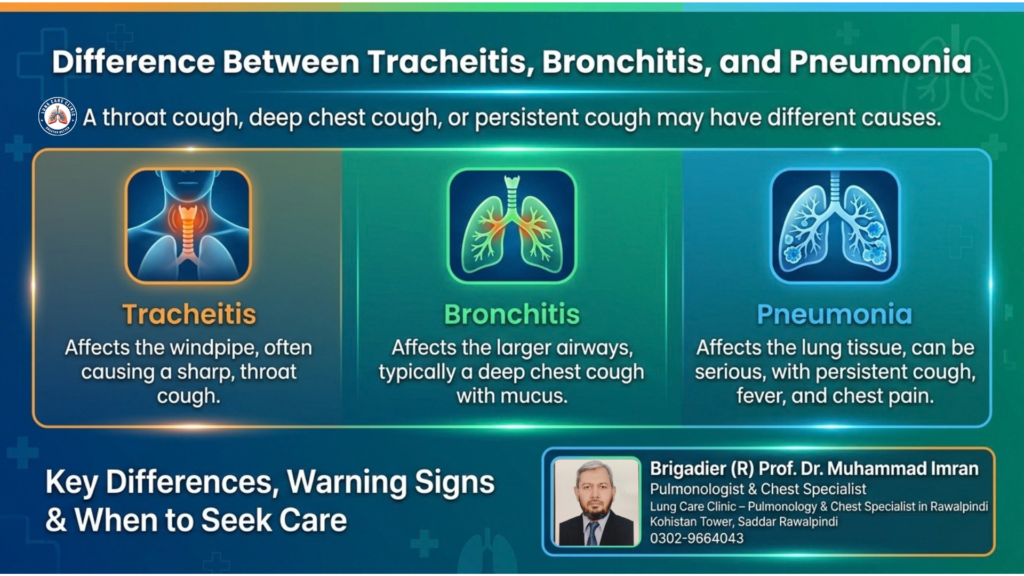
When comparing Tracheitis vs Bronchitis vs Pneumonia, understanding how these three respiratory conditions differ is essential for anyone experiencing a persistent cough, chest discomfort, fever, or shortness of breath. Although they can share overlapping symptoms, each condition affects a distinct part of the respiratory system. Tracheitis causes inflammation of the windpipe, bronchitis affects the larger airways, and pneumonia targets the deep lung tissue.
Recognizing the key differences between Tracheitis vs Bronchitis vs Pneumonia can help you spot warning signs early and determine when to seek professional medical evaluation.
A cough may begin with throat irritation, develop into a deeper chest cough, or occur alongside fever and breathing difficulty. However, the sound or location of a cough cannot reliably identify the underlying illness. A clinical assessment is often necessary to pinpoint the exact cause and guide proper treatment.
Tracheitis vs Bronchitis vs Pneumonia – Core Differences
The main difference when evaluating Tracheitis vs Bronchitis vs Pneumonia lies in the specific area of the respiratory tract that is inflamed or infected:
- Tracheitis: Inflammation of the trachea (the windpipe).
- Bronchitis: Inflammation of the bronchi (the main bronchial tubes leading into the lungs).
- Pneumonia: Infection or severe inflammation affecting the lung tissue and air sacs (alveoli), which may fill with fluid or pus.
These conditions develop due to different viral or bacterial infections. Because their clinical signs frequently overlap, a healthcare provider will consider your medical history, perform a physical exam, and order tests to confirm a diagnosis.
Understanding Tracheitis: Symptoms and Causes
Tracheitis refers specifically to inflammation of the trachea, the central airway connecting the larynx (voice box) to the main bronchial passages.
Infectious tracheitis can be viral or bacterial. Viral irritation commonly follows an upper respiratory tract infection. Bacterial tracheitis is less common but can become serious—especially in young children—because mucus and airway swelling can narrow or obstruct the upper airway.
Tracheitis Symptoms to Watch For
Symptoms of tracheitis may include:
- A persistent, harsh, or barking cough
- Throat or upper chest discomfort
- Fever when an infection is present
- Hoarseness or irritation around the throat
- Squeaky or noisy breathing (stridor) in severe cases
- Shortness of breath if the upper airway narrows
Seek immediate emergency care if an adult or child displays severe breathing difficulty, noisy breathing at rest, bluish lips, or signs of an obstructed airway.
Understanding Bronchitis – Symptoms and Causes
Bronchitis occurs when the lining of the bronchial tubes becomes inflamed, leading to coughing and increased mucus production.
Acute bronchitis usually develops after a cold or flu. Viruses are the primary cause, though environmental irritants can also trigger inflammation. A persistent cough may linger for several weeks even after the main viral infection has cleared.
Chronic bronchitis is a long-term condition defined by a productive cough that lasts at least three months per year for two consecutive years. It is a major component of Chronic Obstructive Pulmonary Disease (COPD) and is strongly linked to long-term tobacco smoking or pollutant exposure.
Bronchitis Symptoms and Complications
Symptoms of bronchitis often include:
- A continuous, hacking cough
- Coughing up clear, white, yellow, or green mucus
- Chest soreness from frequent coughing
- Wheezing or whistling sounds during breathing
- Mild shortness of breath and fatigue
- Low-grade fever during acute viral episodes
Mucus color alone does not indicate whether an infection is bacterial or requires antibiotics. Uncomplicated acute bronchitis usually resolves with rest, fluids, and supportive care.
Understanding Pneumonia – Symptoms and Causes
Pneumonia is an infection of the deep lung tissue in one or both lungs. It causes inflammation in the microscopic air sacs (alveoli), reducing their ability to transfer oxygen into the bloodstream.
Pneumonia can be caused by bacteria, viruses, or fungi. Severity ranges from mild (“walking pneumonia”) to severe cases requiring hospitalization, supplemental oxygen, or intravenous therapy.
Pneumonia Symptoms and Complications
Possible symptoms of pneumonia include:
- Cough that produces thick phlegm or mucus
- High fever, sweating, and shaking chills
- Sharp chest pain that worsens with deep breathing or coughing
- Shortness of breath and rapid, shallow breathing
- Profound fatigue and loss of appetite
- Confusion or altered mental state, especially in older adults
Older individuals and immunocompromised patients may present with mild or atypical symptoms. Prompt clinical evaluation is critical when severe symptoms occur.
Tracheitis vs Bronchitis vs Pneumonia – Symptom Comparison
Evaluating Tracheitis vs Bronchitis vs Pneumonia by symptom progression helps highlight subtle differences between the three:
| Feature | Tracheitis | Bronchitis | Pneumonia |
| Primary Location | Windpipe (Trachea) | Main Airways (Bronchi) | Deep Lung Tissue (Alveoli) |
| Cough Character | Harsh, dry, upper-chest cough | Productive cough with mucus | Deep cough with phlegm & chest pain |
| Breathing Sound | Stridor / Noisy upper breathing | Wheezing / Rattling chest sound | Shallow, rapid breathing |
| Fever Severity | Mild to moderate | Mild / Low-grade | Often high with chills |
| Common Causes | Viral or Bacterial | Mostly Viral | Bacterial, Viral, or Fungal |
A physical examination, lung auscultation with a stethoscope, and diagnostic testing are essential to differentiate these conditions accurately.
Tracheitis vs Bronchitis – Throat Cough vs Chest Cough
People often describe a cough as originating either high in the throat or deep within the chest. While this description provides useful context, it cannot reliably identify the specific airway affected.
Tracheitis causes upper-airway raw sensation and windpipe irritation. Bronchitis affects the lower airways leading into the lungs, causing chest tightness, wheezing, and heavy mucus production.
However, post-nasal drip, acid reflux, asthma, and viral coughs can all mimic these sensations. The duration of symptoms, physical findings, and medical background provide a far clearer diagnostic picture.
Can Bronchitis Turn Into Pneumonia?
While bronchitis and pneumonia are distinct diagnoses, a severe respiratory infection can progress, or a secondary bacterial infection can set in. In some instances, early pneumonia is initially mistaken for bronchitis.
If a cough worsens, fever spikes, chest pain develops, or shortness of breath increases, re-evaluation by a doctor is necessary. Patients with underlying pulmonary conditions like COPD or asthma should seek prompt care at the first sign of worsening symptoms.
How Are Tracheitis, Bronchitis, and Pneumonia Diagnosed?
To diagnose these respiratory infections, a healthcare professional will review your symptoms, take a full medical history, and conduct a physical exam to check your breathing, heart rate, temperature, and blood oxygen levels.
Depending on the clinical presentation, tests may include:
- Chest X-Ray: The primary diagnostic tool used to identify lung infiltrates in pneumonia.
- Blood Tests: Measures inflammatory markers and white blood cell counts.
- Sputum Analysis: Identifies specific bacteria to guide targeted antibiotic therapy.
- Pulse Oximetry: Measures oxygen saturation in the bloodstream.
Not every cough requires extensive testing; your doctor will tailor the diagnostics to your specific presentation.
Tracheitis, Bronchitis, and Pneumonia Treatment Options
Treatment varies depending on whether the infection is viral, bacterial, or environmental:
Tracheitis Treatment
Mild viral cases are managed with humidified air, rest, and fluid intake. Bacterial tracheitis requires immediate medical attention, intravenous antibiotics, and careful airway monitoring.
Bronchitis Treatment
Acute viral bronchitis resolves naturally with supportive care, throat lozenges, hydration, and over-the-counter pain relievers. Antibiotics are ineffective against viral bronchitis and should not be used unless a secondary bacterial infection is identified.
Pneumonia Treatment
Bacterial pneumonia is treated with targeted oral or intravenous antibiotics. Viral pneumonia is managed with supportive therapy or specific antiviral medications when indicated. Severe cases may require hospital admission, oxygen therapy, and respiratory support.
When Should You See a Pulmonologist for Tracheitis, Bronchitis, or Pneumonia?
A pulmonologist is a medical specialist focused on lung and airway diseases. You should consult a pulmonologist if you experience an unresolved or recurring cough, persistent shortness of breath, unexplained wheezing, or frequent respiratory infections.
Seek emergency medical care immediately if you experience severe breathlessness, chest pain, bluish lips or fingertips, coughing up blood, high fever with severe chills, or sudden confusion.
Specialist Evaluation for Tracheitis, Bronchitis, and Pneumonia in Rawalpindi
If you are searching for a chest specialist in Rawalpindi due to a severe cough, chest tightness, or fever, timely medical consultation ensures accurate diagnosis and effective care.
At Lung Care Clinic in Saddar, Rawalpindi, Brigadier (R) Prof. Dr. Muhammad Imran, Pulmonologist & Chest Specialist, provides expert diagnostic evaluation and treatment plans for complex respiratory conditions.
If you have concerns regarding persistent breathing difficulties or lung symptoms, schedule a clinical assessment for personalized care.
Brigadier (R) Prof. Dr. Muhammad Imran
Pulmonologist & Chest Specialist
Lung Care Clinic – Pulmonology & Chest Specialist in Rawalpindi
Kohistan Tower, Mahfooz Road, Military Hospital Rd, Opposite AFIC, Saddar, Rawalpindi
Phone: 0302-9664043