Hearing a rattling sound in your chest when breathing can be concerning. You may notice a crackling, bubbling, gurgling, or vibrating noise when you inhale or exhale. Sometimes the sound is temporary and occurs during a respiratory infection. However, persistent or recurrent unusual breathing sounds may indicate an underlying respiratory problem.
The term “rattling sound in chest” describes a symptom rather than a specific diagnosis. Several conditions can produce abnormal lung sounds, including excess mucus, bronchitis, pneumonia, asthma, COPD, and other respiratory disorders.
A pulmonologist can listen to your lungs and determine whether the sound is more consistent with crackles, rhonchi, wheezing, or another abnormal breath sound.
What Are Crackles in the Lungs?
Crackles are abnormal lung sounds that may sound like popping, clicking, or fine bubbling. They can occur when small airways or air sacs open during breathing or when fluid or secretions are present in the lungs.
Crackles may be associated with several conditions, including:
- Pneumonia
- Pulmonary edema
- Interstitial lung disease
- Some respiratory infections
- Other conditions affecting the lung tissue
The type, timing, and location of crackles can provide useful information during a medical examination.
What Is a Rhonchi Lung Sound?
Rhonchi are generally lower-pitched, continuous abnormal breathing sounds. They can sometimes sound like snoring, gurgling, or a rattling noise.
Rhonchi may occur when mucus or secretions partially obstruct larger airways. They can be heard in conditions such as bronchitis, COPD, and some respiratory infections.
Because mucus can sometimes move within the airways, the sound may change or temporarily improve after coughing.
Can Mucus Cause a Rattling Sound in the Chest?
Yes. Excess mucus can contribute to rattling, bubbling, or gurgling sounds during breathing.
When mucus accumulates in the airways, airflow can move through or around these secretions. This may create unusual sounds that become more noticeable when lying down or during a respiratory infection.
Conditions that can increase mucus production include:
- Acute bronchitis
- Chronic bronchitis
- COPD
- Respiratory infections
- Asthma
- Bronchiectasis
If mucus and rattling sounds continue after an infection has resolved, further evaluation may be appropriate.
Can Bronchitis Cause a Rattling Sound?
Bronchitis causes inflammation of the bronchial tubes and may increase mucus production. As a result, some people develop coughing, chest congestion, wheezing, or rhonchi-like sounds.
Acute bronchitis is often caused by a viral infection and may improve with time. However, persistent symptoms, worsening breathing difficulty, high fever, chest pain, or other concerning signs should be assessed by a medical professional.
Chronic bronchitis is different and is commonly associated with long-term airway irritation, particularly from smoking.
Can Pneumonia Cause Crackles?
Yes. Pneumonia can cause abnormal lung sounds, including crackles, because inflammation and fluid or secretions can affect areas of the lung.
Pneumonia may also cause:
- Fever
- Cough
- Phlegm
- Chest pain
- Shortness of breath
- Fatigue
- Chills
A suspected pneumonia requires appropriate medical evaluation because the severity and treatment depend on the underlying cause and the patient’s overall health.
Can COPD Cause Rattling or Rhonchi?
COPD can cause chronic airway inflammation, mucus production, and airflow limitation. Some people with COPD may develop wheezing, rhonchi, or other abnormal breath sounds.
Other common COPD symptoms include persistent cough, excess phlegm, shortness of breath, and reduced exercise tolerance.
If you regularly experience breathing difficulty or persistent chest congestion, a pulmonary assessment can help determine whether COPD or another respiratory condition is contributing to your symptoms.
Rattling Sound vs Wheezing
A rattling sound and wheezing are not necessarily the same.
Wheezing is usually a higher-pitched, musical or whistling sound. It commonly occurs when the airways become narrowed, such as with asthma or COPD.
Rhonchi are generally lower-pitched and may sound more like snoring or rattling. They can be associated with mucus or secretions in larger airways.
Crackles, on the other hand, are often described as popping or clicking sounds.
Only listening to the sound at home cannot reliably determine its cause. A healthcare professional can assess the sound with a stethoscope and consider it alongside your other symptoms.
When Should You See a Pulmonologist?
A rattling sound in the chest deserves medical evaluation when it is persistent, recurrent, or accompanied by other respiratory symptoms.
Consider consulting a pulmonologist if you have:
- Persistent rattling or crackling sounds
- Chronic cough
- Excess mucus or phlegm
- Wheezing
- Shortness of breath
- Recurrent chest infections
- Chest discomfort
- Reduced exercise tolerance
- Symptoms that keep returning
If you develop sudden severe breathing difficulty, severe chest pain, confusion, bluish lips, or significant weakness, seek urgent medical attention.
How Is an Abnormal Lung Sound Diagnosed?
Diagnosis begins with a detailed medical history and physical examination. Your pulmonologist may ask about smoking, allergies, recent infections, occupational exposure, medications, and the duration of your symptoms.
Depending on your condition, investigations may include:
- Chest X-ray
- CT scan
- Pulmonary Function Test
- Spirometry
- Oxygen saturation measurement
- Blood tests
- Sputum examination
These tests can help identify infections, airway obstruction, chronic lung disease, or changes affecting the lung tissue.
How Are Rattling Chest Sounds Treated?
Treatment depends entirely on the underlying cause. There is no single medicine for a rattling sound in the chest.
For example, a respiratory infection may require supportive care or specific treatment depending on whether the infection is viral or bacterial. Asthma and COPD may require prescribed inhaled medications. Excess mucus related to chronic airway disease may require a broader management plan.
Your doctor may also recommend hydration, breathing exercises, pulmonary rehabilitation, smoking cessation, or other measures depending on your diagnosis.
Avoid taking antibiotics or other prescription medications without professional medical advice.
What Can You Do at Home?
If your symptoms are mild and you are recovering from a common respiratory infection, some general measures may help support recovery:
- Drink adequate fluids.
- Avoid smoking and secondhand smoke.
- Reduce exposure to dust and air pollution.
- Follow prescribed respiratory medications correctly.
- Rest adequately during an infection.
- Monitor symptoms for improvement or worsening.
However, home measures should not replace medical evaluation when symptoms persist or become more severe.
Expert Lung Care in Rawalpindi
A rattling sound in the chest when breathing can have many causes. It may be related to mucus and a temporary respiratory infection, but persistent crackles, rhonchi, wheezing, or other abnormal lung sounds may require further investigation.
Understanding the difference between crackles, rhonchi, and wheezing can provide useful information, but the sound alone cannot establish a diagnosis. A professional respiratory assessment is important when symptoms persist, recur, or occur with breathlessness, chest pain, fever, or chronic cough.
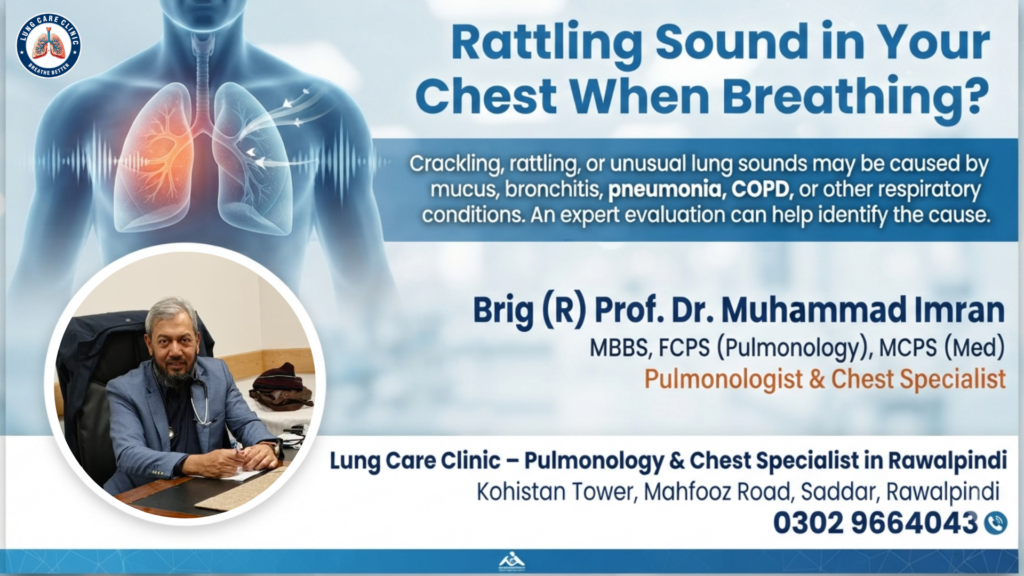
Brig (R) Prof. Dr. Muhammad Imran, Pulmonologist & Chest Specialist, provides expert evaluation and management of respiratory conditions including chronic cough, chest infections, asthma, COPD, bronchitis, breathing difficulties, and other lung disorders at Lung Care Clinic – Pulmonology & Chest Specialist in Rawalpindi.
Kohistan Tower, Mahfooz Road, Saddar, Rawalpindi
0302 9664043
If you notice a persistent rattling sound in your chest, unusual crackling, or noisy breathing, don’t ignore the symptom. Schedule an evaluation to identify the underlying cause and receive appropriate respiratory care.