What Are Chest Retractions in Adults?
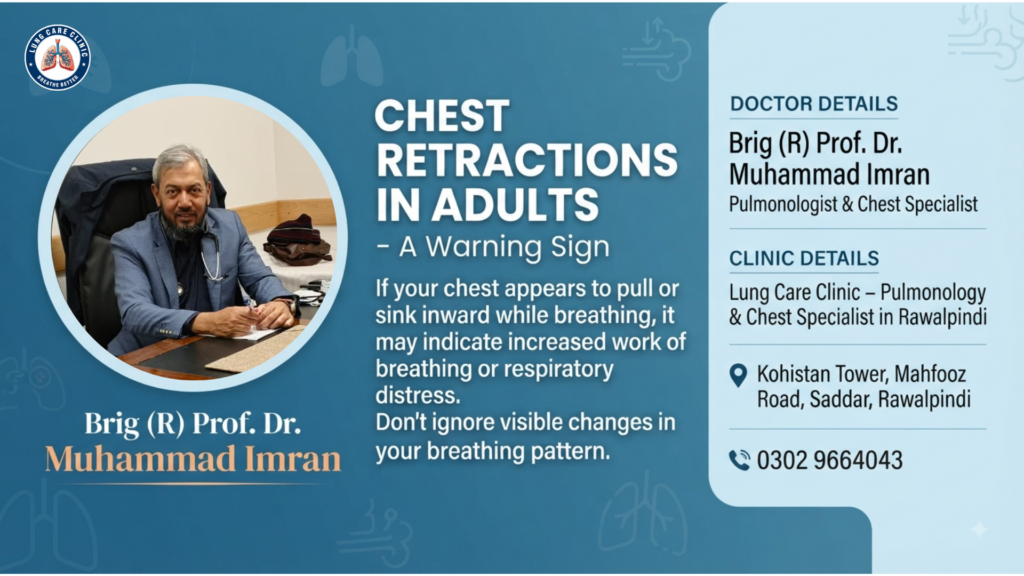
Chest retractions in adults occur when the skin and soft tissues around the ribs or chest pull inward during breathing. This can happen when a person is working harder than normal to move air into the lungs.
You may notice the skin sinking between the ribs, beneath the rib cage, above the breastbone, or around the neck during inhalation. This visible pulling can be a sign of increased work of breathing and should not be ignored, particularly when it develops suddenly or is accompanied by significant breathlessness.
Chest retractions are a physical sign rather than a disease. They can occur because of several conditions that make normal breathing more difficult.
What Does Sinking Chest Breathing Mean?
Sinking chest breathing means that parts of the chest appear to move inward instead of expanding normally during inhalation. This may happen when there is increased resistance to airflow or when the lungs are not functioning effectively.
When breathing becomes difficult, the body may recruit additional muscles around the chest, ribs, neck, and abdomen to help move air. The increased effort can make inward pulling more visible.
This is why chest retractions can be an important warning sign of respiratory distress.
What Causes Chest Retractions in Adults?
Several conditions can cause labored breathing and visible chest retractions.
Asthma Exacerbation
During a severe asthma flare-up, the airways can become narrowed and inflamed. This makes it harder to move air through the lungs.
A person may develop:
- Wheezing
- Chest tightness
- Rapid breathing
- Persistent coughing
- Shortness of breath
- Difficulty speaking comfortably
Severe airway narrowing can increase the work required to breathe and may result in visible chest retractions.
COPD Exacerbation
People with COPD may experience worsening breathlessness during an exacerbation. Increased mucus, airway inflammation, and airflow limitation can make breathing more difficult.
Additional symptoms may include increased coughing, changes in phlegm, wheezing, fatigue, and reduced ability to perform normal activities.
Pneumonia and Severe Respiratory Infections
Pneumonia can interfere with normal oxygen exchange and cause inflammation within the lungs. Severe respiratory infections may therefore produce significant breathing difficulty.
Symptoms may include:
- Fever
- Cough
- Chest discomfort
- Shortness of breath
- Rapid breathing
- Weakness
- Increased mucus production
If breathing becomes visibly labored, prompt medical assessment is important.
Airway Obstruction
An obstruction in the upper or lower airway can make it difficult for air to move normally.
Possible causes include mucus blockage, swelling, foreign material, or other airway problems. Depending on the location and severity of the obstruction, symptoms can develop suddenly and may become serious.
Other Lung Conditions
Interstitial lung disease, bronchiectasis, pulmonary edema, and other respiratory conditions can also cause significant breathing difficulty.
The underlying cause cannot be determined from chest retractions alone. A complete medical assessment is needed to understand what is affecting breathing.
What Does Labored Breathing Look Like?
Labored breathing means that a person is using more effort than usual to breathe. Chest retractions are one possible visible sign.
Other signs may include:
- Rapid breathing
- Visible movement of the neck muscles
- Difficulty speaking in complete sentences
- Flaring of the nostrils
- Sweating
- Sitting upright to breathe more comfortably
- Extreme fatigue
- Wheezing or unusual breathing sounds
- Bluish lips or fingertips
The severity and combination of symptoms matter when assessing respiratory distress.
Are Chest Retractions an Emergency?
Chest retractions can indicate significant breathing difficulty and should be taken seriously, particularly if they are new, worsening, or accompanied by other warning signs.
Seek urgent medical attention if chest retractions occur with:
- Severe shortness of breath
- Blue or gray lips
- Confusion
- Fainting
- Severe chest pain
- Inability to speak normally because of breathlessness
- Rapidly worsening breathing
- Extreme weakness
Do not wait for symptoms to become severe before seeking help when breathing is clearly becoming difficult.
Can Asthma Cause Sinking Chest Breathing?
Yes. Severe airway narrowing during an asthma exacerbation can increase the effort required to breathe. In some adults, this increased effort may result in visible chest retractions.
However, chest retractions should not automatically be assumed to mean asthma. Other respiratory conditions can produce similar signs.
If you have recurrent breathing difficulty, a pulmonologist can help determine whether asthma, COPD, infection, or another condition is responsible.
How Are Chest Retractions Diagnosed?
Chest retractions themselves are usually identified through physical examination. The more important question is why they are occurring.
A pulmonologist may evaluate:
- Breathing rate
- Oxygen saturation
- Heart rate
- Lung sounds
- Chest movement
- Medical history
- Current medications
- Previous respiratory conditions
Additional tests may include:
- Chest X-ray
- CT scan
- Spirometry
- Pulmonary Function Tests
- Blood tests
- Sputum testing
- Other respiratory investigations when necessary
The tests selected depend on the patient’s symptoms and suspected underlying condition.
Treatment Depends on the Cause
There is no single treatment for chest retractions. Management focuses on treating the underlying cause of the breathing difficulty.
For example, asthma may require prescribed inhaled medication and an individualized management plan. COPD exacerbations may require specific respiratory treatment. Infections may need appropriate medical management depending on their cause and severity.
Patients with chronic lung conditions may also benefit from pulmonary rehabilitation, breathing exercises, smoking cessation, vaccination, and long-term disease management.
Do not start antibiotics, steroids, inhalers, or other prescription medications without appropriate medical advice.
When Should You See a Pulmonologist?
You should arrange a pulmonary evaluation if you experience recurrent or unexplained labored breathing, especially when it is associated with:
- Chest retractions
- Persistent wheezing
- Chronic cough
- Frequent chest infections
- Shortness of breath during routine activities
- Reduced exercise tolerance
- Recurrent breathing episodes
- Persistent chest congestion
Early assessment can help identify the underlying problem and determine whether further testing or treatment is required.
Protecting Your Respiratory Health
Although not every episode of breathing difficulty can be prevented, several measures can support better lung health.
Avoid smoking and secondhand smoke. Reduce exposure to dust, chemical fumes, and significant air pollution where possible. Follow prescribed treatment plans for asthma, COPD, and other chronic respiratory conditions.
It is also important to seek medical attention for persistent respiratory symptoms instead of repeatedly treating them without identifying the underlying cause.
Expert Respiratory Care in Rawalpindi
Chest retractions in adults are not a diagnosis by themselves. They are a visible sign that a person may be using increased effort to breathe. The underlying cause may range from an asthma exacerbation or COPD flare-up to pneumonia, airway obstruction, or another serious respiratory condition.
If you notice sinking chest breathing, persistent labored breathing, or visible pulling around the ribs while breathing, professional evaluation is important. Severe or rapidly worsening breathing difficulty requires urgent medical attention.
Brig (R) Prof. Dr. Muhammad Imran, Pulmonologist & Chest Specialist, provides expert evaluation and management of asthma, COPD, chest infections, chronic cough, breathing difficulties, and other respiratory conditions at Lung Care Clinic – Pulmonology & Chest Specialist in Rawalpindi.
Kohistan Tower, Mahfooz Road, Saddar, Rawalpindi
0302 9664043
If you or someone around you is experiencing persistent labored breathing or visible chest retractions, do not ignore the warning signs. Seek appropriate medical evaluation to identify the cause and receive timely respiratory care.