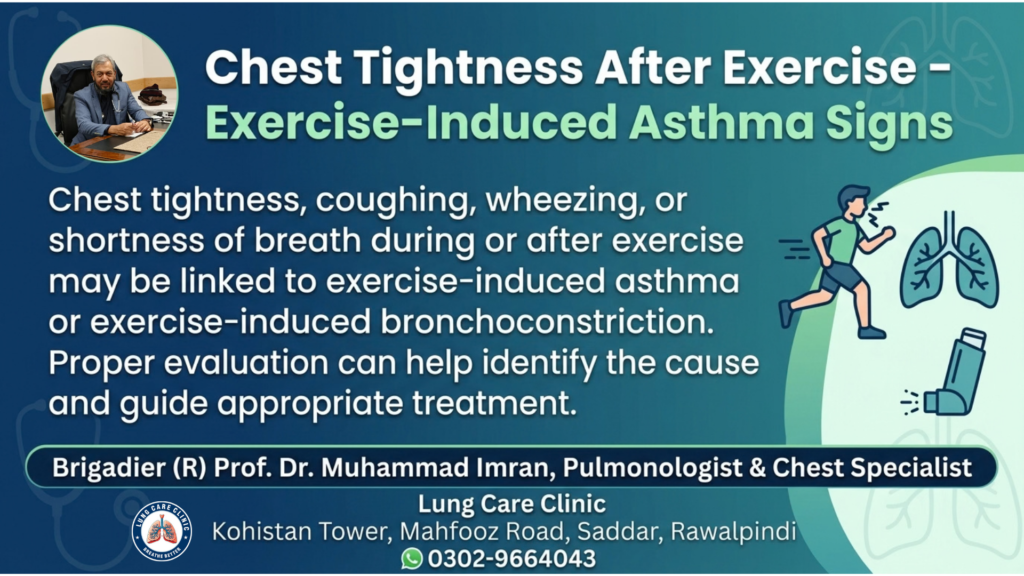
Chest tightness after exercise can be uncomfortable and concerning, especially when it happens repeatedly. Some people may also notice coughing, wheezing, shortness of breath, or difficulty breathing during or shortly after a workout. These symptoms can occur with exercise-induced asthma, a term commonly used for breathing symptoms triggered by physical activity.
Doctors may also use the term exercise-induced bronchoconstriction (EIB). This describes temporary narrowing of the airways during or after exercise. EIB can occur in people with asthma, but it can also affect people who do not have persistent asthma.
Understanding the symptoms, possible triggers, and available evaluation options can help you decide when specialist respiratory care may be appropriate.
What Is Exercise-Induced Asthma?
Exercise-induced asthma is commonly used to describe asthma symptoms that occur during or after physical activity. Exercise-induced bronchoconstriction is the more specific medical term for temporary airway narrowing associated with exercise.
During physical activity, breathing usually becomes faster and deeper. As a result, the airways may be exposed to larger amounts of cooler or drier air. In susceptible people, this can contribute to airway narrowing and inflammation.
Symptoms may begin during exercise or within several minutes after stopping. They can sometimes continue for a period afterward.
Not everyone who becomes breathless during exercise has asthma. Fitness level, environmental conditions, heart problems, anemia, respiratory infections, vocal cord dysfunction, and other conditions can also cause exercise-related breathing difficulties. Therefore, recurring symptoms deserve appropriate evaluation rather than self-diagnosis.
Common Exercise-Induced Asthma Symptoms
Symptoms can vary from person to person. Some people notice only mild chest tightness, while others experience several symptoms together.
Common signs include:
- Chest tightness during or after exercise
- Wheezing or a whistling sound while breathing
- Coughing during or after physical activity
- Shortness of breath that seems greater than expected
- Difficulty taking comfortable breaths
- Reduced exercise tolerance
- Unusual tiredness during workouts
- Needing to stop exercise because of breathing difficulty
For some people, symptoms may become more noticeable after intense exercise or when exercising in cold, dry conditions.
A recurring pattern is particularly important. For example, if you regularly develop coughing or chest tightness after running but feel comfortable during normal daily activities, an exercise-related airway problem may need to be considered.
Why Does Exercise Trigger Breathing Problems?
Exercise itself does not necessarily cause asthma. Instead, physical activity can act as a trigger for airway narrowing in susceptible individuals.
When you exercise, your ventilation increases. This means more air moves through the respiratory system. If the inhaled air is cold or dry, the airways may respond by becoming narrower.
Other environmental factors can also contribute. These may include:
- Cold outdoor air
- Dry air
- Air pollution
- Smoke
- Dust
- Pollen
- Strong chemical fumes
- Poor indoor air quality
Therefore, the same person may experience different symptoms depending on where and how they exercise.
For example, running outdoors during a cold season may trigger symptoms in someone who has few problems when exercising indoors in a controlled environment.
Chest Tightness After Exercise – Is It Always Asthma?
No. Chest tightness after exercise can have several possible causes.
Asthma and EIB are important possibilities, but other conditions can also cause similar symptoms. These may include respiratory infections, allergies, poor physical conditioning, heart-related conditions, anemia, or other airway problems.
In some cases, people may interpret normal breathlessness from intense exercise as a disease. On the other hand, significant or disproportionate breathlessness should not simply be dismissed as poor fitness.
Chest discomfort can also have causes unrelated to the lungs. For this reason, the nature of the symptoms, their timing, associated signs, medical history, and exercise pattern all matter.
If chest pain or pressure is severe, persistent, occurs with fainting, marked weakness, sweating, or other concerning symptoms, urgent medical assessment may be necessary.
Who Is More Likely to Experience Exercise-Related Airway Symptoms?
Exercise-related airway narrowing can affect people of different ages and activity levels.
It may be more noticeable in people with asthma or allergic conditions. Athletes who exercise intensely may also notice symptoms because their breathing demands are higher.
People who exercise in cold or polluted environments may experience more symptoms if they are susceptible to airway narrowing.
However, being physically active does not mean that someone automatically has exercise-induced asthma. A proper evaluation is needed before assuming that symptoms are caused by asthma.
How Is Exercise-Induced Asthma Diagnosed?
Diagnosis begins with a detailed medical history.
A respiratory specialist may ask:
- When do symptoms start?
- Do they occur during exercise or after stopping?
- What type of exercise triggers them?
- How long do symptoms last?
- Do symptoms occur at rest?
- Is there coughing or wheezing?
- Are symptoms worse in cold weather?
- Are there known allergies?
- Does smoke or pollution make symptoms worse?
- Is there a history of asthma or other lung disease?
Lung function testing can also be important.
Spirometry is commonly used to assess how well air moves in and out of the lungs. Depending on the clinical situation, additional testing may be considered to evaluate whether exercise or another controlled trigger produces measurable airway narrowing.
The exact testing approach depends on the patient’s symptoms and medical history.
What Is the Difference Between Asthma and EIB?
Asthma is a chronic respiratory condition involving airway inflammation and variable narrowing of the airways.
Exercise-induced bronchoconstriction refers specifically to airway narrowing associated with exercise.
A person can have asthma and experience exercise-triggered symptoms. However, some people experience exercise-related bronchoconstriction without having persistent asthma symptoms at other times.
This distinction is important because treatment and long-term management depend on the underlying condition.
Can Exercise-Induced Asthma Be Managed?
Yes. Many people with exercise-related airway symptoms can remain physically active when their condition is properly evaluated and managed.
Treatment depends on the underlying diagnosis and severity of symptoms.
For people with asthma, a specialist may recommend an appropriate asthma management plan. Depending on the patient’s condition, treatment may include prescribed inhaled medicines and strategies to reduce exposure to known triggers.
Some patients may be advised to use a prescribed reliever medicine before exercise. However, medication should be used according to a clinician’s instructions rather than started or adjusted independently.
If symptoms are frequent despite treatment, the overall asthma management plan may need review.
Warm-Up and Exercise Preparation
A gradual warm-up may help some people tolerate exercise more comfortably.
Instead of immediately beginning intense activity, a person can gradually increase exercise intensity. This may allow the respiratory system to adjust before strenuous activity begins.
However, a warm-up should not be considered a substitute for medical evaluation or prescribed treatment.
If exercise repeatedly causes significant wheezing, chest tightness, or breathlessness, the underlying cause should be investigated.
Choosing the Right Exercise Environment
Environmental conditions can influence respiratory symptoms.
If cold, dry air triggers symptoms, exercising in a warmer environment may be more comfortable. Similarly, people sensitive to pollen, smoke, dust, or air pollution may benefit from choosing environments with fewer respiratory irritants.
Indoor exercise is not automatically safer, though. Poor ventilation, dust, chemical cleaning products, or other irritants can also affect breathing.
Therefore, identifying individual triggers is more useful than assuming that one exercise setting is suitable for everyone.
Should You Stop Exercising?
Not necessarily.
Physical activity has many health benefits, and people with asthma or exercise-related airway symptoms may often continue exercising with appropriate management.
However, exercise should be modified or stopped if significant breathing difficulty develops.
Repeatedly pushing through severe symptoms is not a safe strategy.
If symptoms are preventing normal exercise, occurring frequently, or becoming progressively worse, specialist assessment can help determine the reason.
When Should You See a Pulmonologist?
Consider respiratory evaluation if you repeatedly experience:
- Chest tightness after exercise
- Wheezing during or after workouts
- Persistent coughing after running or other exercise
- Breathlessness that seems disproportionate to your activity level
- Reduced exercise tolerance
- Recurrent symptoms in cold or polluted environments
- Symptoms that interfere with sports or daily activities
A pulmonologist can assess whether the symptoms are related to asthma, exercise-induced bronchoconstriction, another airway condition, or a non-respiratory cause.
When Is Exercise-Related Breathlessness an Emergency?
Some breathing symptoms require urgent attention.
Seek urgent medical care if severe breathlessness develops suddenly or is accompanied by symptoms such as severe chest pain or pressure, fainting, confusion, bluish lips, or inability to speak comfortably because of breathing difficulty.
Severe symptoms should not be assumed to be exercise-induced asthma without medical assessment.
Exercise-Induced Asthma Treatment in Rawalpindi
If you regularly experience chest tightness, coughing, wheezing, or shortness of breath during or after exercise, specialist evaluation can help identify the underlying cause.
At Lung Care Clinic in Saddar, Rawalpindi, Brigadier (R) Prof. Dr. Muhammad Imran provides specialist respiratory evaluation for asthma, breathing problems, wheezing, persistent cough, and other pulmonary conditions.
Assessment may include a detailed respiratory history and appropriate lung-function testing when clinically indicated.
The goal is not simply to treat one episode of breathlessness. A proper evaluation can help identify triggers, understand the underlying condition, and develop an appropriate management approach.
Chest tightness after exercise should not automatically be considered normal, especially when it happens repeatedly or is accompanied by coughing, wheezing, or significant shortness of breath.
Exercise-induced asthma is a commonly used term for asthma symptoms triggered by physical activity, while exercise-induced bronchoconstriction more specifically describes temporary airway narrowing associated with exercise. Importantly, similar symptoms can have other causes.
With appropriate evaluation and management, many people with asthma or exercise-related airway symptoms can continue physical activity safely and comfortably.
If exercise repeatedly leaves you coughing, wheezing, or struggling to breathe, consider discussing your symptoms with a pulmonologist rather than ignoring the pattern.
Brigadier (R) Prof. Dr. Muhammad Imran
Pulmonologist & Chest Specialist
Lung Care Clinic
Kohistan Tower, Mahfooz Road, Saddar, Rawalpindi
0302-9664043