Comparing a nebulizer vs inhaler is a vital step for anyone managing chronic respiratory conditions such as asthma, chronic obstructive pulmonary disease (COPD), or acute chest infections. Both medical devices deliver bronchodilators, corticosteroids, and anti-inflammatory medications directly into the airways and lungs. However, they function differently in terms of administration technique, medication delivery speed, portability, and ease of use.
Understanding the key distinctions between a nebulizer vs inhaler helps patients, caregivers, and parents make informed decisions alongside their pulmonologist to ensure optimal lung health and symptom control.
What Is the Difference Between a Nebulizer vs Inhaler?
The core difference in the nebulizer vs inhaler comparison lies in how liquid medication is converted into breathable particles and delivered into the lungs:
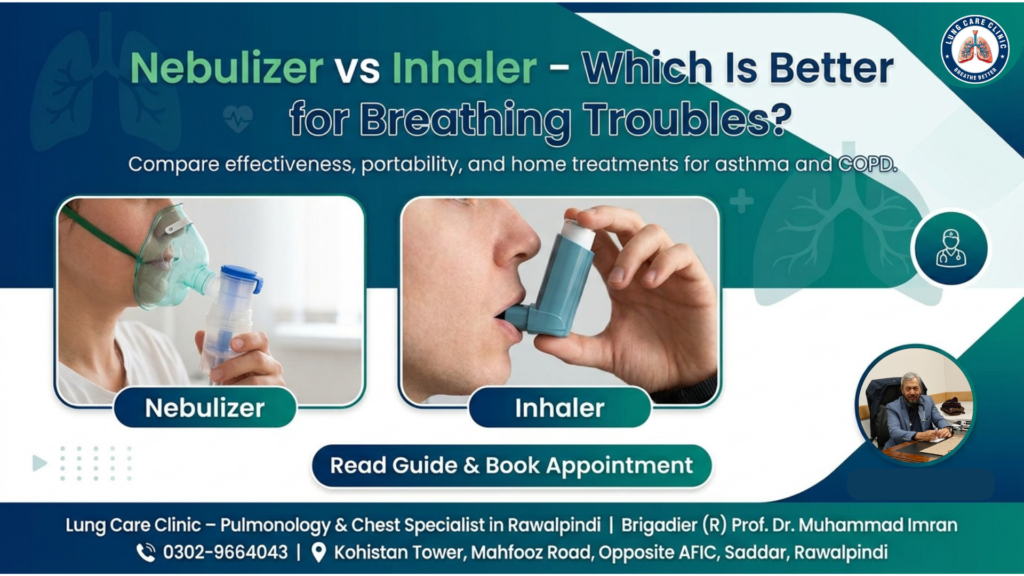
- Inhaler (pMDI or DPI): A compact, handheld device that delivers a pre-measured dose of medicine in a rapid burst or fine dry powder. It requires the patient to coordinate their breath with the device actuation or inhale forcefully.
- Nebulizer: An electric or battery-powered machine that continuously turns liquid medication into a fine mist over a 5- to 15-minute period. The patient simply breathes normally through a mouthpiece or face mask.
While both devices aim to relieve wheezing, shortness of breath, chest tightness, and persistent coughing, choosing between a nebulizer vs inhaler depends heavily on age, physical capability, severity of symptoms, and lifestyle requirements.
Nebulizer vs Inhaler Comparison Overview
| Feature | Inhaler (with or without Spacer) | Nebulizer (Compressor or Mesh) |
| Portability | Highly portable, fits easily in a pocket or bag | Larger unit, requires power source or batteries |
| Administration Time | Takes less than 1 minute | Requires 5 to 15 minutes per session |
| Coordination Required | High coordination (unless used with a spacer) | None (Requires only natural, normal breathing) |
| Ideal For | Active adults, older children, on-the-go relief | Infants, toddlers, elderly, severe flare-ups |
| Maintenance | Minimal cleaning required | Regular cleaning & disinfection mandatory |
Understanding Inhalers: Types and Benefits
Inhalers are the most widely prescribed devices for chronic respiratory management worldwide. When examining a nebulizer vs inhaler, inhalers offer unmatched convenience and speed.
Types of Inhalers
- Metered-Dose Inhalers (pMDIs): Use a pressurized canister to release a specific spray dose of medication.
- Dry Powder Inhalers (DPIs): Deliver medication as a fine powder triggered by the patient’s deep, rapid inhalation.
- Soft Mist Inhalers (SMIs): Produce a slow-moving aerosol mist that is easier to inhale than traditional pressurized sprays.
Advantages of Inhalers
- Fast-Acting Relief: Administration takes only seconds, making rescue inhalers crucial during sudden asthma attacks or acute shortness of breath.
- Ultimate Portability: Inhalers require no electricity, water, or bulky setup, allowing patients to carry them anywhere.
- Precise Dosing: Each puff releases an exact, standardized dose of prescribed medication.
Limitations of Inhalers
The main drawback of an inhaler is breath-actuation coordination. Patients must press the canister and inhale deeply at the exact same moment. If executed incorrectly, much of the medication settles on the back of the throat rather than reaching the lower airways.
Understanding Nebulizers – Types and Benefits
Nebulizers serve as a cornerstone for home breathing treatment when inhalers are difficult or impossible to operate correctly.
Types of Nebulizers
- Jet Nebulizers: Use compressed air to turn liquid medication into a breathable mist (common tabletop models).
- Ultrasonic Nebulizers: Utilize high-frequency sound waves to atomize liquid.
- Mesh Nebulizers: Use a vibrating mesh to generate an ultrafine mist; highly efficient and portable.
Advantages of Nebulizers
- Zero Coordination Needed: Patients breathe normally through a mask or mouthpiece without holding their breath.
- Effective for High-Risk Patients: Ideal for infants, toddlers, elderly patients with arthritic hands, or confused individuals.
- High Medication Delivery During Crisis: Delivers continuous medication during severe asthma attacks or COPD exacerbations when deep breathing is difficult.
Limitations of Nebulizers
Nebulizers are bulkier, require routine assembly and cleaning to prevent bacterial contamination, and take significantly longer per treatment session.
Is a Nebulizer Better Than an Inhaler?
A common question among patients comparing a nebulizer vs inhaler is whether one is scientifically more effective than the other.
Clinical studies demonstrate that when an inhaler is used correctly with a valved holding chamber (spacer), it delivers medication to the lungs just as effectively as a nebulizer. Neither device is inherently “better”—the superior choice depends entirely on patient capability and clinical scenario:
- Inhalers with Spacers are generally preferred for daily maintenance and sudden rescue relief due to speed and portability.
- Nebulizers are preferred during severe acute respiratory distress, emergency clinic care, or for patients physically unable to use a spacer.
The Role of Spacers in Inhaler Therapy
Using a spacer attachment solves the major drawback of metered-dose inhalers. A spacer holds the aerosolized medication in a chamber, allowing the patient to inhale it slowly over several normal breaths.
For children and adults alike, a metered-dose inhaler paired with a spacer mask offers the ease of a nebulizer with the speed and portability of an inhaler.
Proper Cleaning and Maintenance Guidelines
Whether using a nebulizer vs inhaler, maintaining device hygiene is essential to prevent lung infections:
- Inhaler Care: Wipe the mouthpiece weekly with a dry cloth or tissue. Wash plastic spacer chambers with mild soap once a week and air-dry completely.
- Nebulizer Care: Wash the cup, mask, and mouthpiece with warm soapy water after every use. Disinfect components thoroughly once or twice a week according to manufacturer instructions to avoid fungal or bacterial growth.
When Should You Consult a Pulmonologist?
Selecting between a nebulizer vs inhaler should always be done under expert medical supervision. Consult a specialist if you or your loved one experience:
- Frequent night-time coughing, wheezing, or shortness of breath
- Ineffective relief despite using your prescribed inhaler or nebulizer
- Difficulty coordinating inhaler usage or uncertainty about proper technique
- Frequent respiratory infections, bronchitis flare-ups, or asthma attacks
- Unexplained chest tightness or low physical stamina during daily activities
Specialist Respiratory & Asthma Care in Rawalpindi
If you are struggling with persistent breathing difficulties, asthma, or COPD, obtaining an accurate diagnosis and proper device prescription is vital for long-term health.
At Lung Care Clinic in Saddar, Rawalpindi, Brigadier (R) Prof. Dr. Muhammad Imran, Pulmonologist & Chest Specialist, provides comprehensive respiratory evaluation, spirometry testing, and tailored inhaler/nebulizer management plans.
Consultant Brigadier (R) Prof. Dr. Muhammad Imran
Specialty Pulmonologist & Chest Specialist
Lung Care Clinic – Pulmonology & Chest Specialist in Rawalpindi
Kohistan Tower, Mahfooz Road, Military Hospital Rd, Opposite AFIC, Saddar, Rawalpindi
0302-9664043