What Is Bronchiectasis?
Bronchiectasis is a long-term lung condition in which the airways become permanently widened and damaged. Because damaged airways may not clear mucus effectively, mucus can build up and create an environment where bacteria can grow.
This can lead to a persistent productive cough, frequent chest infections, wheezing, breathlessness, and fatigue.
Bronchiectasis varies from person to person. Some people have mild symptoms, while others experience repeated infections and significant mucus production. Proper assessment is important because treatment should be based on the individual’s symptoms, lung function, infection history, and underlying cause.
What Causes Damaged Airways?
Several conditions can contribute to bronchiectasis. Previous severe respiratory infections, certain immune system problems, inflammatory conditions, and other lung diseases may damage the airways.
In some people, the exact cause cannot be identified.
When the airway walls become damaged, normal mucus clearance can become less effective. As a result, secretions may remain inside the lungs for longer periods.
This is one reason why people with bronchiectasis may experience recurrent chest infections.
Common Symptoms of Bronchiectasis
The symptoms can vary depending on the extent of airway damage.
Common symptoms include:
- Persistent cough
- Regular production of phlegm
- Recurrent chest infections
- Wheezing
- Shortness of breath
- Chest discomfort
- Fatigue
- Reduced exercise tolerance
- Changes in the amount or color of sputum
Some people notice that their cough and mucus production become worse during an exacerbation.
Coughing up blood can also occur in bronchiectasis. Any significant or unexplained blood in sputum should receive prompt medical assessment.
Why Does Bronchiectasis Cause So Much Mucus?
Healthy airways have natural mechanisms that help move mucus and unwanted particles out of the lungs.
With bronchiectasis, damaged and widened airways may have difficulty clearing secretions. Mucus can therefore remain in the airways and become thicker or more difficult to remove.
This mucus buildup can contribute to repeated infections and worsening inflammation.
For this reason, airway clearance is an important part of long-term bronchiectasis management.
What Is Airway Clearance?
Airway clearance refers to techniques used to help move mucus from the smaller airways toward the larger airways so it can be coughed out.
Your healthcare professional may recommend specific techniques depending on your condition.
These may include breathing-based techniques, controlled coughing, physiotherapy methods, or airway clearance devices.
The goal is to help reduce mucus accumulation and improve the ability to clear respiratory secretions.
Airway Clearance Techniques
Different patients may benefit from different approaches.
Active Cycle of Breathing Techniques
This approach combines controlled breathing, deeper breathing, and huffing techniques to help move mucus.
A respiratory physiotherapist or healthcare professional can teach the correct method.
Huff Coughing
Huff coughing uses controlled exhalation to help move mucus without the excessive strain that can sometimes occur with repeated forceful coughing.
Airway Clearance Devices
Some people may benefit from devices designed to assist mucus clearance. Whether a device is appropriate depends on the patient’s condition and should be discussed with a healthcare professional.
Physical Activity
Appropriate physical activity may help support overall fitness and respiratory function. The level and type of exercise should be appropriate for your health status.
How Is Bronchiectasis Diagnosed?
A detailed medical history and respiratory examination are important first steps.
A chest CT scan is commonly used to identify structural airway changes associated with bronchiectasis.
Your doctor may also recommend:
- Spirometry
- Pulmonary function testing
- Oxygen saturation assessment
- Sputum culture
- Blood tests
- Chest imaging
Sputum testing can be particularly useful when recurrent infections occur because it may help identify bacteria responsible for an infection and guide antibiotic selection.
Bronchiectasis Treatment
Bronchiectasis treatment is personalized because the causes, symptoms, and severity can differ significantly between patients.
Treatment may involve several components.
Airway Clearance
Regular mucus clearance can be an important part of managing bronchiectasis. Your healthcare professional can recommend appropriate techniques based on your symptoms and ability to clear secretions.
Treating Respiratory Infections
Chest infections may require appropriate medical treatment. Antibiotics may be prescribed when a bacterial infection is suspected or confirmed.
The choice of treatment depends on clinical findings and, when available, sputum culture results.
Antibiotics should not be taken unnecessarily or without medical advice.
Managing Underlying Conditions
If asthma, COPD, immune problems, or another condition contributes to bronchiectasis or respiratory symptoms, that condition should also be properly managed.
Addressing the underlying cause can be an important part of long-term care.
Inhaled Treatments
Some patients may benefit from inhaled medications, depending on their symptoms and associated airway conditions.
Inhalers are not automatically required for every person with bronchiectasis. Your pulmonologist can determine whether they are appropriate for you.
Pulmonary Rehabilitation
For people with significant breathlessness or reduced exercise capacity, pulmonary rehabilitation may help improve physical conditioning and confidence with activity.
A structured program may include exercise, breathing strategies, education, and lifestyle guidance.
Can Bronchiectasis Be Cured?
Bronchiectasis involves permanent structural changes to the airways, so treatment generally focuses on controlling the condition rather than completely reversing existing airway damage.
However, good long-term management can help reduce symptoms, improve mucus clearance, manage infections, and support better quality of life.
Following an individualized treatment plan and recognizing worsening symptoms early are important parts of care.
How Can Bronchiectasis Flare-Ups Be Reduced?
Several measures may help reduce respiratory complications.
Follow your recommended airway clearance routine consistently. Avoid smoking and exposure to respiratory irritants. Maintain appropriate physical activity and follow your prescribed medications.
It is also important to recognize changes in your usual symptoms.
A sudden increase in cough, a noticeable increase or change in sputum, worsening breathlessness, fever, fatigue, or chest discomfort may indicate an exacerbation or infection.
Contact your healthcare professional when symptoms change significantly.
When Should You See a Bronchiectasis Specialist?
Consider specialist evaluation if you have a persistent productive cough, repeated chest infections, unexplained wheezing, recurring pneumonia, or ongoing mucus production.
A pulmonologist can assess your symptoms, review previous imaging and medical reports, evaluate lung function, and determine whether additional testing is needed.
Specialist care can also help develop an individualized airway clearance and infection-management plan.
Bronchiectasis Treatment in Rawalpindi
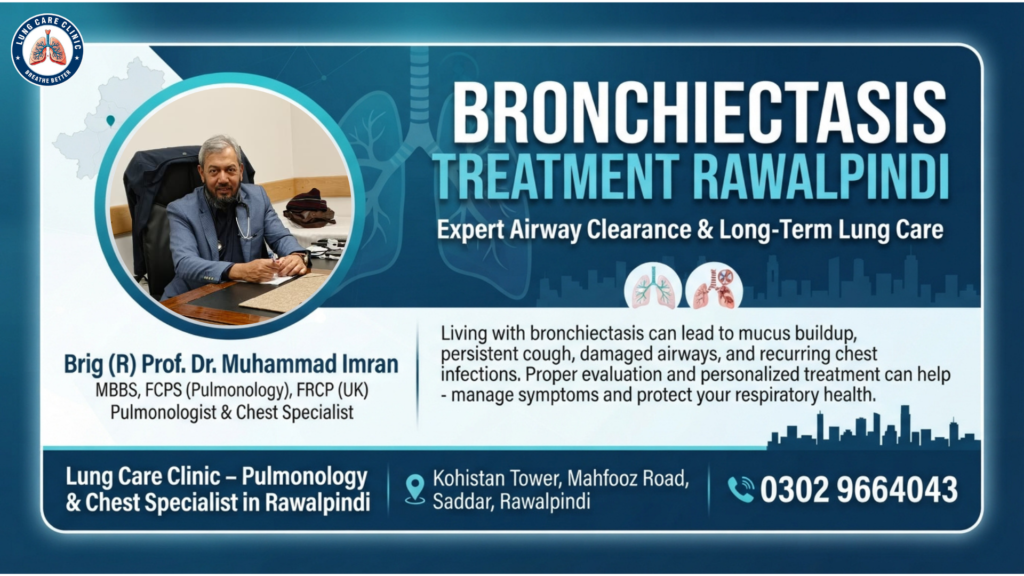
If you are searching for Bronchiectasis Treatment Rawalpindi, proper specialist evaluation is an important step toward managing damaged airways, mucus buildup, and recurrent respiratory infections.
Brig (R) Prof. Dr. Muhammad Imran, Pulmonologist & Chest Specialist, provides expert evaluation and management of bronchiectasis, chronic cough, recurrent chest infections, breathing difficulties, wheezing, COPD, and other respiratory conditions at Lung Care Clinic – Pulmonology & Chest Specialist in Rawalpindi.
The approach focuses on understanding the patient’s symptoms, medical history, lung condition, and individual treatment requirements rather than relying on a one-size-fits-all plan.
Kohistan Tower, Mahfooz Road, Saddar, Rawalpindi
0302 9664043
If you have persistent mucus, repeated chest infections, or a chronic productive cough, don’t ignore these symptoms. A proper respiratory assessment can help determine whether bronchiectasis or another lung condition may be contributing to your problems.
Book a consultation for expert respiratory evaluation and personalized bronchiectasis care in Rawalpindi.